Global Respect Act of 2021 This bill imposes visa-blocking sanctions on foreign persons responsible for or complicit in violating the human rights of individuals due to actual or perceived sexual orientation, gender identity, or sex characteristics. The President shall report and periodically update a list of foreign persons responsible for such human rights violations and apply sanctions accordingly. The Department of State shall designate at least one senior officer who shall be responsible for tracking violence and discrimination against individuals based on actual or perceived sexual orientation or gender identity in foreign countries.
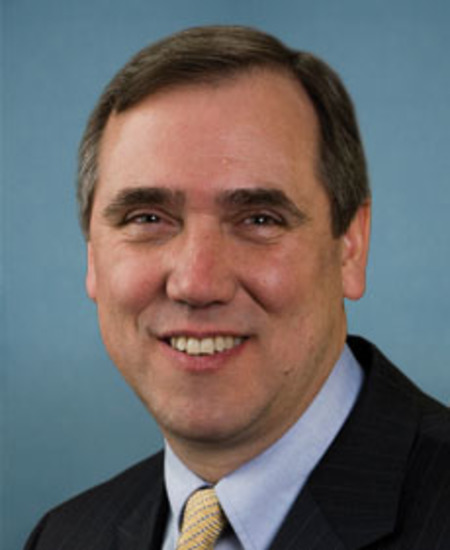
Sen. Jeff Merkley
Sponsored bills
LGBTQ Data Inclusion Act This bill requires federal agencies that collect information through a survey that includes demographic data (where subjects self-report information or a proxy provides information about the subject or responds for all persons in a household) to review existing data sets to determine in which data sets information about sexual orientation and gender identity is not included, and to assess needed changes in survey methods related to asking questions on sexual orientation and gender identity. Agencies that publish reports relying on survey demographic data must include information on sexual orientation and gender identity.
Charitable Conservation Easement Program Integrity Act of 2021 This bill imposes a limitation on the tax deduction for qualified conservation contributions made by certain partnerships if the amount of the contribution exceeds 2.5% times the sum of each partner's relevant basis in the partnership. This limitation also applies to other pass-thru entities, such as S corporations.
Veterans Visa and Protection Act of 2021 This bill provides permanent resident status and citizenship eligibility to certain noncitizen veterans and addresses related issues. The Department of Homeland Security (DHS) must establish a program that allows (1) eligible noncitizen veterans outside of the United States to be admitted as permanent residents, and (2) eligible noncitizen veterans in the United States to obtain permanent resident status. Generally, an eligible noncitizen veteran under this bill is one who was not removed from the United States for certain crimes related to violence or national security. DHS may waive these eligibility requirements for humanitarian, family unity, public interest, or exceptional military service reasons. A noncitizen veteran who obtains permanent resident status under this bill shall be eligible for (1) naturalization through service in the Armed Forces, and (2) military and veterans benefits as if they had not been removed (or ordered removed) from the United States. For a noncitizen veteran in removal proceedings or subject to a final removal order, the Department of Justice (DOJ) must determine whether the veteran is eligible for permanent resident status under this bill. If the veteran is eligible, DOJ must adjust the veteran's status. The bill also protects noncitizen veterans or service members from being removed from the United States unless the veteran has been convicted of a crime of violence.
Break the Cycle of Violence Act This bill establishes federal grant programs and related entities to support violence intervention initiatives. Specifically, the bill directs the Department of Health and Human Services (HHS) to award grants for coordinated community violence intervention initiatives in communities disproportionately impacted by homicides and community violence. HHS must also establish several related entities, including an Office of Community Violence Intervention to administer programs and activities related to violence intervention; the Community Violence Intervention Advisory Committee to advise and assist the office and HHS; and the National Community Violence Response Center to provide training and technical assistance, coordinate research, and develop data collection policies. Additionally, the bill directs the Department of Labor to award grants for job training and workforce programs in communities disproportionately affected by gun violence to connect youth ages 16 to 24 to in-demand occupations.
Immigrant Veterans Eligibility Tracking System Act or the I-VETS Act This bill requires the Department of Homeland Security (DHS) to identify aliens who are serving or have served in the Armed Forces when such an alien applies for an immigration benefit or is placed in an immigration enforcement proceeding. Such information shall be reflected in DHS records and may not be used to remove an alien from the United States.
Better Care Better Jobs Act This bill establishes programs and provides funds for state Medicaid programs to improve home- and community-based services (HCBS), such as home health care, personal care, case management, and rehabilitative services. Specifically, the bill provides funds for the Centers for Medicare & Medicaid Services to award planning grants, develop quality measures, and provide technical assistance to states regarding specified HCBS improvements, particularly with respect to access, utilization, and the associated workforce. The bill also increases the Federal Medical Assistance Percentage (i.e., federal matching rate) for HCBS in states that develop plans and meet specified benchmarks for improvements. The bill also makes permanent (1) the Money Follows the Person Rebalancing Demonstration Program (a grant program to help states increase the use of HCBS for long-term care and decrease the use of institutional care), and (2) certain provisions regarding Medicaid eligibility that protect against spousal impoverishment for recipients of HCBS.
Combating Global Corruption Act of 2021 This bill requires the Department of State to develop a program to combat corruption in foreign countries. The State Department must annually report to Congress a tiered list of all foreign countries. The first tier shall contain countries that meet minimum standards for combating public corruption, while the second tier shall contain countries that do not yet meet these standards but are making significant efforts to do so. Third-tier countries do not meet the minimum anti-corruption standards and are not making significant efforts to do so. Factors for assessing efforts to address corruption include a country's compliance with specified relevant international agreements. The State Department must report on whether, for purposes of potential sanctions, foreign persons are engaged in significant corruption in third-tier countries or in relation to the planning, construction, or operation of the Nord Stream 2 pipeline. The State Department must also designate an anti-corruption point of contact in the U.S. diplomatic post in each second- or third-tier country and where the State Department determines that such a point of contact is necessary. The point of contact shall be responsible for enhancing coordination and promoting the implementation of a whole-of-government approach to enhancing the ability of foreign countries to combat public corruption.
This resolution reaffirms the goals of World Refugee Day and the commitment of the United States to promote the safety and well-being of refugees.
Patsy T. Mink and Louise M. Slaughter Gender Equity in Education Act of 2021 This bill requires the Department of Education (ED) to establish an Office for Gender Equity to support state and local educational agencies, institutions of higher education, and elementary and secondary schools in fully implementing title IX of the Education Amendments of 1972, which prohibits discrimination on the basis of sex in federally funded education programs or activities. The office may provide grants and perform activities to reduce or prevent sex discrimination in all areas of education. The office must provide technical assistance and annual training to title IX coordinators and develop a handbook for conducting self-evaluations of title IX compliance. The training must address discrimination based on multiple characteristics, including race, ethnicity, national origin, disability status, religion, age, or actual or perceived sex. The office may award grants to eligible entities and partnerships that apply to carry out programs and activities designed to implement title IX and prevent and reduce sex discrimination, including programs that increase access to resources. ED must coordinate with the Institute of Education Sciences and other federal entities to investigate, identify, and disseminate best practices to (1) reduce and prevent sex stereotyping, bias, and discrimination in educational materials; (2) address sex-based harassment and violence on campuses; (3) develop counseling and career guidance training; (4) mitigate implicit bias in teaching and discipline; and (5) address the needs of students who face discrimination based on multiple characteristics.