

Alternatives to Detention Act of 2021 This bill requires the Department of Homeland Security (DHS) to establish programs that are alternatives to detention for immigration enforcement and addresses related issues. Such programs must be available regardless of whether an alien is subject to a removal order or whether a charge of removability is pending, but shall not be available to certain aliens, such as those subject to mandatory detention. DHS or an immigration judge must determine, within 72 hours of an individual being taken into custody for immigration enforcement, the appropriate level of supervision for the individual and whether the individual may participate in such an alternative program. For a member of a vulnerable population (such as a victim of trafficking) or a caregiver (such as a parent of a minor), there must be a presumption that such an individual must be placed in a community-based supervision program. DHS must restore the Family Case Management Program as an alternative to detention. This program must provide community supervision and community support services through a contract with a nongovernmental organization. DHS must establish a Coordinator of Alternatives to Detention position. The Government Accountability Office must report on the use and effectiveness of the programs established under this bill.
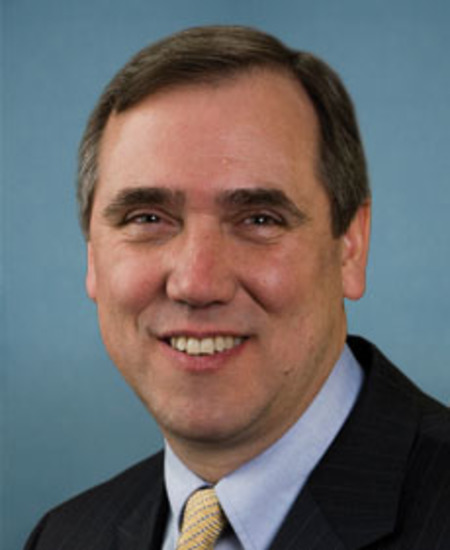
Sen. Jeff Merkley
Sponsored bills
Tyler Clementi Higher Education Anti-Harassment Act of 2021 This bill addresses harassment at institutions of higher education (IHEs). Specifically, the bill requires each IHE to include in its annual security report a statement of policy regarding harassment on the basis of a student's actual or perceived race, color, national origin, sex (including sexual orientation, gender identity, pregnancy, childbirth, a medical condition related to pregnancy or childbirth, and a sex stereotype), disability, or religion. In addition, the Department of Education may award grants to IHEs to initiate, expand, or improve programs to (1) prevent the harassment of students; (2) provide counseling or redress services to students who have been harassed or accused of subjecting other students to harassment; or (3) educate and train students, faculty, or staff to prevent harassment or address harassment if it occurs.
Radiation Exposure Compensation Act Amendments of 2021 This bill expands two programs that compensate individuals who were exposed to radiation during certain nuclear testing or uranium mining and subsequently developed medical conditions, including cancers. First, the bill expands and extends a program that compensates individuals who were exposed to radiation from atmospheric nuclear testing or other sources and subsequently developed specified cancers. Under current law, this program compensates individuals who were present in a designated geographic area during a period of nuclear testing and certain individuals employed in uranium mining. The bill expands the designated areas to include Colorado, Idaho, Montana, New Mexico, and Guam and additional areas in Arizona, Nevada, and Utah; makes more individuals who worked in uranium mining eligible for the program; increases the amount of compensation awarded to and provides medical benefits for eligible claimants; and extends for 19 years following the bill's enactment the fund that supports this program and the statute of limitations for filing claims (currently, the program terminates on July 10, 2022). Second, the bill makes certain individuals employed in uranium mines or mills eligible for a program that compensates workers, including Department of Energy employees and contractors, for illnesses caused by occupational exposure to radiation and hazardous substances during development and testing of the nation's nuclear weapons stockpile. The bill also establishes a grant program in the National Institute of Environmental Health Sciences for institutions of higher education to study the epidemiological impacts of uranium mining and milling among individuals without occupational exposure.
This resolution designates the week of September 19-September 25, 2021, as National Estuaries Week.
Welcoming Evacuees Coming from Overseas to Mitigate Effects of Displacement Act of 2021 or the WELCOMED Act of 2021 This bill makes certain individuals from Afghanistan eligible for any benefit that is available to a refugee, such as resettlement assistance. Specifically, this bill shall apply to a national of Afghanistan (or an individual with no nationality who last habitually resided in Afghanistan) who is temporarily paroled into the United States for urgent humanitarian reasons or significant public benefit during the four-year period beginning on July 1, 2021.
Financial Compensation for CFPB Whistleblowers Act This bill requires the Consumer Financial Protection Bureau to provide rewards to whistleblowers who report information relating to a violation of consumer financial law resulting in certain monetary sanctions exceeding $1 million. Specifically, the bureau must award compensation to whistleblowers for 10%-30% of the collected penalties. In cases where the bureau collects less than $1 million in penalties, the bureau must award any single whistleblower 10% of the amount collected or $50,000, whichever is greater. The bill also sets forth requirements regarding the legal representation of a whistleblower and provides for confidentiality regarding the whistleblower's identity.
Helping Ensure Life- and Limb-Saving Access to Podiatric Physicians Act or the HELLPP Act This bill adds podiatrists as covered physicians under the Medicaid program. Additionally, the bill revises certain documentation requirements related to Medicare coverage of therapeutic shoes for individuals with diabetes. Finally, the bill subjects payments made to a Medicaid provider or supplier to a continuing levy for federal taxes owed by the provider or supplier.
This joint resolution proposes a constitutional amendment authorizing Congress and the states to set reasonable limits on the raising and spending of money by candidates and others to influence elections. The amendment grants Congress and the states the power to implement and enforce this amendment by legislation. They are allowed to distinguish between natural persons and corporations or other artificial entities created by law, including by prohibiting such entities from spending money to influence elections.
Farmworker Smoke and Excessive Heat Protection Act of 2021 This bill provides protections for farmworkers from occupational exposures to wildfire smoke and excessive heat. Specifically, the bill establishes an initial occupational safety and health standard that requires agricultural operation employers to provide farmworkers with appropriate equipment to protect them from wildfire smoke (e.g., N95 masks or N100 masks) and excessive heat exposure (e.g., water and cooling facilities). Employers must also provide farmworkers with materials about how to use the equipment and the risks associated with exposure to wildfire smoke and excessive heat. Under the standard, workers are required to use the appropriate protective equipment when air quality or heat reaches a dangerous level. In addition, the Occupational Safety and Health Administration (OSHA) must promulgate an occupational safety and health standard that provides at least the same level of protection as the initial standard. OSHA must also provide technical assistance to employers on how to comply with the standards and develop sample training and education materials that may be used by employers.
Do No Harm Act This bill prohibits the application of the Religious Freedom Restoration Act of 1993 (RFRA) to specified federal laws or the implementation of such laws. Currently, RFRA prohibits the government from substantially burdening a person's exercise of religion even if the burden results from a rule of general applicability, except in furtherance of a compelling governmental interest when using the least restrictive means. Under the bill, RFRA is inapplicable to laws or the implementation of laws that protect against discrimination or the promotion of equal opportunity (e.g., the Civil Rights Act of 1964); require employers to provide wages, other compensation, or benefits, including leave; protect collective activity in the workplace; protect against child labor, abuse, or exploitation; or provide for access to, information about, referrals for, provision of, or coverage for, any health care item or service. The bill prevents RFRA from being used to deny (1) goods or services the government has contracted, granted, or made an agreement to provide to a beneficiary of or participant in a program or activity funded by such government contract, grant, agreement, or other award; or (2) a person's full and equal enjoyment of a government-provided good, service, benefit, facility, privilege, advantage, or accommodation. In order for a person to assert a RFRA claim or defense in a judicial proceeding, the government must be a party to the proceeding.