

United States Climate Leadership in International Mitigation, Adaptation, and Technology Enhancement Act of 2021 This bill sets out priorities for climate action, clean energy, energy diplomacy, reduced deforestation, and related U.S. foreign policy. The Department of State must incorporate climate action and climate diplomacy across all bureaus and U.S. missions abroad. In addition, the bill directs increased U.S. involvement in international climate change agreements and activities, including the Paris Agreement (a climate treaty adopted in 2015), the Kigali Amendment to the Montreal Protocol (amends a treaty on reducing ozone-depleting compounds to include hydrofluorocarbons) and efforts to reduce short-lived climate pollutants, the Carbon Offset and Reduction Scheme for International Aviation, and Mission Innovation and the Clean Energy Ministerial (global initiatives to advance clean energy technologies and policies). In addition, the bill directs (1) increased U.S. engagement in international economic forums (e.g., G-7 and the World Economic Forum) related to climate action, including with a specific focus on China; and (2) efforts by the U.S. International Finance Development Corporation and U.S. representatives at international financial institutions to prioritize renewable energy projects and advance other climate-related policy objectives. The bill also establishes foreign assistance, financing mechanisms, and other programs to support developing countries transition to renewable energy and reduce carbon emissions. Furthermore, the bill outlines climate-related foreign policy and programs for particular regions (the Arctic, sub-Saharan Africa, the Caribbean, Europe, and North America) and countries (China, India, Brazil, and Indonesia). The bill also addresses climate change and its effects on women and girls.
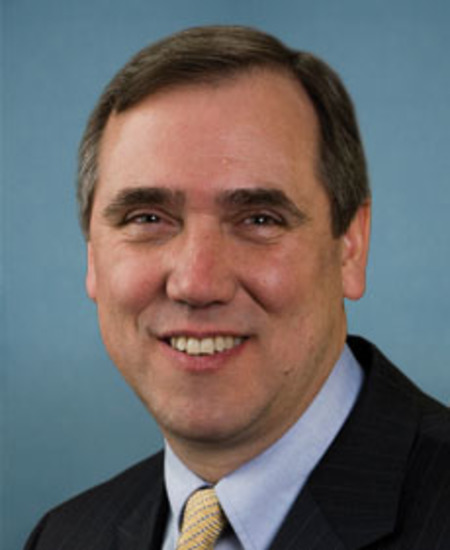
Sen. Jeff Merkley
Sponsored bills
Elementary and Secondary School Counseling Act This bill directs the Department of Education to award formula grants to state educational agencies and, through them, subgrants to local educational agencies to increase access to school-based, mental-health-services providers at high-need public elementary and secondary schools.
Protecting Community Television Act This bill revises the definition of a franchise fee that is paid by a cable operator or cable subscriber to encompass only a tax, fee, or other monetary assessment that is imposed by a franchising authority or other governmental entity.
Maddy summaryThis is a ceremonial Senate resolution (SRES 470) commemorating the death of former U.S. Senator Bob Dole of Kansas. It formally expresses the Senate's sorrow, requests the Secretary of the Senate transmit a copy to Dole's family, and directs the Senate to adjourn as a mark of respect. The resolution has no policy or legal effect - it solely serves as a symbolic tribute to Dole's public service career. It does not affect any individuals or enact new laws.
Maddy summarySJRES 31 is a joint resolution that would block a specific foreign military sale to Saudi Arabia. The sale, submitted to Congress under the Arms Export Control Act, includes 280 advanced air-to-air missiles, 596 missile launchers, and related support equipment. If enacted, the resolution would prohibit the U.S. government from proceeding with this transaction. This directly affects the U.S. government's ability to transfer these defense articles to Saudi Arabia.
This resolution expresses that the International Atomic Energy Agency (IAEA) plays an indispensable role in strengthening nuclear security and safety around the globe. The resolution also reaffirms that the United States has a vital interest in preventing the spread of nuclear weapons and securing nuclear materials.
PrEP Access and Coverage Act This bill requires private health insurance plans to cover prescription drugs that prevent HIV, including related screenings, diagnostic procedures, administrative fees, and clinical follow-ups, without any cost-sharing obligation for the plan holder. Further, insurance plans must not impose any preauthorization requirement for this coverage. These coverage requirements also apply to public health insurance programs, including Medicare, Medicaid, and the Children's Health Insurance Program. Additionally, the bill prohibits denying, limiting, or qualifying coverage or increasing premiums for disability insurance, long-term care insurance, or life insurance policies based on an individual taking medication for HIV prevention. The bill further requires the Department of Health and Human Services to award grants to states, or directly to eligible local organizations, to provide uninsured individuals and underinsured individuals access to prescription drugs and related services that prevent HIV. The Centers for Disease Control and Prevention also must develop a public awareness campaign that focuses efforts in communities with a high need for HIV prevention treatment.
Protecting America's Meatpacking Workers Act of 2021 This bill addresses workplace conditions and safety with a particular focus on meat and poultry processing establishments and makes other changes to agricultural programs and activities. Generally, the bill provides funding through FY2027 for hiring additional Occupational Safety and Health Administration (OSHA) inspectors and related activities. It also restricts an employer's use of certain attendance policies under which a worker is assessed points for absences with progressive discipline imposed as points accumulate. Additionally, the bill expands protections for workers who exercise their rights under occupational safety and health laws and regulations. This includes specific protections and procedures for workers of meat and poultry processing establishments. The bill expands workplace safety and health requirements that apply to meat and poultry processing establishments, including by prohibiting waivers (subject to limited exceptions) related to line speeds and inspections. Additionally, OSHA must issue standards for these establishments that address, for example, ergonomic program management and preventing occupational exposure to COVID-19. OSHA must also (1) establish, within seven days, a process for establishments to report COVID-19 information; and (2) publish certain regulations regarding a workers' representative accompanying an OSHA inspector during inspections of an establishment. The bill provides funding through FY2031 for, and imposes additional conditions on recipients of, grants to improve meat and poultry processing facilities. Further, the bill increases funding for a program that supports regional and local food systems. It also requires country-of-origin labeling of beef, pork, and dairy products.
Healthy Maternity and Obstetric Medicine Act or the Healthy MOM Act This bill expands health insurance coverage availability for pregnant individuals. It requires health insurers, health insurance exchanges, and group health plans to offer a special enrollment period to pregnant individuals. The special enrollment period offered by an insurer or exchange must begin when the pregnancy is reported to the insurer or exchange. The special enrollment period offered by a group health plan must begin when the pregnancy is reported to the plan or is confirmed by a health care provider. The bill also makes pregnancy a qualifying life event for the purpose of enrolling in a federal employee health benefit plan. Additionally, a group health plan or health insurer that covers dependents must provide coverage for maternity care to all covered individuals. Any individual who is eligible for Medicaid and is, or becomes, pregnant maintains such eligibility for one year after the end of the pregnancy. The bill revises the range in which a state must establish a maximum level of family income for pregnant women and infants to be eligible for Medicaid. The upper limit of the range is eliminated and the lower limit is set to the level in place on January 1, 2014.
Smaller Class Sizes for Students and Educators Act of 2021 This bill directs the Department of Education to award grants for local educational agencies to reduce class sizes in the early elementary grades (grades K-3) in targeted public elementary schools by recruiting, hiring, and supporting qualified teachers.