

Maddy summaryThe Radiation Exposure Compensation Act Amendments of 2023 extends the timeframe for individuals to file claims related to radiation exposure from nuclear testing and uranium mining operations. It increases compensation amounts for certain claims from $50,000-$75,000 to $150,000, expands eligibility criteria for leukemia and other specified diseases, and adds medical benefits for claimants. The bill extends the fund's operational period from 2 years to 19 years after enactment, allows affidavits to support claims, and creates a new $3 million annual grant program to study uranium mining's health impacts. These changes primarily affect individuals exposed to radiation during atmospheric nuclear testing (1944-1962) or who worked in uranium mines/mills (1942-1990), including miners, millers, core drillers, and their family members.
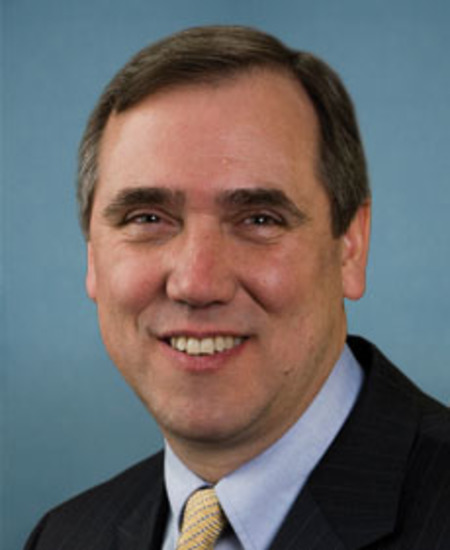
Sen. Jeff Merkley
Sponsored bills
Maddy summaryThe Build Housing with Care Act of 2023 establishes a competitive grant program to fund the co-location of affordable housing developments with licensed child care providers. It directly affects low-income families in housing facilities, particularly in "child care deserts" (areas with severe shortages of licensed providers), by requiring grantees to partner with eligible child care providers serving these communities. Key mechanisms include awarding grants up to $10 million per project for planning, construction, or renovation of co-location facilities, with priority given to projects in underserved areas or serving very-low-income families. The program requires applicants to certify no resident evictions will occur, include resident engagement plans, and demonstrate compliance with environmental and licensing standards, with $100 million authorized annually for fiscal years 2024-2029.
Maddy summaryThe HELP Act of 2023 allocates federal funding to strengthen 211 information and referral services and 988 mental health crisis services nationwide. It requires states to coordinate these services to ensure 24/7 availability, improve accessibility for people with disabilities, and reduce inappropriate 911 calls by connecting individuals with human services instead of law enforcement. The bill authorizes $550 million annually for 2024-2025 (split between 211 and 988 services) and $450 million annually for 2026-2030, with states required to establish oversight bodies to monitor service quality and racial equity. States must use funds to expand access to mental health and human services, particularly in underserved communities, while tracking how many 911 calls are diverted to appropriate services.
Maddy summaryThe BAN Fossil Fuel Exports Act would give the President authority to restrict U.S. exports of coal, petroleum, natural gas, and energy-related equipment. It specifically prohibits exports of U.S. crude oil and natural gas, with possible exemptions if the President determines they serve national interest. Exemptions could be based on destination, purpose, or other criteria, but must align with the bill's goals. This directly affects U.S. energy producers and exporters seeking international markets for fossil fuels.
Maddy summaryThe Affordability is Access Act of 2023 requires health insurance plans to cover over-the-counter contraceptives approved by the FDA without cost-sharing (such as copays or deductibles). It directly affects millions of people, especially those who rely on birth control but face cost barriers, including low-income individuals and people in contraceptive deserts. The bill clarifies that insurance coverage must include FDA-approved OTC contraceptives even without a prescription, and it mandates retailers to provide accurate information about these products without interfering with access. Retailers may refuse to sell the product if payment cannot be made, but they cannot block access or spread misinformation.
Maddy summaryThe Real Education and Access for Healthy Youth Act of 2023 would establish federal grant programs to fund comprehensive sex education and sexual health services for young people aged 10-29. It authorizes $100 million annually to support evidence-based sex education in schools and colleges, educator training, and youth-friendly sexual health services specifically designed for marginalized young people including Black, Indigenous, Latine, Asian American, Native Hawaiian, Pacific Islander, and LGBTQ+ youth. The bill prohibits funding for abstinence-only education and requires programs to be medically accurate, culturally responsive, trauma-informed, and inclusive of diverse gender identities and sexual orientations. Grants would require reporting on how services reach diverse youth populations, including disaggregation by race, ethnicity, sexual orientation, and gender identity. This legislation aims to address current gaps in sex education that disproportionately affect marginalized young people.
Maddy summaryThis bill prohibits the use of "unlawful seclusion or restraint" in schools receiving federal funding, including mechanical, chemical, and certain physical restraints that pose risks to students. It requires schools to implement positive behavioral interventions instead of restraint, mandates staff training in crisis intervention, and establishes procedures for reporting and following up after restraint incidents. The bill requires states to create monitoring plans and collect detailed data on restraint use, with specific reporting requirements for schools and Head Start programs. Schools must provide immediate parent notification after restraint incidents and hold meetings to discuss prevention strategies. The bill applies to public schools, special education schools, and other federally funded programs, but does not affect private schools not receiving federal support or home schools.
Maddy summaryThis bill extends Medicare reimbursement rate increases for ground ambulance services through 2028. It adjusts specific payment percentages for ambulance providers: maintaining a 26.7% rate increase for "super rural" ambulance services and setting 4.3% and 3.4% increases for other ground ambulance services during 2025-2028. These changes directly affect Medicare beneficiaries using ground ambulance services and the ambulance providers who serve them, particularly in rural areas. The bill modifies existing Social Security Act provisions to adjust payment rates without altering Medicare eligibility or coverage rules. It provides temporary rate adjustments to help sustain ambulance service availability during this period.
Maddy summaryThe AIR PUMP Act requires airlines (air carrier employers) to provide crewmembers - such as flight attendants and pilots - with reasonable break time to express breast milk for up to one year after childbirth and a private, non-bathroom space for that purpose. These accommodations cannot be required during critical flight phases (e.g., takeoff or landing) and must not compromise flight safety, security, or require significant expense (like aircraft modifications). The bill also prohibits airlines from retaliating against employees who use these accommodations or file complaints. Violations would be enforced by the Secretary of Labor under existing Fair Labor Standards Act penalties.
Maddy summarySRES 215 is a Senate resolution designating May 9, 2023, as National Fentanyl Awareness Day. It supports raising public awareness about the dangers of fake or counterfeit fentanyl pills, which are often disguised as legitimate medications and contribute to overdose deaths. The resolution encourages existing law enforcement efforts to combat counterfeit pill distribution and acknowledges the severe impact of fentanyl on young people, citing statistics on rising overdose deaths. It does not create new laws or funding but formally recognizes the issue through congressional support.