

Maddy summaryThis bill establishes a 15-member Commission to investigate historical discrimination against LGBTQ+ service members in the U.S. military. The Commission will document policies from WWII onward that led to discharges based on sexual orientation or gender identity, gather testimonies from affected veterans, and examine impacts on mental health, benefits access, and career opportunities. Key mechanisms include public hearings, compiling historical records, analyzing disparate impacts on racial minorities and women, and recommending specific remedies like record upgrades, improved healthcare data collection, and formal apologies. The Commission must submit a report to Congress within one year, focusing on concrete policy changes to address past harms and improve inclusion.
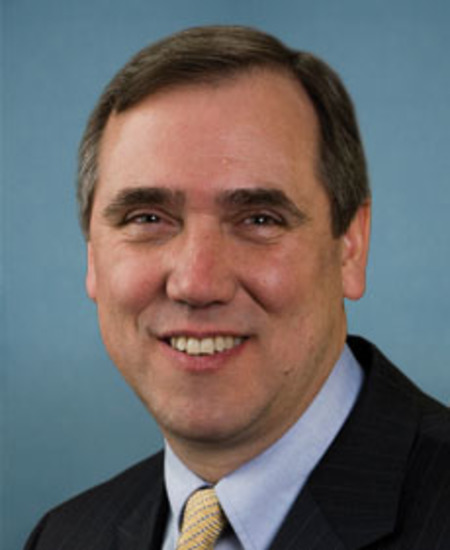
Sen. Jeff Merkley
Sponsored bills
Maddy summarySRES 349 is a symbolic Senate resolution designating September 19, 2023, as "National Stillbirth Prevention Day." It recognizes that approximately 21,000 pregnancies end in stillbirth annually in the U.S., with higher risks for Black, Hispanic, Native Pacific Islander, and Indigenous families. The resolution calls for increased public awareness, support for evidence-based prevention efforts, and better data collection to address this issue. It requests the President issue a proclamation encouraging nationwide observance through awareness programs, without creating new laws or funding.
Maddy summaryThis Senate resolution symbolically designates September 2023 as "National Voting Rights Month" to raise awareness about voting rights history and current challenges. It recommends Congress pass specific voting rights legislation (like the Freedom to Vote Act and Democracy Restoration Act) and encourages public education on voting accessibility, registration, and historical voter suppression. The resolution has no binding effect on policy or funding - it serves as a symbolic recognition and call to action for voting rights advocacy.
Maddy summaryThis bill requires states to allow eligible voters to register or update their registration at polling places on election day for federal elections, starting with the November 2024 general election. It mandates that polling places provide the necessary forms for registration or changes, directly affecting voters and state election systems. States already without voter registration requirements for federal elections are exempt. The law includes a phased implementation for states needing time, requiring at least one compliant location per 15,000 voters in each jurisdiction before November 2026.
Maddy summaryThe Civilian Climate Corps for Jobs and Justice Act establishes a national service program to create climate-related jobs and provide workforce development, with a focus on historically underserved communities including low-income communities, communities of color, and tribal communities. The program would recruit 50,000-400,000 participants annually by 2028 to work on climate resilience projects like energy-efficient building retrofits, wildfire prevention, and pollution remediation. Participants would receive a minimum $17/hour living allowance, health care, and $25,000 in educational benefits upon completion, with 50% of projects required to be located in under-resourced communities of need, including 10% in Indian country. The bill also includes provisions to ensure worker protections, including the right to organize and collective bargaining, and requires coordination with tribal nations to respect tribal sovereignty.
Maddy summaryThis bill prohibits states from automatically removing voters from registration lists due to factors like not voting or not responding to mail. It requires states to use only objective evidence (such as death records or proof of permanent move out of state) for removals and mandates 48-hour notice to voters with reinstatement options. Voters who move within a state can update their address through election day to vote at their new location. The law directly affects registered voters and election officials who must implement these verification and notice requirements.
Maddy summaryThe Schedules That Work Act requires employers in retail, food service, hospitality, and cleaning industries to provide 14 days' advance notice of work schedules and pay predictability pay for last-minute changes. It gives eligible nonexempt workers the right to request schedule adjustments for family care, health needs, education, or second jobs, with employers required to grant these requests unless they have a bona fide business reason for denial. The law applies to covered employers with 15 or more workers and prohibits retaliation against employees who exercise these rights. The legislation aims to address widespread issues with unpredictable scheduling that disproportionately affect low-wage workers, particularly women and people of color, by providing greater schedule stability and control.
Maddy summaryThe Register America to Vote Act of 2023 would require states to automatically register eligible citizens to vote when they turn 18 or when they interact with state motor vehicle authorities for services like license applications, with an option to decline. States would need to establish electronic systems to transfer registration information from motor vehicle offices to election officials, updating voter registration without requiring additional action from citizens. The bill includes strong privacy protections for voter information and requires states to modernize registration systems to improve accuracy and accessibility, particularly benefiting young people, individuals with disabilities, and racial and ethnic minorities. It also provides $3 billion in federal funding to help states implement these changes by 2024.
Maddy summaryThis proposed constitutional amendment would give Congress and states the authority to regulate campaign contributions and spending, including setting limits and prohibiting corporations from spending money to influence elections. It explicitly protects freedom of the press by stating the amendment cannot be used to abridge it. If ratified by three-fourths of state legislatures, it would establish a new constitutional standard for campaign finance regulation.
Maddy summaryThe Veteran Families Health Services Act of 2023 provides fertility treatment and counseling services to active duty military members and veterans with infertility conditions, along with adoption assistance for veterans. It requires the Department of Defense to establish fertility preservation procedures before deployment or hazardous assignments, including cryopreservation and storage of reproductive genetic material at no cost to service members. The bill ensures these services are provided without regard to sex, gender identity, sexual orientation, or marital status, with specific limits on in vitro fertilization (three completed oocyte retrievals, unlimited embryo transfers per medical guidelines). It creates coordination between the Department of Defense and Department of Veterans Affairs to ensure seamless transitions of care and adds adoption assistance with a limit of three covered adoptions. The legislation specifically covers veterans with service-connected disabilities affecting reproductive health, such as spinal cord injuries, military sexual trauma, or certain mental health conditions.