

Maddy summaryThis bill requires federal agencies to adjust contract prices for contractors who suspended work due to government shutdowns (lapses in appropriations). It mandates that contractors receive reimbursement for reasonable costs incurred to pay furloughed or laid-off employees their standard wages during the shutdown, or to restore paid leave used during the shutdown. The reimbursement is capped at $1,442 per week (pro-rated for part-time work) and must be documented by contractors. It directly affects federal contractors and their employees who experienced pay disruptions during the 2023-2024 government shutdowns.
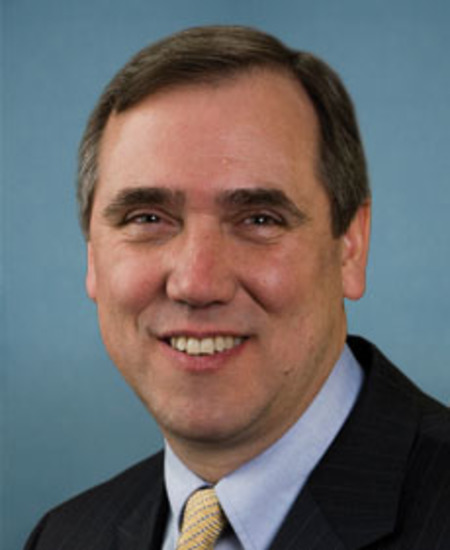
Sen. Jeff Merkley
Sponsored bills
Maddy summaryThe SHOP SAFE Act of 2023 holds online marketplaces (like Amazon or eBay) financially responsible if third-party sellers on their platforms sell counterfeit products that pose health or safety risks, such as unsafe consumer goods. To avoid liability, platforms must implement specific, free measures: verify seller identities, proactively screen listings for counterfeits, quickly remove suspicious items, and terminate sellers who repeatedly sell fake products. The law applies to platforms with $500,000+ in annual sales or smaller platforms after receiving 10 verified counterfeit notices. It defines "health-safety-implicating goods" as products that could cause harm if not made to safety standards (e.g., faulty electronics or unsafe toys). The bill aims to shift accountability to platforms for counterfeit sales that endanger consumers, without restricting other trademark protections.
Maddy summaryThis joint resolution commemorates the fifth anniversary of the murder of Saudi journalist Jamal Khashoggi, who was killed in 2018 at the Saudi consulate in Istanbul. It calls on the Saudi government to ensure accountability for those responsible for his death, release individuals wrongfully detained (including activists and dissidents), lift travel bans on critics, and respect freedoms of assembly and expression. The resolution notes that the U.S. has already sanctioned 17 Saudi officials under the Global Magnitsky Act for their role in the murder. As a non-binding resolution, it urges the executive branch to pursue these actions without creating new legal obligations.
Maddy summarySRES 378 is a Senate resolution designating September 25-October 1, 2023, as "Asian American and Native American Pacific Islander-Serving Institutions Week." It recognizes the work of institutions that enroll at least 10% Asian American, Native Hawaiian, or Pacific Islander students and highlights their role in serving over 46% of such students nationwide. The resolution encourages eligible institutions to seek federal funding and marks the 16th anniversary of the program established by the 2007 College Cost Reduction Act. It does not create new policies or funding but formally acknowledges these institutions' contributions to higher education.
Maddy summaryThis bill replaces "Columbus Day" with "Indigenous Peoples’ Day" as the official federal holiday observed on the second Monday in October. It amends U.S. Code Section 6103(a) and updates all existing federal laws, regulations, and official documents to use the new holiday name instead of Columbus Day. The change directly affects federal government operations, including employee pay, public office closures, and official communications on that date.
Maddy summaryThis Senate resolution (SRES 372) expresses concern about the rising trend of book bans in U.S. schools and libraries, citing PEN America data showing nearly 3,400 book removals affecting 1,557 titles from July 2022-June 2023. It specifically highlights disproportionate bans targeting books with LGBTQ+ themes (36%) or content about race/racism (37%), including titles like *The Handmaid’s Tale* and *Maus*. The resolution urges local schools and libraries to follow established guidelines (e.g., from the American Library Association) when addressing book challenges and reaffirms support for First Amendment rights to read and access diverse perspectives. It does not create new laws but formally calls for protecting students’ access to literature reflecting diverse viewpoints.
Maddy summaryThis bill requires federal agencies to provide naloxone kits and annual employee training on their use, with rules to be issued by the Occupational Safety and Health Administration (OSHA) within 270 days. It also provides non-binding guidance to private employers about acquiring kits and training staff annually. Federal agencies - including the Veterans Health Administration - must comply with the new requirements, while private businesses receive recommendations but face no mandates. The law aims to improve workplace response to opioid overdoses by standardizing access to reversal medication.
Maddy summaryThis bill establishes a federal grant program to help schools obtain naloxone, a medication that reverses opioid overdoses. It provides funding for public and private elementary and secondary schools to maintain accessible naloxone supplies and train staff (like school nurses) to administer it during emergencies. Schools must certify they have trained personnel on-site during operating hours, maintain the medication in accessible locations, and confirm their state offers legal protection for staff using naloxone. The grant program requires states to verify their civil liability laws cover school personnel acting in good faith during overdose emergencies.
Maddy summaryS 2960, the "Expanding the VOTE Act," requires states and local election officials to provide voting materials (including digital and printed ballots, notices, and instructions) in minority languages when communities meet specific population thresholds. It clarifies that "voting materials" now explicitly include digital content and mandates new notices for jurisdictions near population thresholds. For American Indian and Alaska Native communities with unwritten languages, it requires oral assistance instead of written translations, while still mandating written materials for election workers. The bill also creates $15 million in grants to help jurisdictions provide materials in languages that don’t yet meet coverage thresholds, and directs a study on lowering population thresholds for language access requirements.
Maddy summaryS 2932, the Housing ACCESS Act, requires the federal government to create guidance helping states connect Medicaid beneficiaries (people receiving medical assistance) with housing services. It directs agencies to simplify coordination between healthcare and housing providers, develop agreements aligning eligibility and outcomes tracking, and support housing providers in seeking Medicaid reimbursement. The bill also mandates a national study to set fair reimbursement rates for housing services, aiming to ensure living wages, reduce staff turnover, and maintain a 1:15 case manager-to-client ratio. States must report on progress within two years, focusing on racial equity in housing stability and health outcomes.