

Maddy summary# Summary of the Protecting Communities from Plastics Act This comprehensive legislation aims to address the environmental and health impacts of plastic production and pollution through several key provisions: ## Core Focus Areas 1. **Environmental Justice Protections** - Requires environmental justice assessments for permits to new plastic facilities - Mandates consultation with fenceline communities (communities near plastic facilities) - Requires community benefit agreements for permitted facilities - Establishes requirements for real-time air and water quality monitoring 2. **Stricter Regulations for Plastic Facilities** - Prohibits new permits for covered plastic facilities during a temporary pause period - Requires new air and water pollution standards for plastic production facilities - Implements stricter emissions controls (including for benzene, VOCs, and flaring) - Requires continuous emissions monitoring for all combustion devices 3. **Toxic Substances Regulation** - Mandates an inventory of plastic manufacturing and distribution - Requires reporting on plastic chemicals and their health impacts - Prioritizes toxic chemicals like styrene and vinyl chloride for regulation 4. **Plastic Waste Management** - Prohibits exports of plastic waste to non-OECD countries - Requires hazardous waste designation for discarded polyvinyl chloride - Limits plastic pellet discharge into waterways 5. **Microplastics Research** - Mandates studies on microplastics in food and the environment - Establishes a pilot program to test microplastic removal technologies - Requires research on microplastics in human bodies 6. **Agricultural Plastic Reduction** - Promotes biodegradable alternatives to plastic weed barriers - Creates grants for reducing single-use plastics in agricultural packaging The legislation establishes a comprehensive framework to reduce plastic pollution at every stage of the plastic lifecycle, with particular emphasis on protecting vulnerable communities disproportionately impacted by plastic production and pollution. It represents a significant regulatory shift toward holding plastic producers accountable for the environmental and health impacts of their products.
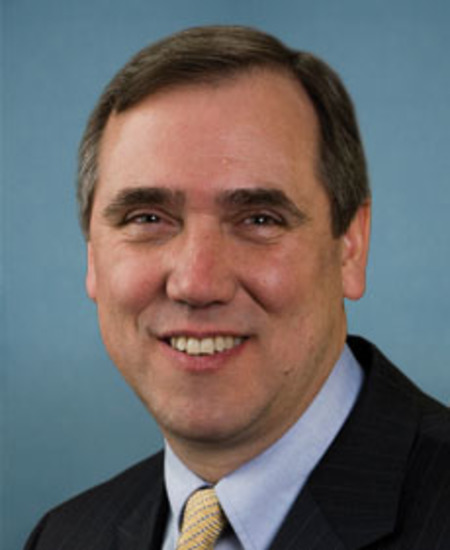
Sen. Jeff Merkley
Sponsored bills
Maddy summaryThis bill amends federal funding rules to support stillbirth prevention programs. It allows funds under the Social Security Act to cover evidence-based activities like tracking fetal movements, improving birth timing for high-risk pregnancies, smoking cessation support, and community home visits. The bill directly affects pregnant individuals, particularly those in higher-risk groups identified in the findings (such as Black mothers, those with medical conditions like diabetes, or those aged 35+). Key provisions update funding language to explicitly include stillbirth prevention research and programs, aiming to address disparities where stillbirth rates are significantly higher among certain demographics. The bill focuses on concrete policy changes to expand access to proven prevention strategies.
Maddy summaryThis bill increases federal funding for Medicaid home and community-based services (HCBS) by raising the federal share (FMAP) by 10 percentage points for states during 2024-2025, capped at 95%. States must apply with plans to use these funds to increase wages and benefits for home care workers (like paid leave and hazard pay), reduce waiting lists for services, help people return from institutional settings, and cover related costs like equipment or training. Funds must supplement, not replace, existing state spending and be reported on by states by 2027. It directly affects states administering Medicaid HCBS programs, home care workers, and people receiving community-based care.
Maddy summaryThe Safe Schools Improvement Act (S 3105) requires states receiving federal education funding to mandate public elementary and secondary schools to adopt comprehensive anti-bullying policies. These policies must prohibit bullying based on protected characteristics like race, gender identity, disability, or religion, include annual parent/student notices, establish complaint procedures, and collect anonymized data on incidents. Schools must publicly report annual data on bullying frequency at the school and district levels. The law also requires states to submit biennial reports on implementation and triggers a federal evaluation to assess the policy's impact on reducing bullying. It explicitly states the law supplements, but does not replace, existing civil rights protections like Title IX.
Maddy summaryThis bill directs the U.S. government to strengthen its relationship with Taiwan through concrete policy actions. It requires creating an interagency task force to develop a 21st-century partnership strategy, mandates treating Taiwan's democratically elected government as its legitimate representative (replacing outdated terms like "authorities"), and directs efforts to promote Taiwan's meaningful participation in international organizations and security forums. The bill also directs strategies to counter Chinese coercion tactics targeting U.S. businesses and entities regarding Taiwan, including developing a code of conduct and responding to disinformation campaigns. These provisions aim to enhance U.S.-Taiwan cooperation under existing frameworks like the Taiwan Relations Act, without altering U.S. diplomatic recognition of Taiwan.
Maddy summaryS. RES. 420 designates Betty K. Koed as Historian Emerita of the U.S. Senate, effective October 21, 2023, honoring her 25-year career as the Senate's first female Historian (serving from 2015-2023 after roles as Assistant and Associate Historian). The resolution recognizes her work preserving Senate archives, producing historical publications, and supporting educational programs about Senate history. It is a ceremonial honor with no policy changes or direct impact on legislation or constituents.
This resolution states that the Senate stands with Israel as it defends itself, reaffirms Israel's right to self-defense, and calls on all countries to unequivocally condemn Hamas' war on Israel. The resolution also reaffirms the United States' commitment to Israel's security, supports emergency resupply and certain other types of assistance to Israel, and calls on the United States to lead an international effort to deprive Hamas of Iranian and other sources of funding and lethal assistance. Furthermore, the resolution states that nothing in it may be construed as a declaration of war or an authorization for the use of military force.
Maddy summaryThis bill amends the Fair Credit Reporting Act to define "medical debt" as debts from medical services and prohibits credit bureaus from including medical debt in credit reports. It also requires the Consumer Financial Protection Bureau to update regulations within one year, banning creditors from using medical debt information when making credit decisions. The law directly affects consumers with medical debt (such as unpaid hospital bills) and creditors who rely on credit reports for lending. Key changes include removing medical debt from credit reports and preventing its use in credit evaluations, aiming to reduce how medical costs impact credit scores.
Maddy summaryThis bill requires the President to appoint one new Supreme Court justice every two years (within 120 days of the first and third years of each presidential term), replacing the current system of lifetime appointments. It mandates that the Court always maintain exactly nine justices, with appointments beginning on July 1 unless made to fill a vacancy below nine justices. The bill also specifies that only the nine most recently appointed justices serve on appellate cases, while all justices handle original jurisdiction cases. This would fundamentally change the Court's composition and appointment process, effective after the first full presidential term following enactment.
Maddy summarySRES 412 is a symbolic Senate resolution supporting approximately 150,000 United Auto Workers (UAW) members negotiating new contracts with General Motors, Ford, and Stellantis (the "Big Three" automakers"). It expresses the Senate's backing for UAW demands for fair wages, benefits, and working conditions, citing corporate profits and stagnant worker pay. The resolution specifically calls on the automakers to negotiate in good faith and offer a fair contract, without creating new legal requirements or funding. As a non-binding resolution, it serves as a statement of support rather than a policy change.