

Maddy summaryThis bill would admit Washington, D.C. as the 51st state, officially named "State of Washington, Douglass Commonwealth," granting it full representation in Congress with two Senators and one Representative. It would establish a "Capital" area within the new state that remains under federal jurisdiction, including the White House, Capitol Building, and other key government properties. The bill would repeal the District of Columbia's congressional delegate position and the 23rd Amendment, which currently provides D.C. with electoral votes in presidential elections. It would also provide for the transition of federal properties, courts, and government functions while maintaining federal control over the Capital area.
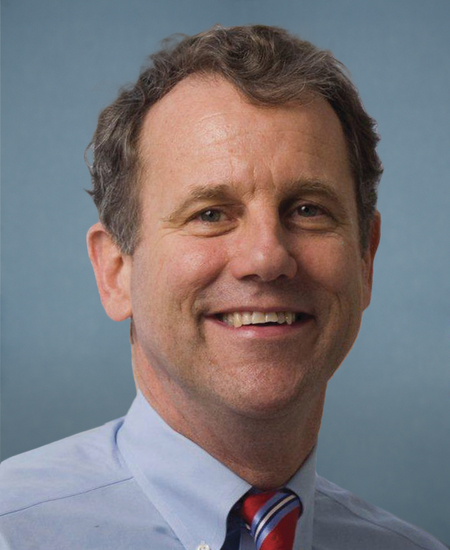
Sen. Sherrod Brown
Sponsored bills
Maddy summaryS 45 extends a tax credit for employer social security taxes paid on employee tips to beauty service establishments (like salons, spas, and barbershops), directly affecting businesses where tipping is customary for services such as hair care, nail care, or esthetics. It creates a "safe harbor" that protects businesses from IRS tip audits if they implement employee tip reporting training, monthly tip tracking, and maintain records for four years. The bill also requires businesses renting space to beauty service providers (e.g., salon landlords) to report annual rental income over $600 to the IRS. Finally, it mandates a 5-year GAO study on how the tax credit impacts small business tax compliance and employee benefits.
Maddy summaryThe BUILD for Veterans Act of 2023 aims to improve how the Department of Veterans Affairs manages its physical infrastructure, including buildings, land, and related assets used to deliver health care and services to veterans. Key provisions require the VA to establish dedicated staffing for capital asset management at medical centers, develop performance metrics to track progress, and create a comprehensive 10-year strategic plan addressing staffing, budgeting, and planning needs. The bill also mandates climate resilience reviews for VA facilities, centralized management of asset disposal and reuse, and regular reports to Congress on capital asset projects, funding requirements, and performance metrics. These changes directly affect VA's operations across all medical centers, facilities, and infrastructure assets under its jurisdiction, aiming to make capital asset management more efficient and responsive to veterans' needs.
Maddy summaryThis bill establishes a 13-member commission to study the history of slavery in the U.S. and its ongoing effects on African Americans. The commission will examine slavery from 1619 to 1865, post-emancipation discrimination (including Jim Crow, redlining, and educational inequity), and current disparities in wealth, incarceration, and health. It will compile evidence and recommend potential remedies to Congress, including educational initiatives and frameworks for compensation, but does not authorize any reparations payments. The commission must submit its findings within one year of its first meeting.
Maddy summaryThis bill creates a refundable tax credit for restaurants and food service businesses that suffered pandemic-related revenue losses. Eligible businesses can claim up to $25,000 per calendar quarter in credit against payroll taxes for wages paid between January 2023 and December 2023, provided they met revenue loss criteria (50% drop in 2020 or 70% in 2021 vs. 2019) and were established before March 2020. The credit directly helps small food service businesses by offsetting payroll costs during recovery, with excess credit refundable if it exceeds payroll tax obligations. It applies only to businesses that qualified under the American Rescue Plan Act but did not receive initial SBA grants.
Maddy summaryThis bill would ban the sale, manufacture, transfer, and possession of most semiautomatic rifles, pistols, and shotguns meeting specific criteria defined as "assault weapons," as well as large capacity ammunition magazines holding more than 10 rounds. The ban would not apply to weapons already owned before enactment, or to certain types like bolt-action rifles, antique firearms, or weapons used by law enforcement. The bill would require identification markings on new assault weapons and magazines, require background checks for transfers of "grandfathered" weapons, and authorize federal buy-back programs for banned weapons through Byrne grants. It includes exemptions for military, law enforcement, and certain historical firearms.
Childhood Cancer Survivorship, Treatment, Access, and Research Reauthorization Act of 2022 or the Childhood Cancer STAR Reauthorization Act This act reauthorizes through FY2028 and modifies pediatric cancer research and related programs, including to expand collection of and access to relevant biospecimens and to support the transition of pediatric cancer survivors to primary care.
Iran Hostages Congressional Gold Medal Act This bill provides for the award of a Congressional Gold Medal to the 53 hostages of the Iran Hostage Crisis (November 4, 1979-January 21, 1981) in recognition of their bravery and endurance throughout their captivity.
Supply Chain Disruptions Relief Act This bill modifies the treatment of liquidations of new motor vehicle inventory as qualified LIFO (last in first out accounting method) inventory. It allows new motor vehicle dealers to elect to wait until the end of 2025 to replace their inventory for purposes of determining income attributable to the sale of such inventory during 2020 and 2021.
Robert C. Byrd Mine Safety Protection Act of 2022 This bill revises requirements governing (1) investigations of mine accidents, (2) miners' rights and protections (e.g., whistle-blower rights and protections), (3) mine health and safety standards, (4) underground coal mines, and (5) health and safety training for miners. The Department of Labor, when investigating coal or other mines, must (1) determine why an accident occurred and whether there were violations of law, mandatory health and safety standards, or other requirements; and (2) make recommendations to avoid a recurrence of an accident. The bill expands Labor's enforcement authority, including by requiring Labor to (1) revoke the approval of mine operators' plans or programs based on certain criteria, and (2) order mine operators to withdraw all persons from a mine until Labor approves a new plan. The bill revises civil and criminal penalties, including by subjecting a mine operator who knowingly violates health or safety standards to a felony punishable by up to five years in prison and a $1 million fine. Underground coal mine operators must implement a communication program to brief miners of current mine conditions and install atmospheric monitoring systems. The bill amends the Occupational Safety and Health Act of 1970 to expand its coverage to government employees and increase civil and criminal penalties for violations of the act. The bill also expands whistle-blower rights and protections against retaliation under the act, establishes employee rights with respect to work-related bodily injuries or death, and establishes procedures for correcting serious, willful, or repeated violations of occupational safety and health standards.