

Maddy summaryThis bill establishes a comprehensive sanctions framework targeting the Russian government and its affiliated entities in response to ongoing military actions. It authorizes the President to block assets, revoke visas, and prohibit financial transactions for Russian officials, military leaders, and foreign persons supporting Russia's defense industry or undermining Ukraine. The legislation also bans U.S. investments in Russian energy sectors, prohibits the purchase of Russian sovereign debt, and imposes high tariffs on Russian imports while restricting crude oil purchases by specific foreign nations. Additionally, the bill prevents Russian companies from listing on U.S. stock exchanges and includes mechanisms for terminating sanctions only if Russia signs a peace agreement accepted by Ukraine and ceases hostilities.
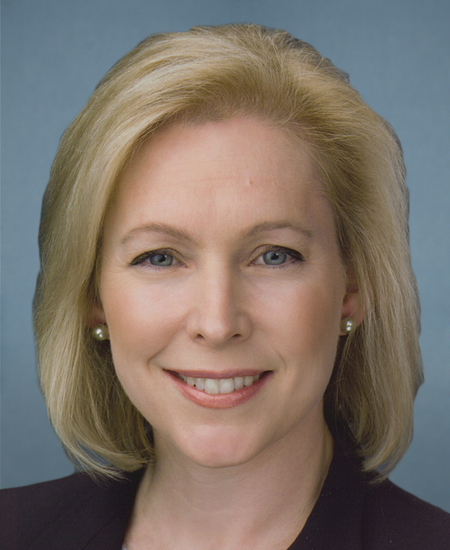
Sen. Kirsten E. Gillibrand
Sponsored bills
Maddy summaryThe Cannabis Administration and Opportunity Act fundamentally changes federal law by removing marijuana from the Controlled Substances Act, effectively decriminalizing it at the federal level and allowing states to regulate their own cannabis markets without federal interference. To manage this new landscape, the bill creates a new federal agency called the Alcohol, Tobacco, and Cannabis Tax and Trade Bureau to oversee licensing, collect taxes, and prevent illicit trade, while also establishing a new Center for Cannabis Products within the FDA to regulate safety and labeling. The legislation includes significant restorative justice measures, such as automatically expunging federal cannabis convictions and prohibiting discrimination against individuals with such records in areas like immigration, security clearances, and access to federal benefits. Additionally, the bill provides billions of dollars in funding to support research into the health effects of cannabis, expand access to financial services for legitimate cannabis businesses, and assist communities and individuals harmed by past prohibition enforcement.
Maddy summaryThe More Paid Leave for More Americans Act creates a federal grant program to help states establish or improve paid leave systems that offer up to six weeks of paid time off for reasons like illness, family care, or bonding. To receive funding, states must create a partnership with private entities to manage the program and agree to a national network that standardizes rules and technology across different states. The bill sets specific requirements for benefit amounts, such as providing at least 67 percent of an employee's weekly pay for low-income workers, and allows grants of up to $8 million per state to cover startup costs and ongoing operations. Additionally, the legislation authorizes funding for a national organization to build a shared technology system that helps workers apply for benefits regardless of which states they have worked in.
Maddy summaryThis joint resolution seeks to officially disapprove a specific rule issued by the Centers for Medicare & Medicaid Services regarding the implementation of prior authorization for certain Medicare services. The proposed action would prevent the rule, known as the WISeR Model, from taking effect, thereby stopping the new requirements from being enforced. If passed, the resolution would nullify the regulation and maintain the status quo for the affected healthcare services.
Maddy summaryThe Work Without Worry Act of 2026 changes how the Social Security Administration evaluates disability for children who receive benefits based on a parent's work record. It allows these children to be considered disabled even if their condition started before age 22 but continued after that age, removing the requirement that they remain disabled continuously until they apply for benefits. Additionally, the bill treats a child's application for benefits as a simultaneous request for their own disability or retirement benefits if they meet specific age and insurance criteria, though they will only receive the higher payment amount. These changes apply to applications filed at least two years after the law is enacted.
Maddy summaryThe Pharmaceutical Investment Oversight and Accountability Act requires the Federal Trade Commission to produce an annual report on foreign investment within the U.S. pharmaceutical industry. This report must assess how foreign ownership affects domestic drug manufacturing, supply chains, and the capacity to sequence or store DNA. The FTC will also review past investigations into these foreign transactions to determine how many were approved or blocked. Finally, the agency must publish a public summary of its findings on its website and share the full report with specific congressional committees.
Maddy summaryThe Language Access for All Act of 2026 requires all federal agencies to ensure individuals with limited English proficiency can meaningfully access government programs and services. To achieve this, agencies must translate vital documents into frequently encountered languages, add multilingual features to digital systems, and provide oral interpretation services, while also establishing a dedicated Language Access Coordinator in each agency. The bill mandates the creation of detailed language access plans and technical standards that cover both traditional communication methods and artificial intelligence tools, ensuring that AI is used only to assist rather than replace human interpreters. A new public complaint system will be established to track barriers to access, and agencies will be required to submit their plans and annual compliance reports to the Attorney General and Congress. Noncompliance with these requirements will be treated as discrimination under Title VI of the Civil Rights Act, allowing the Department of Justice to investigate and enforce the law.
Older Americans Act Reauthorization Act of 2025 This bill reauthorizes through FY2030, modifies, and establishes programs under the Older Americans Act, which supports social services and activities for individuals aged 60 years or older. Reauthorized programs and activities include the national eldercare locator service; regional aging and disability resource centers; grants to support counseling and assistance on pensions and other retirement benefits; grants to support home-delivered nutrition services (sometimes referred to as meals on wheels programs); programs to facilitate the delivery of supportive services to tribal organizations; and programs to prevent elder abuse, neglect, and exploitation. The bill also modifies existing programs for older individuals, including by explicitly permitting states to use certain grant funds to make carryout meals available at congregate meal sites or community locations. (Some providers began offering carryout meals to seniors in response to the COVID-19 pandemic.) Further, the bill permits the Administration on Aging to establish and operate, through grants to or contracts with eligible entities, a national resource center to support growth of the direct care workforce. The center’s activities may include the provision of training and technical assistance and the promotion of strategies to recruit and retain direct care workers. Finally, the bill establishes or reconvenes certain advisory groups, including (1) an advisory committee to provide guidance regarding the needs of older Native Americans and the implementation of related programs, and (2) a White House Conference on Aging to recommend improvements to federal programs that serve older individuals.
Maddy summaryThe Good Jobs for Good Airports Act establishes new federal standards to ensure that workers at small, medium, and large hub airports receive a living wage and adequate health benefits. It defines "covered service workers" to include employees in roles such as baggage handling, passenger assistance, security, ticketing, and concession services, regardless of whether they are directly hired by the airport or work for a contractor. Under the bill, employers must pay these workers at least the higher of the federal Service Contract Act wage rates or applicable state and local minimum wages, and they must provide similar fringe benefits. To enforce these rules, the Secretary of Labor and the Secretary of Transportation will have the authority to investigate violations, issue penalties, and require employers to submit monthly compliance certifications. Additionally, the law allows private individuals to file lawsuits against non-compliant employers and mandates annual reports to Congress on the implementation of these labor standards.
Maddy summaryThis Senate resolution honors the 27th anniversary of the Supreme Court's Olmstead v. L.C. decision, which established that states must offer community-based services to individuals with disabilities rather than forcing them into institutions. The bill affirms the legal requirement that people with disabilities should live in the most integrated settings possible and salutes those who have expanded home and community support services. It also condemns a recent Department of Justice opinion that challenges this integration mandate and calls on the department to rescind that opinion. Additionally, the resolution criticizes cuts to the Medicaid program and urges Congress to restore funding to protect the health and independence of people with disabilities.