

Maddy summaryS 280, the Global Health, Empowerment and Rights Act, removes barriers for foreign nongovernmental organizations (NGOs) seeking U.S. aid under the Foreign Assistance Act. It directly affects foreign NGOs providing health services (like counseling) with non-U.S. funds, ensuring they cannot be denied aid solely for offering such services if they comply with local laws and U.S. federal standards. The bill prohibits denying aid based on health services provided with non-U.S. funds and stops applying stricter rules on non-U.S. funds for advocacy to foreign NGOs compared to U.S. NGOs. This changes how the U.S. government evaluates eligibility for aid, making the process more consistent for foreign health-focused organizations.
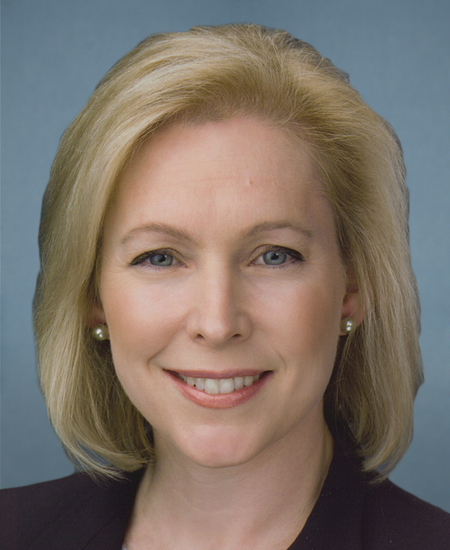
Sen. Kirsten E. Gillibrand
Sponsored bills
Maddy summaryThis bill provides federal grants to states and tribal entities to address "child care deserts" - areas with insufficient affordable, quality child care - by funding two key initiatives. It offers grants for workforce development (helping child care providers earn portable credentials and supporting training for new workers, especially those without college degrees) and facility construction/expansion (funding building or renovating centers and family child care homes in underserved areas). Grants cover 50% of eligible costs, including tuition, equipment, and facility improvements, while requiring states to coordinate with existing workforce programs and prioritize nontraditional hours and affordability. The law aims to increase access to quality child care for families in underserved communities by directly supporting providers and infrastructure.
Maddy summaryS 147 establishes a federal grant program to help communities create accessible clean air centers and provide free, certified air filters to low-income households with vulnerable members (such as seniors, people with asthma, or disabilities) during wildfire smoke events. Local air pollution agencies receive grants to partner with community groups, set up clean air centers in smoke-prone areas, and distribute at least 1,000 certified air filters per program to eligible households - along with filter replacements - at no cost. The program requires educational materials on filter use, post-distribution surveys to assess effectiveness, and annual reports to Congress on implementation and outcomes. This directly supports households at high health risk from wildfire smoke in underserved communities.
Maddy summaryThis Senate resolution (SRES 28) honors women who have served in combat roles in the U.S. Armed Forces. It recognizes their contributions, bravery, and sacrifices, specifically highlighting their service since 9/11 - including over 3,000 women earning combat badges - and acknowledges the Department of Defense opening all military roles to women in 2015. The resolution has no binding policy effect; it is a symbolic gesture to celebrate their service and inspire future generations.
Maddy summaryThis bill authorizes Congress to award a single Congressional Gold Medal to wildland firefighters collectively, recognizing their service in protecting forests, grasslands, and communities. It directs the Secretary of the Treasury to strike the medal with input from the National Interagency Fire Center, with the medal to be displayed at that center for public access and research. The bill also permits the sale of bronze duplicates at cost to cover production expenses, but does not create new benefits or policy changes for firefighters. The medal honors all federal, state, local, and contract wildland firefighters who serve in high-risk conditions, including those who have died or been injured in service.
Maddy summaryS 94, the "Miracle on Ice Congressional Gold Medal Act," authorizes three congressional gold medals for the 1980 U.S. Olympic Men's Ice Hockey Team members. The bill directs the Secretary of the Treasury to strike the medals, with one medal displayed at each of three locations: the Lake Placid Olympic Center, the U.S. Hockey Hall of Fame Museum in Minnesota, and the U.S. Olympic & Paralympic Museum in Colorado Springs. The legislation also permits the sale of bronze duplicates to cover costs, with proceeds going to the U.S. Mint. This is a commemorative measure recognizing the team's 1980 Olympic victory, not a policy change affecting current legislation or constituents.
Maddy summarySRES 19 is a Senate resolution honoring former President Jimmy Carter's life and legacy, commending his decades of public service, humanitarian work, and diplomatic achievements including the Camp David Accords and founding The Carter Center. The resolution specifically recognizes his Nobel Peace Prize, efforts to combat diseases like Guinea worm, and 30+ years of Habitat for Humanity homebuilding. It formally mourns his passing and extends condolences to his family, while highlighting his role in establishing U.S.-China diplomatic relations and creating the Departments of Education and Energy. As a symbolic resolution with no policy impact, it directly affects no individuals or entities but serves as a formal Senate tribute to Carter's historical contributions.
Maddy summaryThis bill adjusts tax credit rules for health insurance under the Affordable Care Act to make coverage more affordable for lower-income households. It replaces a flat income threshold with a sliding scale, reducing the percentage of income people pay for premiums based on their household income relative to the poverty line (e.g., 0% for incomes up to 150% of poverty, rising to 8.5% at 400%+). The change directly affects individuals buying insurance through health insurance marketplaces who qualify for tax credits. It takes effect for tax years beginning after 2025, modifying how the IRS calculates subsidy eligibility.
Maddy summaryThis bill amends the Seniors Farmers' Market Nutrition Program to include maple syrup as an eligible product for purchase with program benefits, alongside herbs and other agricultural items. It directly affects seniors participating in the program by expanding the range of locally produced agricultural goods they can buy using their benefits. The key change is a simple addition to the list of qualifying products in existing law, with no new funding or program structure.
Maddy summaryThe Washington, D.C. Admission Act would admit Washington, D.C. as a new state called "Washington, Douglass Commonwealth," granting it full representation with two U.S. Senators and one U.S. Representative. The bill would establish the new state's boundaries, with the area serving as the seat of government (the "Capital") remaining under federal jurisdiction for specific purposes. It would repeal the District of Columbia's congressional delegate position and its participation in presidential elections, while providing for a transition period overseen by a Statehood Transition Commission to handle the shift from district to state governance.