

Maddy summaryThis bill creates a new federal grant program to fund public transit improvements in cities. It provides 80% federal funding for urban transit systems to cover operating costs (like vehicle service), security enhancements (including personnel), and safety projects identified by safety committees. Recipients must certify they will maintain or increase their own funding levels for these services and cannot use funds to switch to third-party on-demand transit providers. The grants are allocated based on each city's reported transit operating expenses from the previous year.
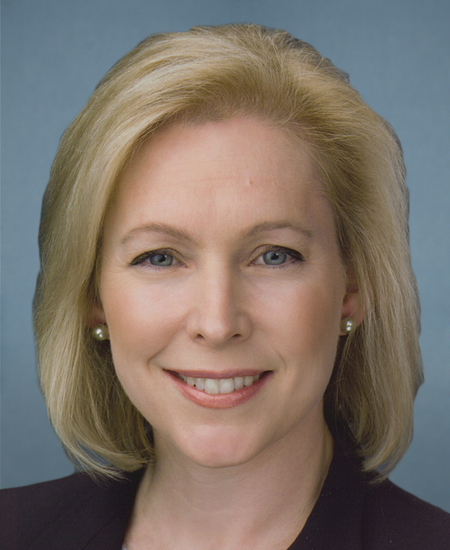
Sen. Kirsten E. Gillibrand
Sponsored bills
Maddy summaryThe Clean Water Standards for PFAS Act of 2025 requires the Environmental Protection Agency (EPA) to establish new water quality standards and industry-specific limits for PFAS chemicals (commonly called "forever chemicals") by 2028. It sets specific deadlines for the EPA to publish these standards for targeted industries, including plastics manufacturing and electroplating by 2026, textile mills and landfills by 2027, and leather tanning and paint manufacturing by 2028. The bill mandates immediate monitoring of PFAS discharges from these industries and other entities like airports, and requires the EPA to adopt a standardized testing method by January 2026. Additionally, it authorizes $200 million annually for five years to help wastewater treatment plants address PFAS contamination.
Maddy summaryThe PFAS Accountability Act of 2025 creates a federal legal cause of action for individuals significantly exposed to PFAS chemicals (linked to cancer, immune harm, and other health issues), allowing lawsuits against manufacturers or users who foresaw exposure risks. It establishes a presumption of significant exposure based on location near PFAS sources or blood test results, and enables courts to order medical monitoring for affected individuals to detect PFAS-related health problems. The bill shifts the costs of medical monitoring from victims to the responsible polluters and encourages new research into PFAS health effects. It does not replace existing state legal claims or remedies.
Maddy summaryThe International Human Rights Defense Act of 2025 establishes a permanent U.S. Special Envoy for LGBTQI+ rights at the Department of State, with the authority to coordinate all federal government efforts addressing discrimination and violence against LGBTQI+ people globally. The bill requires the development of a U.S. global strategy to prevent and respond to criminalization, discrimination, and violence against LGBTQI+ individuals, along with annual briefings to Congress on progress. It mandates that the Department of State's Country Reports on Human Rights Practices include detailed information about laws criminalizing or discriminating against LGBTQI+ people in all countries. The legislation also requires all U.S. government-funded programs to adopt inclusive nondiscrimination policies covering sexual orientation, gender identity, and sex characteristics. These provisions aim to strengthen U.S. foreign policy efforts to protect LGBTQI+ rights worldwide through coordinated diplomatic, humanitarian, and development initiatives.
Maddy summarySRES 483 is a ceremonial Senate resolution honoring Dr. Jane Goodall, who passed away on October 1, 2025. It pays tribute to her lifelong work as a primatologist, conservationist, and founder of the Jane Goodall Institute and Roots & Shoots program, which engages youth globally in environmental action. The resolution recognizes her scientific contributions - including groundbreaking chimpanzee research at Gombe - and her advocacy for wildlife protection, education, and community-based conservation efforts like Tanzania's TACARE program. As a non-binding resolution, it does not enact policy changes but formally commemorates her legacy.
Sentencing Accountability For Exploitation Act or the SAFE Act This bill directs the U.S. Sentencing Commission to review and amend its guidelines and policy statements applicable to federal criminal offenses involving the production, receipt, transport, shipment, or distribution of child sexual abuse material to (1) account for the actual and potential harm from the offense and changes since the last amendments with respect to the typical offense behavior and modern technologies, and (2) better reflect the spectrum of offender culpability.
Stop Sextortion Act This bill criminalizes threats to distribute child sexual abuse material to intimidate, coerce, extort, or cause substantial emotional distress. This practice is commonly referred to as sextortion . The bill also increases criminal penalties for related offenses that involve the use of child sexual abuse material to intimidate, coerce, extort, or cause substantial emotional distress. Specifically, the bill establishes new federal criminal offenses for threatening to distribute child pornography or a visual depiction of a minor engaging in sexually explicit conduct with intent to intimidate, coerce, extort, or cause substantial emotional distress. An offense, or an attempt or conspiracy to commit the offense, is subject to criminal penalties. Additionally, the bill increases the maximum prison term for various offenses involving the sexual exploitation of children if those offenses involve the use of child pornography or a visual depiction of a minor engaged in sexually explicit conduct with intent to intimidate, coerce, extort, or cause substantial emotional distress.
Maddy summaryThis bill establishes comprehensive labor protections for domestic workers, including house cleaners, nannies, personal care aides, and other employees working in private homes. It directly affects approximately 2.2 million domestic workers, predominantly women of color and immigrants who have historically been excluded from key labor protections. Key provisions include requiring written employment agreements outlining wages and hours, providing earned sick days for health and safety needs, establishing fair scheduling practices with advance notice requirements, protecting privacy rights, and prohibiting unfair wage deductions. The bill also extends civil rights protections under Title VII of the Civil Rights Act to domestic workers and creates a Domestic Employee Standards Board to recommend workplace standards.
Maddy summaryThe AGRITOURISM Act (S 3392) creates a new Agritourism Advisor position within the USDA to support rural businesses. This role will directly assist farms and ranches offering agritourism activities - like farm stays, winery tours, u-pick operations, and farm-to-table dining - by connecting them to federal resources. The Advisor will coordinate USDA programs, provide technical assistance, share best practices, and help update farm enterprise development tools. The bill aims to strengthen rural economies by making it easier for small agricultural businesses to diversify through tourism. It applies to all states, tribal lands, and USDA programs nationwide.
Ending Coercion of Children and Harm Online or the ECCHO Act This bill establishes a federal framework to combat the online coercion of minors to commit harm. The bill creates new criminal offenses, expands reporting of instances involving the online coercion of minors, facilitates the prosecution of offenders, and expands protections for minors who testify in court. Specifically, the bill makes it a crime to intentionally coerce a minor to commit suicide (or attempt to); kill someone (or attempt to); kill a pet, emotional support animal, service animal, or horse (or attempt to); physically harm an individual (including the minor), pet, emotional support animal, service animal, or horse; or commit (or attempt to commit) arson or certain other acts such as doxxing or swatting. A violation (or conspiracy or attempt to commit a violation) is subject to a fine, a prison term, or both. The bill requires electronic communication service providers and remote computing service providers to report instances of online coercion of minors to the National Center for Missing & Exploited Children via the CyberTipline. The bill facilitates the federal prosecution of offenses committed by (1) individuals as part of a child exploitation enterprise, and (2) minors in certain circumstances. The bill extends various protections for minors who testify in court (e.g., certain privacy protections) to those who are victims of or witnesses to crimes involving mental injury (i.e., psychological or intellectual harm to a child) or the negligent treatment of a child.