

Maddy summarySRES 237 is a ceremonial Senate resolution honoring Army Staff Sgt. Jose Dueñez Jr., Staff Sgt. Edvin Franco, Staff Sgt. Troy Knutson-Collins, and Pfc. Dante Taitano, who died during a vehicle recovery mission in Lithuania while supporting a NATO training exercise. The resolution expresses the Senate’s gratitude for their service, acknowledges the multinational recovery effort involving U.S., Lithuanian, Polish, and Estonian personnel, and reaffirms commitment to NATO deterrence in the Baltic region. It has no policy impact - it solely commemorates the soldiers’ sacrifice and their role in a U.S.-led NATO mission.
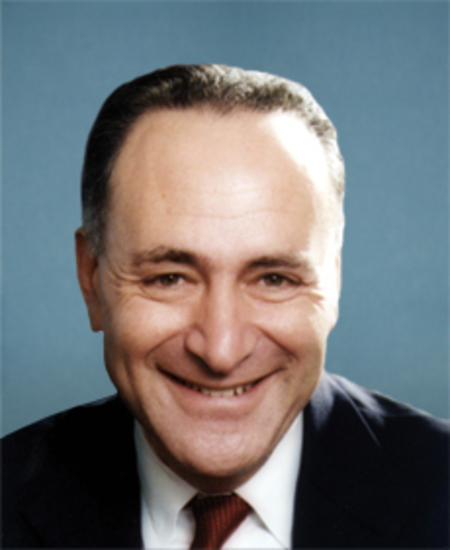
Sen. Charles E. Schumer
Sponsored bills
Maddy summaryThis bill prohibits using Department of Defense funds for fiscal years 2025-2026 to buy, modify, restore, or maintain aircraft previously owned by foreign governments or their entities for presidential airlift. It directly affects the Pentagon's budget planning for presidential transportation security by banning foreign-owned aircraft from being used for this purpose. The key provision blocks funding for any aircraft that was previously controlled by a foreign government, ensuring presidential airlift options remain domestically sourced. This is a concrete policy change to restrict foreign involvement in high-level presidential travel security.
Maddy summaryThis resolution (SRES 195) directs the U.S. Secretary of State to submit a detailed report to Congress within 30 days on El Salvador’s human rights practices. The report must include verified information about alleged violations such as torture, forced disappearances, judicial independence concerns, and the treatment of foreign nationals detained in El Salvador. It also requires assessments of whether U.S. security assistance could be misused and actions taken to protect U.S. citizens detained there. The resolution specifically requests this information under Section 502B(c) of the Foreign Assistance Act, which governs human rights conditions for foreign aid. The report will inform Congress’s oversight of U.S. policy toward El Salvador.
Maddy summaryThis bill protects employees and independent contractors who report AI-related security risks or violations. It prohibits employers from retaliating against workers who disclose AI security vulnerabilities (like potential theft of AI systems) or AI violations (such as unsafe development practices) to regulators, Congress, or internal supervisors. Covered individuals can seek remedies like reinstatement, double back pay, and legal fees through the Labor Department or federal court if retaliated against. The law explicitly blocks employers from requiring arbitration or waiving these protections through contracts.
Maddy summarySRES 229 is a procedural Senate resolution authorizing the Committee on Foreign Relations to share specific records with the Department of Justice. It directly affects the Foreign Relations Committee and the Department of Justice by permitting them to provide records related to a panel discussion attended by committee staff. These records are needed for the court case *United States v. Peter Biar Ajak* (CR-24-00394-PHX-SPL) pending in Arizona federal court. The resolution allows the committee chair and ranking member to release these records without violating Senate privileges, as required by Senate Rule XI. This is a limited, case-specific authorization with no broader policy changes.
Maddy summarySRES 218 is a non-binding Senate resolution condemning the acceptance of presidential aircraft or other substantial gifts from foreign governments. It states such acceptance poses national security risks (citing Air Force One’s sensitive technology) and violates the Constitution’s Foreign Emoluments Clause, which requires congressional consent for presidential gifts from foreign states. The resolution demands that any such gift must have explicit congressional approval and urges rejecting foreign aircraft that don’t meet U.S. defense security standards. It applies to the President and sets a procedural expectation, not a new law, emphasizing constitutional compliance and public trust.
Maddy summaryThis resolution (SRES 224) calls for urgent U.S. diplomatic action to address the severe humanitarian crisis in Gaza, where approximately 2.2 million civilians face acute hunger and malnutrition, including 10,000 children identified with acute malnutrition since January 2025. It highlights that Gaza’s borders have been blocked since March 2, 2025, preventing entry of food, medicine, and other lifesaving aid, leading to closed bakeries and exhausted food rations. The Senate resolution specifically urges the White House and State Department to use all available diplomatic tools to end the blockade, secure hostage releases, and achieve a durable conflict resolution. As a non-binding resolution, it does not enact law but formally expresses the Senate’s concern and directs executive branch action.
Maddy summaryThe Truth in Tariffs Act (S 1741) requires most businesses selling goods to U.S. consumers to clearly display the portion of a product's price attributable to new tariffs (specifically tariffs imposed after January 20, 2025) as a separate "tariff surcharge." It exempts small businesses (as defined by the Small Business Act) from this requirement. The Federal Trade Commission (FTC) will enforce this rule under its existing authority, treating violations as unfair or deceptive practices under the FTC Act. This law directly affects retailers and manufacturers selling consumer goods, aiming to make tariff costs transparent to shoppers.
Maddy summaryS 1705, the Chip Security Act, requires U.S. companies exporting specific advanced integrated circuits (used in AI systems and high-performance computing) to install location verification technology before shipping them abroad. It directly affects manufacturers and exporters of chips classified under U.S. export control numbers like 3A090 or 4A090. The bill mandates that these chips include security mechanisms to verify their location and prevent diversion or tampering, with companies needing to report suspicious activity like unauthorized location changes. The Commerce Secretary must implement these requirements within 180 days and conduct annual assessments to update security standards. This aims to strengthen compliance with export laws and protect national security by securing chip supply chains.
Maddy summaryS 1668 prohibits senior U.S. government officials - including the President, Vice President, Members of Congress, and Senate-confirmed appointees - from issuing, sponsoring, or endorsing cryptocurrencies, tokens, or stablecoins for profit. It also bans acquiring similar financial interests through derivatives or investment funds, while allowing normal public market trading. Violations face civil penalties of up to 10% of the financial interest's value or profits gained, and criminal charges if losses exceed $1 million or personal financial gain occurs. The law applies during official service and for one year after leaving office.