

Vaccine Access Improvement Act of 2021 This bill adds vaccines recommended by the Centers for Disease Control and Prevention (CDC) for routine administration to children or in pregnant women to the list of taxable vaccines for purposes of the vaccine excise tax. The CDC must notify the Department of the Treasury and specified congressional committees of the designation of such vaccines as taxable vaccines.
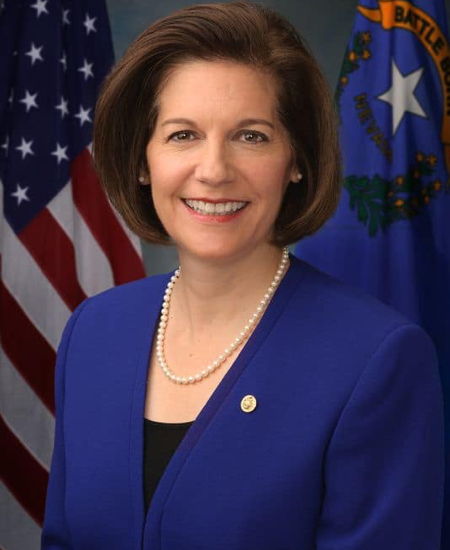
Sen. Catherine Cortez Masto
Sponsored bills
MicroCap Small Business Investing Act of 2021 This bill authorizes the Small Business Administration (SBA) to issue up to ten Small Business Investment Company (SBIC) licenses each year to certain applicants. An SBIC is a privately owned company, licensed and regulated by the SBA, which invests in small businesses through debt and equity. A license issued under the bill must be awarded to an applicant that would otherwise be issued a license except that the management of the applicant does not satisfy certain qualification requirements such as investment experience; where the fund managers have a documented record of successful business experience, a record of business management success, or knowledge in the particular industry or business in which the investment strategy is being pursued; and that will make at least 25% of its investments in specified areas and businesses (e.g., low-income communities, businesses owned or controlled by individuals in underserved communities, and rural areas). The SBA must prioritize applicants that are located in states with fewer licenses and establish a streamlined application process for those licenses.
New, Emerging, and Exciting Technologies in Transportation Act or the NEXT in Transportation Act This bill establishes and expands activities concerning electrification of transportation systems and intelligent transportation systems and technology. Regarding transportation electrification, the Department of Transportation (DOT) and the Department of Energy must (1) establish a temporary working group to make recommendations about incorporating electric vehicles into U.S. transportation and energy systems, and (2) develop a transportation electrification strategy based on those recommendations. The bill also provides funding for states to develop electric vehicle charging infrastructure; includes programs to increase transportation energy efficiency and the use of alternative fuels or electric vehicles in state energy conservation plans; and allows the use, subject to limits, of public transportation funds to install charging equipment for privately owned vehicles. Regarding intelligent transportation systems and technology, DOT must establish an internet-based resource for states and localities to use when developing intelligent transportation and related programs. DOT must also award grants to improve transportation efficiency and safety through advanced smart city or community technologies and systems. Eligible recipients include states, Indian tribes, localities, public transit agencies, and groups of such entities. Additionally, DOT must support workforce development in the intelligent transportation technologies and systems industry. This includes (1) contracting with the National Academies of Sciences to assess workforce needs, (2) establishing a working group to implement a workforce development plan, and (3) increasing public awareness of career opportunities in the transportation sector.
Digital Accountability and Transparency to Advance Privacy Act or the DATA Privacy Act This bill establishes information security requirements for businesses that collect, process, store, or disclose information relating to at least 50,000 people in a 12-month period. The bill applies to information that may be linked to a specific individual or a device associated with a specific individual. It does not cover data related to employment or publicly available government records. Specifically, covered businesses must provide consumers with accessible notice of the business's privacy practices with respect to such information; and if meeting a certain revenue threshold, appoint a privacy officer to oversee compliance with the business's privacy practices. The bill further requires the Federal Trade Commission to promulgate rules requiring covered businesses to limit the purpose and amount of consumer data collection to reasonable business purposes, provide consumers with clear methods to opt-in and opt-out of such collection, and refrain from using such data for discriminatory purposes; provide consumers with a method to access, revise, transmit, and delete collected information; and establish information security standards based on the sensitivity and level of identifiability of the collected data, risk of exposure of such data, widely-accepted practices of securing such data, and cost and impact of implementing such practices. Finally, the bill requires the National Science Foundation, and other agencies, to support research of technology that increases the privacy and confidentiality of collected data.
Preserving Family Farms Act of 2021 This bill increases to $11.7 million (currently, $750,000) the limitation on the special use valuation for farmland or other trades or businesses for estate tax purposes. The increased amount is adjusted for inflation for estates of decedents dying after 2021.
Battery Material Processing and Component Manufacturing Act of 2021 This bill requires the Department of Energy to establish grant programs to support, enhance, and sustain a domestic supply chain for batteries, including grants to facilities for processing, manufacturing, and recycling batteries.
National Science, Innovation, and Technology Strategy Act of 2021 This bill requires a national science and technology strategy and a technology review. The Office of Science and Technology Policy (OSTP) shall submit to Congress a comprehensive national science and technology strategy of the United States to meet national research and development objectives for the following four-year period. No later than one year after the enactment of this bill and every four years afterwards, the OSTP shall complete an interagency review of the science and technology enterprise of the United States.
Freedom to Vote Act This bill addresses voter registration and voting access, election integrity and security, redistricting, and campaign finance. Specifically, the bill expands voter registration (e.g., automatic and same-day registration) and voting access (e.g., vote-by-mail and early voting). It also limits removing voters from voter rolls. Next, the bill establishes Election Day as a federal holiday. The bill declares that the right of a U.S. citizen to vote in any election for federal office shall not be denied or abridged because that individual has been convicted of a criminal offense unless, at the time of the election, such individual is serving a felony sentence. The bill establishes certain federal criminal offenses related to voting. In particular, the bill establishes a new criminal offense for conduct (or attempted conduct) to corruptly hinder, interfere with, or prevent another person from registering to vote or helping someone register to vote. Additionally, the bill sets forth provisions related to election security, including by requiring states to conduct post-election audits for federal elections. The bill outlines criteria for congressional redistricting and generally prohibits mid-decade redistricting. The bill addresses campaign finance, including by expanding the prohibition on campaign spending by foreign nationals, requiring additional disclosure of campaign-related fundraising and spending, requiring additional disclaimers regarding certain political advertising, and establishing an alternative campaign funding system for certain federal offices.
Veteran Peer Specialist Act of 2021 This bill requires the Department of Veterans Affairs (VA) to make permanent and expand the program that establishes at least two peer specialists in patient aligned care teams at VA medical centers to promote the use and integration of services for mental health, substance use disorder, and behavioral health in a primary care setting.
Lander County Land Management and Conservation Act This bill conveys all interest in certain federal land to Lander County, Nevada, and designates wilderness areas in the county. After Lander County selects certain parcels for conveyance, the Department of the Interior and Forest Service must convey the parcels to the county, for no consideration, for use by the county for watershed protection, recreation, and parks. Interior shall convey to Lander County parcels of federal land identified as Kingston Airport to improve the airport facility and related infrastructure. The only costs to the county of the conveyance shall be surveying costs. Land conveyed by this bill reverts to federal land if it is not managed in accordance with the purpose of its conveyance. The bill designates the Cain Mountain and Desatoya Mountains Wildernesses in Nevada as components of the National Wilderness Preservation System. The bill releases the Augusta Mountain and Desatoya Wilderness Study Areas within Lander County from further study for designation as wilderness.