

Maddy summaryThis bill prohibits the Department of the Interior (DOI) from implementing any reduction in force or involuntary employee separations (except for misconduct, delinquency, or performance issues) at any DOI agency or bureau. It applies to most federal employees within the DOI, including competitive service workers, excepted service career employees, and senior executives. The moratorium remains in effect until full-year funding for the DOI's fiscal year 2026 budget is approved by Congress. The bill does not alter existing personnel laws but adds this temporary restriction to prevent workforce reductions during the budget process.
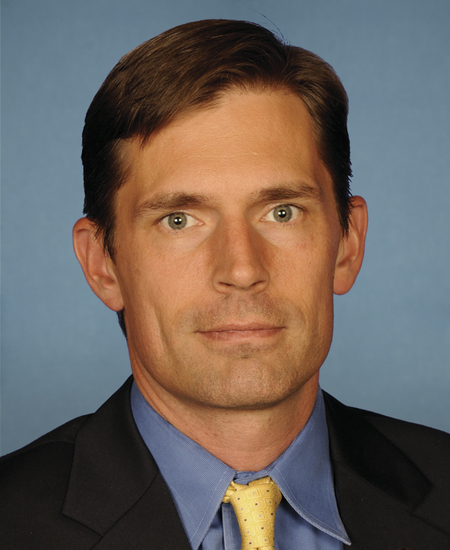
Sen. Martin Heinrich
Sponsored bills
Maddy summaryThis bill reauthorizes funding for state-level maternal mortality review committees, which analyze pregnancy-related deaths to identify preventable causes. It requires the Health and Human Services Secretary to share annual best practices for preventing maternal mortality with hospitals, medical societies, and maternity care groups. The bill increases annual funding for these programs from $58 million to $100 million, extending support through fiscal years 2026-2030. These changes directly affect state health agencies, hospitals, and medical professionals working on maternal health. The focus is on improving death record accuracy and implementing proven prevention strategies.
Maddy summaryS 2596, the "Saving the Forest Service's Workforce Act," prohibits the Forest Service from initiating layoffs or involuntary separations of most employees until after full-year funding for fiscal year 2026 is secured. It directly affects Forest Service employees in the competitive service, excepted service career roles, and Senior Executive Service positions by blocking most workforce reductions. The bill’s key provision creates a moratorium on layoffs, allowing separations only for cause (like misconduct or poor performance) under existing personnel laws. This applies until Congress passes the full 2026 budget, preventing potential workforce cuts during budget negotiations.
Maddy summaryThe Forest Bioeconomy Act (S 2598) establishes new programs to advance the commercial use of forest materials. It creates a Forest Service Office of Technology Transfer led by a Chief Commercialization Officer to help turn research into marketable products, including renewable fuels and mass timber construction. The bill also launches a small business voucher program providing funding for forest product companies to collaborate with Forest Service research facilities, with cost-sharing requirements. Additionally, it mandates a national mass timber science program to support research on tall wood buildings, focusing on safety, carbon impact, and industry needs. These provisions directly affect the Forest Service, forest product manufacturers, small businesses, and architects developing sustainable construction projects.
Maddy summaryThis bill, S 2564 (Tribal Gaming Regulatory Compliance Act), clarifies regulatory requirements for two specific Texas tribes: the Ysleta del Sur Pueblo and the Alabama-Coushatta Tribe. It amends the Ysleta del Sur Pueblo and Alabama and Coushatta Indian Tribes of Texas Restoration Act to ensure the standard Indian Gaming Regulatory Act (IGRA) fully applies to their gaming activities, eliminating redundant rules. The bill adds a "rule of construction" provision stating IGRA governs these tribes' gaming operations identically to all other tribes nationwide, and removes two outdated sections (107 and 207) from the prior law. This change directly affects only these two tribes, aligning their regulatory framework with the national standard under IGRA.
Maddy summaryThe Truth and Healing Commission on Indian Boarding School Policies Act of 2025 establishes a federal commission to investigate the history, impacts, and lasting effects of Indian Boarding Schools on Native American communities, including physical, cultural, and emotional consequences. The commission will document these impacts through research, hold meetings across the country to gather testimony from survivors and tribal representatives, and collaborate with a Survivors Truth and Healing Subcommittee and two advisory committees. The commission will produce an initial report within four years and a final report before terminating six years after enactment, with recommendations for Federal action to address the legacy of these policies. This legislation aims to formally acknowledge historical trauma caused by Indian Boarding Schools and guide future Federal efforts toward healing and reconciliation.
Maddy summarySRES 349 designates the week of August 3-9, 2025, as "National Farmers Market Week." The resolution recognizes farmers markets for their role in supporting local economies, connecting urban and rural communities, and promoting sustainable agriculture. It does not create new laws or funding but formally acknowledges the sector's contributions to food access, community engagement, and farming livelihoods. This is a ceremonial designation without binding policy changes.
Maddy summaryThe Veteran Families Health Services Act of 2025 would provide fertility treatment and counseling to active duty military members and their spouses, partners, and gestational surrogates without regard to sex, gender identity, sexual orientation, or marital status. It requires the Department of Defense to establish procedures for preserving reproductive genetic material before deployment or hazardous assignments and to coordinate with the Department of Veterans Affairs for seamless care transitions. The bill also extends similar fertility services to veterans through the Department of Veterans Affairs, including adoption assistance with a limit of three covered adoptions. It would amend existing law to include fertility treatment under the definition of medical services for veterans.
Maddy summaryS 2557, the Epstein Files Transparency Act, requires the Department of Justice to make publicly available, within 30 days of enactment, all unclassified records related to Jeffrey Epstein's investigations, associates (like Ghislaine Maxwell), travel logs, immunity deals, and DOJ internal communications. It mandates the release in a searchable format while prohibiting redactions based on embarrassment or political sensitivity. The bill allows limited redactions only for victim privacy, child pornography, active investigations, graphic content, or national security classifications, with detailed justifications required for any withholdings. The Attorney General must also submit a report to Congress listing all released materials, redactions, and names of officials referenced in the documents. This bill directly affects the DOJ's handling of Epstein-related records and provides the public access to previously withheld information.
Maddy summaryThis bill requires the U.S. Department of Agriculture (USDA) to submit a report to Congress within 30 days of enactment, focusing on preparations for potential outbreaks of New World screwworms - a pest harmful to livestock. The report must detail domestic readiness efforts, including plans for a U.S. production facility for sterile flies (used to control the pest), partnerships with states and industry, and comparisons of domestic versus international sterile fly production costs and timelines. It specifically examines barriers and benefits of building domestic production capacity to prevent livestock losses. The bill directly affects USDA operations and livestock industries reliant on pest control measures.