

Child Care for Working Families Act This bill provides funds and otherwise revises certain child care and early learning programs for low- to moderate-income families. Specifically, the bill provides funds for the Child Care and Development Block Grant program and reestablishes it as a child care and development assistance program. The bill also allocates program funds for states to provide services and supports to infants, toddlers, and children with disabilities. Further, the bill revises the program to require each state to create a tiered and transparent system for measuring the quality of child care providers, which must include evidence-based standards and payment rates that are based on a certain cost estimation model; ensure that copayments are based on a sliding scale and that no family receiving assistance pays more than 7% of its household income on child care; and use quality child care amounts for certain activities, such as increasing the supply of child care providers. The bill also provides funds and establishes grants for states to create preschool programs for low- to moderate-income children between the ages of three and five years. The Department of Health and Human Services (HHS) must make grants to Head Start agencies to provide children with access to full-school-year and full-school-day services, provide access to additional service hours for migrant and seasonal agencies, or enhance the quality of existing services. Finally, the bill requires, and provides funds for, HHS to assist Head Start agencies with ensuring their teachers and staff are paid a living wage.
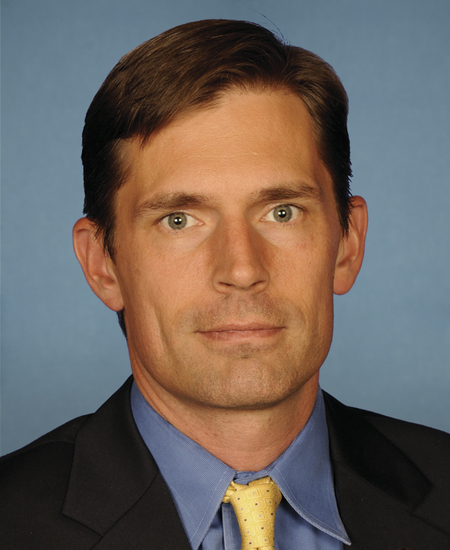
Sen. Martin Heinrich
Sponsored bills
Clean Energy for America Act This bill provides tax incentives for investment in clean electricity, clean transportation, clean fuel production, energy efficiency, and sets forth workforce development requirements for the energy sector. The bill also terminates certain fossil fuel provisions and requires contractors on federal energy projects to ensure that not less than 15% of total labor hours be performed by qualified apprentices.
This resolution extends condolences to the family and friends of former Vice President Walter Mondale. The resolution acknowledges Mondale's lifetime service to the United States, including as a U.S. Senator and as the first presidential candidate from a major party to select a woman, Geraldine Ferraro, as his running mate.
Fourth Amendment Is Not For Sale Act This bill generally prohibits law enforcement and intelligence agencies from obtaining U.S. customer or subscriber records or any illegitimately obtained information from a third party in exchange for anything of value (e.g., purchasing such information). Records or information obtained in violation of this bill are inadmissible as evidence in any trial, hearing, or other legal proceeding.
Big Cat Public Safety Act This bill revises requirements governing the trade of big cats (i.e., species of lion, tiger, leopard, cheetah, jaguar, or cougar or any hybrid of such species). Specifically, it revises restrictions on the possession and exhibition of big cats, including to restrict direct contact between the public and big cats.
This resolution designates April 17, 2021, through April 25, 2021, as National Park Week. The resolution also encourages the people of the United States and the world to responsibly visit, experience, and support the treasured national parks of the United States while protecting public health during the coronavirus pandemic.
This bill prohibits the sale of food that contains water buffalo and is labeled as buffalo unless the specific term used in the labeling is water buffalo .
Master Sergeant Roddie Edmonds Congressional Gold Medal Act This bill provides for the posthumous award of a Congressional Gold Medal to Roddie Edmonds in recognition of his achievements and heroic actions during World War II.
Affordable Housing Credit Improvement Act of 2021 This bill revises provisions of the low-income housing tax credit and renames it as the affordable housing credit . The bill increases the per capita dollar amount of the credit and its minimum ceiling amount beginning in 2021 and extends the inflation adjustment for such amounts. The bill modifies tenant income eligibility requirements and the average income formula for determining such income. It also revises rules for student occupancy of rental units and tenant voucher payments, and prohibits any refusal to rent to victims of domestic abuse. The bill further modifies the credit to increase state allocations of the credit; repeal the qualified census tract population cap; prohibit local approval and contribution requirements; increase the credit for certain projects designated to serve extremely low-income households; increase the credit for certain bond-financed projects designated by state agencies; eliminate the basis reduction for properties that receive certain energy-related tax benefits; and increase the population cap for difficult development areas (i.e., areas with high construction, land, and utility costs relative to area median gross income). The bill also includes Indian and rural areas as difficult development areas and modifies other requirements relating to casualty losses, acquisition credits, and foreclosures.
Comprehensive Paid Leave for Federal Employees Act This bill provides paid family and medical leave to federal employees. Currently, federal employees are entitled to 12 weeks of administrative leave for one or more of the following reasons: (1) the birth of a child, (2) the adoption or foster care of a child, (3) the care of an immediate family member with a serious health condition, (4) inability to work due to a serious health condition, and (5) exigencies relating to an immediate family member's active duty service in the Armed Forces. However, of these reasons, employees are entitled to paid administrative leave only in connection with the birth, adoption, or foster care of a child (i.e., parental leave). The bill provides 12 weeks of paid administrative leave for any of these reasons, and specifies that this leave is in addition to any annual or sick leave to which employees are entitled.