

Rights for the Transportation Security Administration Workforce Act of 2021 or the Rights for the TSA Workforce Act of 2021 This bill modifies the workplace rights, protections, and benefits applicable to Transportation Security Administration (TSA) personnel. Specifically, the bill within 180 days, eliminates personnel authorities of the Department of Homeland Security (DHS) and the Department of Transportation governing the conditions of employment for TSA employees, thus making TSA employees subject to the personnel management system applicable to other federal employees; sets forth transition rules that protect the pay rates, leave rights, and other rights of TSA and Federal Air Marshal Service employees; and requires DHS to consult with the labor organization certified by the Federal Labor Relations Authority to carry out the conversion of such positions. The bill also directs the TSA to implement in-person or remote mental health programs at each field office of the Federal Air Marshal Service and consult with labor associations to address concerns regarding federal air marshals, including mental health and suicide rates; requires DHS to prioritize the hiring of veterans, including disabled veterans; and directs the TSA to ensure its employees are provided proper guidance regarding prevention and protections against the coronavirus.
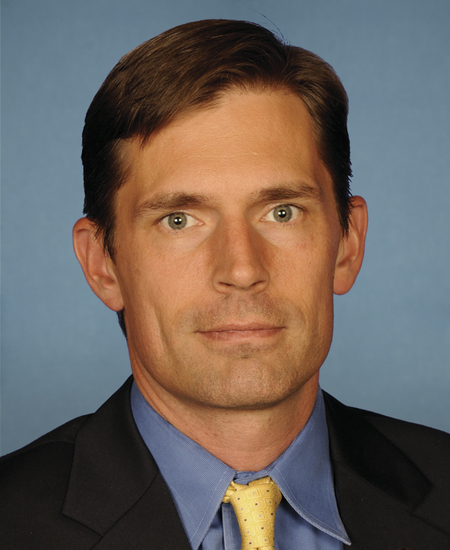
Sen. Martin Heinrich
Sponsored bills
Accelerating Access to Critical Therapies for ALS Act This bill establishes grant programs to address neurodegenerative diseases, such as amyotrophic lateral sclerosis (also known as ALS or Lou Gehrig's disease), and contains other related provisions. The Department of Health and Human Services (HHS) shall award grants to eligible entities to facilitate patients' access to investigational drugs that diagnose or treat ALS. The Food and Drug Administration (FDA) shall award grants to public and private entities to cover the costs of research and development of drugs that diagnose or treat ALS and other severely debilitating neurodegenerative diseases. HHS shall also establish the Public-Private Partnership for Neurodegenerative Diseases between the National Institutes of Health, the FDA, and at least one eligible entity (generally, an institution of higher education or a nonprofit organization). The partnership shall support the development and regulatory review of drugs that address ALS and other rare neurodegenerative diseases. The FDA shall publish on its website a five-year action plan for fostering the development of drugs that improve or extend the lives of people living with rare neurodegenerative diseases.
Pursuing Equity in Mental Health Act This bill establishes and expands programs to address racial and ethnic disparities in mental health. Specifically, the Department of Health and Human Services (HHS) must award grants to establish interprofessional behavioral health care teams in areas with a high proportion of racial and ethnic minority groups. In addition, HHS may award grants to incorporate best practices and competencies to address mental health disparities in curricula for training social workers, psychologists, and other behavioral health professionals. HHS must also promote behavioral and mental health and reduce stigma associated with mental health conditions and substance use disorder through outreach to racial and ethnic minority groups. HHS must consult with appropriate advocacy groups and behavioral health organizations to develop a strategy for this outreach. The bill also (1) reauthorizes the minority fellowship program to support the education of mental health professionals who provide services to racial and ethnic minorities, and (2) requires studies on mental health disparities and the effects of social media use on adolescents.
This resolution designates May 15, 2021, as Kids to Parks Day. The resolution recognizes the importance of outdoor recreation and the preservation of open spaces to the health and education of young people of the United States.
Artificial Intelligence for the Military Act of 2021 This bill requires the implementation of training and education related to emerging technologies and artificial intelligence for certain military personnel. The bill requires expansion of the curriculum for military junior leader education to incorporate training material related to focuses that include problem definition and curation and a conceptual understanding of the artificial intelligence life cycle. Such training and education should include the use of existing artificial intelligence-enabled systems and tools. The Department of Defense (DOD) must ensure that the curriculum for professional military education is revised in each of the military services to incorporate periodic courses on militarily significant emerging technologies. DOD must establish a short course on emerging technologies for general and flag officers and senior executive-level civilian leaders. The course must be taught on an iterative, two-year cycle and address the most recent and relevant technologies and the application of these technologies to military and business outcomes in DOD. DOD must ensure that the military services code appropriate billets to be filled by emerging technology-qualified officers and develop a process for qualification of officers in emerging technologies. The process for qualifying officers for emerging technology-coded billets must be modeled on a streamlined version of the joint qualification process and may include credit for serving in emerging technology-focused (1) fellowships, (2) talent exchanges, (3) government positions, and (4) education courses.
Schools and State Budgets Certainty Act of 2021 This bill modifies how states, counties, and Indian tribes are paid for mineral extraction on their land. The Department of the Interior shall pay to eligible states, counties, and Indian tribes an energy transition payment as calculated in accordance with this bill. An energy transition payment received by a state or county pursuant to the Gulf of Mexico Energy Security Act of 2006 must be used for certain authorized uses, such as coastal protection and mitigation of damage to wildlife.
COVID - 19 Hate Crimes Act This bill requires a designated officer or employee of the Department of Justice (DOJ) to facilitate the expedited review of hate crimes and reports of hate crimes. DOJ must issue guidance for state, local, and tribal law enforcement agencies on establishing online hate crime reporting processes, collecting data disaggregated by protected characteristic (e.g., race or national origin), and expanding education campaigns. Additionally, DOJ and the Department of Health and Human Services must issue guidance aimed at raising awareness of hate crimes during the COVID-19 (i.e., coronavirus disease 2019) pandemic. The bill establishes grants for states to create state-run hate crimes reporting hotlines. It also authorizes grants for states and local governments to implement the National Incident-Based Reporting System and to conduct law enforcement activities or crime reduction programs to prevent, address, or respond to hate crimes. Finally, in the case of an individual convicted of a hate crime offense and placed on supervised release, the bill allows a court to order that the individual participate in educational classes or community service as a condition of supervised release.
This resolution urges an immediate cease-fire to prevent further loss of life and escalation of the conflict in Israel and the Palestinian territories, and it supports diplomatic efforts to resolve the Israeli-Palestinian conflict, uphold international law, and protect human rights.
Helping American Victims Afflicted by Neurological Attacks Act of 2021 or the HAVANA Act of 2021 This bill specifically authorizes the Central Intelligence Agency, the Department of State, and other agencies to provide payments to agency personnel who incur brain injuries from hostilities while on assignment. Specifically, the bill allows agency personnel and their families to receive payments for brain injuries that are incurred (1) during a period of assignment to a foreign duty station; (2) in connection with war, insurgency, hostile acts, terrorist activity, or other agency-designated incidents; and (3) not as the result of willful misconduct. The bill's authority applies to injuries incurred before, on, or after the date of the bill's enactment. Agencies must submit classified reports on the bill's implementation, including the number of payments made and the amount of each payment. Since 2016, some intelligence, diplomatic, and other governmental personnel have reported experiencing unusual cognitive and neurological impairments while on assignment (particularly abroad), the source of which is currently under investigation. Symptoms were first reported by personnel stationed in Cuba and have since been collectively referred to as Havana Syndrome .
Midwives for Maximizing Optimal Maternity Services Act of 2021 or the Midwives for MOMS Act of 2021 This bill establishes grants within the Health Resources and Services Administration (HRSA) for establishing or expanding midwifery programs at institutions of higher education and nursing schools. HRSA may prioritize funding for institutions that focus on increasing the number of midwife professionals from underrepresented groups and that promote practicing in areas with limited access to professional health care.