Supreme Court Ethics Act This bill establishes a new statutory requirement for the Judicial Conference of the United States to issue a judicial code of conduct for judges and justices of U.S. courts, including Justices of the Supreme Court. Currently, the Judicial Conference issues a code of conduct for judges of U.S. courts (but not for Justices of the Supreme Court).
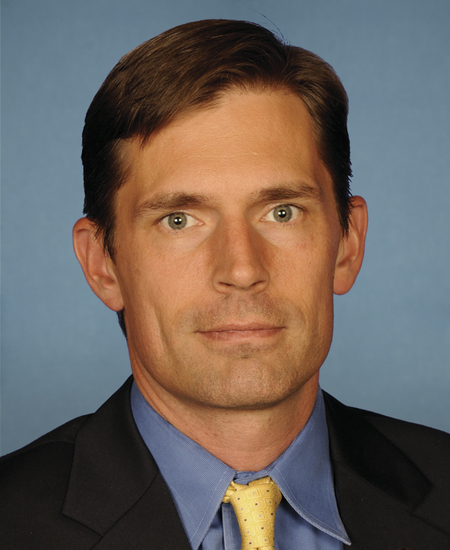
Sen. Martin Heinrich
Sponsored bills
Safeguard Tribal Objects of Patrimony Act of 2021 This bill prohibits the exportation of Native American cultural items and archaeological resources that were illegally obtained; provides for the return of such items, including voluntary returns; and establishes and increases related criminal penalties. The bill requires the Department of the Interior and the Department of State to each designate a liaison to facilitate and hold trainings and workshops on the voluntary return of human remains and cultural items. Additionally, Interior must refer individuals and organizations to Indian tribes and Native Hawaiian organizations to facilitate the voluntary return of human remains and cultural items; convene an interagency working group; and convene a Native working group consisting of representatives of Indian tribes and Native Hawaiian organizations to provide advice on issues concerning the return of, and illegal trade in, human remains and cultural items. The bill also increases from 5 years to 10 years the maximum prison term for an individual convicted of selling, purchasing, using for profit, or transporting for sale or profit human remains or cultural items that were illegally obtained.
Cyber Incident Notification Act of 2021 This bill requires federal agencies and certain entities to report cybersecurity intrusion incidents to the Cybersecurity and Infrastructure Security Agency (CISA) and addresses related issues. Within 24 hours of a confirmed intrusion (or potential intrusion), the targeted agency or entity must report the intrusion to CISA. CISA must promulgate rules relating to the bill, including the information that must be included in each incident report and the entities that must comply with the reporting requirements. At minimum, the covered entities must include federal contractors and owners or operators of critical infrastructure. Similarly, such rules must at minimum require federal agencies and covered entities to report all intrusions involving a nation-state, advanced persistent threat cyber actor, or transnational organized crime group. If a covered entity fails to meet the bill's requirements, CISA may assess a civil penalty of up to 0.5% of the entity's gross revenue for each day the violation lasts. If the violating entity has federal contracts, the General Services Administration may impose additional penalties, including removal from the Federal Contracting Schedule. A violation by a federal agency must be referred to that agency's office of the inspector general, which must treat the case as a matter of urgent concern. CISA, the Department of Justice, and the Office of the Director of National Intelligence must provide periodic reports to Congress concerning the current cyber threat picture facing federal agencies and covered entities.

Safe Schools Improvement Act of 2021 This bill requires states to direct their local educational agencies (LEAs) to establish policies that prevent and prohibit bullying and harassment of elementary and secondary school students. In particular, these policies must prohibit bullying and harassment based on race, color, national origin, sex, sexual orientation, gender identity, disability, or religion. Further, LEAs must provide (1) students, parents, and educational professionals with annual notice of the conduct prohibited in their disciplinary policies; (2) students and parents with grievance procedures that target such conduct; and (3) the public with annual data on the incidence and frequency of that conduct at the school and LEA level. The Department of Education must conduct and report on an independent biennial evaluation of programs and policies to combat bullying and harassment in elementary and secondary schools. The National Center for Education Statistics must collect state data to determine the incidence and frequency of the conduct prohibited by LEA disciplinary policies.
This bill requires the Department of Health and Human Services to award additional FY2022 funds to the Indian Health Service Sanitation Facilities Construction Program. This program provides American Indian and Alaska Native homes and communities with water supply, sewage disposal, and solid waste disposal facilities.
Reconciliation in Place Names Act This bill directs the Department of the Interior to establish the Advisory Committee on Reconciliation in Place Names to advise the Board on Geographic Names with regard to renaming geographic features with offensive place names. The board shall rename a geographic feature with an offensive name in accordance with a recommendation of the committee unless the board determines that (1) there is a compelling reason and substantial public interest in rejecting the recommendation, or (2) approving the recommendation would violate federal law. The board shall accept or reject a recommendation within three years of receiving the recommendation.
Tribal Access to Clean Water Act of 2021 This bill provides funding for and expands access to water resources for Native communities (i.e., Indian tribes and Native Hawaiian communities). First, the bill provides funding for the Indian Health Service to (1) plan, design, construct, modernize, improve, and renovate water, sewer, and solid waste sanitation facilities; (2) provide technical assistance; and (3) operate and maintain water facilities that serve Native communities. Next, the bill provides funding for the Department of Agriculture to provide water and wastewater facility grants to eligible entities (e.g., Native communities) that have residents facing significant health risks due to inadequate water supply systems. An eligible entity shall not be required to provide a matching contribution in order to receive a grant. In addition, the bill reauthorizes through FY2031 the Bureau of Reclamation's Rural Water Supply Program. Further, the bill provides funding for and establishes a grant program for tribal clean water access projects. It also provides funding for the Native American Affairs Technical Assistance Program. The bill also provides funding for the Environmental Protection Agency to provide grants to Indian tribes and Alaska Native villages for drinking water and clean water.
Intelligence Community Workforce Agility Protection Act of 2021 This bill allows a current tax deduction for the moving expenses of an employee or new appointee of the intelligence community who moves due to a change in assignment that requires relocation. It also allows a current tax exclusion for such employees or appointees for moving expense reimbursements. Under current law, the tax deduction and exclusion for the moving expenses of other taxpayers are suspended for the period beginning in 2018 through 2025.
Chai Suthammanont Remembrance Act of 2021 This bill requires federal agencies to develop and disclose safety plans that contain certain information for on-site employees and contractors during the public health emergency relating to COVID-19 (i.e., coronavirus disease 2019). Specifically, the bill requires each agency to post a safety plan on its website that includes descriptions of (1) the personal protective equipment that the agency will provide to its on-site employees and contractors; (2) protections for employees whose work requires them to travel off-site; (3) testing, contact-tracing, and vaccination protocols; and (4) protocols that ensure the continuity of operations in the event it is necessary to reverse on-site requirements. Each agency's Office of the Inspector General must report on whether the agency has published and implemented its safety plan.
This joint resolution nullifies the Oil and Natural Gas Sector: Emission Standards for New, Reconstructed, and Modified Sources Review rule published by the Environmental Protection Agency on September 14, 2020. The rule finalized amendments to new source performance standards under the Clean Air Act for the oil and natural gas sector, such as an amendment that removed limitations on methane emissions from such sector.