

Maddy summaryThe Working Families Tax Relief Act of 2023 expands tax benefits for low-to-moderate income workers and families with children. It lowers the minimum age for the Earned Income Credit from 25 to 19 (with exceptions for students, former foster youth, and homeless youth), removes the age 65 maximum, and increases credit amounts and income thresholds. The bill also establishes a permanent system for monthly advance payments of the Child Tax Credit, with higher payments ($300 monthly) for children under age 6 compared to $250 for older children. It includes inflation adjustments to maintain the value of these credits over time and creates mechanisms for determining eligibility and recapturing payments in certain circumstances. The provisions apply to all states and U.S. territories, including Puerto Rico and American Samoa.
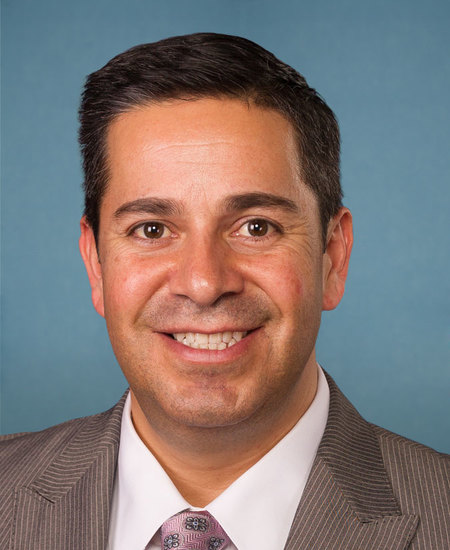
Sen. Ben Ray Luján
Sponsored bills
Maddy summaryS 1982, the SPACEPORT Act, authorizes federal grants to modernize space transportation infrastructure, directly affecting state, local, and private projects developing spaceports. It changes grant rules to allow up to 90% federal funding (with national interest waivers), updates eligibility to include civil, national security, and commercial space needs, and requires a $10 million annual appropriation for these grants. The bill mandates a report within two years evaluating U.S. space transportation demand and competitiveness, with updates every four years. This focuses federal support on projects advancing national space capabilities through modernized infrastructure grants.
Maddy summaryThe Right to Contraception Act (S 1999) establishes a federal statutory right for individuals to access contraceptives and related information without government interference, directly affecting all people seeking reproductive care and health care providers who offer these services. Key provisions prohibit state or federal laws that restrict contraceptive access, single out contraceptive services, or allow provider refusals based on personal beliefs, while requiring any restrictions to be narrowly tailored to advance access. The bill preempts conflicting state laws, allows enforcement through lawsuits by affected individuals or the Attorney General, and explicitly protects access for historically marginalized groups facing barriers. It does not alter existing insurance coverage requirements under the Affordable Care Act but ensures contraceptive access remains protected from restrictive state policies.
Maddy summaryThe College for All Act of 2023 would establish a federal-state partnership to eliminate tuition and required fees for eligible students at public community colleges and 4-year institutions. It would cover students from families earning under $125,000 (single) or $250,000 (married) annually, with the federal share of costs decreasing from 100% to 80% over five years. The bill also includes separate provisions to eliminate tuition at historically Black colleges and minority-serving institutions through dedicated grant programs, while requiring states to maintain higher education funding levels and improve student support services.
Maddy summaryS 305 authorizes the U.S. Mint to produce and sell commemorative coins (gold, silver, and half-dollar denominations) to mark the U.S. Marine Corps' 250th anniversary in 2025. Each coin sale includes a surcharge ($5 to $35 per coin) that will fund the Marine Corps Heritage Center's educational programs, with proceeds paid directly to the Marine Corps Heritage Foundation. The coins will be sold from January 1 to December 31, 2025, and the surcharge structure ensures no net cost to taxpayers by covering production expenses through sales. This bill directly affects the U.S. Mint (in coin production), the Marine Corps Heritage Foundation (as recipient of funds), and the public (as potential buyers).
Maddy summaryS 1935, the AIRWAYS Act, establishes a federal grant program to expand workforce development in aviation. It provides funding for projects that support education and recruitment of aircraft pilots, aviation maintenance technicians, and aviation manufacturing workers, directly affecting schools, training programs, and underrepresented communities. Key provisions include grants for creating aviation education programs in schools, scholarships, outreach to women and minorities, and prioritizing projects that address workforce gaps in rural areas. The program requires grant recipients to prioritize participation from underrepresented groups and consult industry stakeholders during application reviews.
Maddy summaryThe Global Respect Act of 2023 requires the U.S. President to publicly list foreign officials or entities responsible for severe human rights violations against LGBTI individuals, including torture, arbitrary detention, or inciting violence based on sexual orientation or gender identity (Section 4). This list must be updated every 180 days and published in the Federal Register, with individuals added facing U.S. visa ineligibility and potential removal from the country (Section 5). The bill also mandates annual reports tracking additions/removals from the list and directs the State Department to monitor global violence against LGBTI people in country reports (Section 7). It directly affects foreign government actors accused of targeting LGBTI communities, using visa restrictions as a tool to increase accountability for human rights abuses.
Maddy summaryThis bill amends the Essential Community Facilities program to allow rural communities to use existing funding for clean school bus infrastructure. It directly affects rural school districts and communities seeking to adopt cleaner buses by permitting funds to cover charging infrastructure costs and planning activities. The key provision expands eligibility under current programs to include acquisition of charging equipment and technical support for clean bus deployment. It references the Energy Policy Act's definition of "clean school bus" but does not create new funding streams - only authorizes necessary appropriations for existing program use. The bill enables rural areas to leverage current resources for transitioning to zero-emission school transportation.
Maddy summarySRES 243 is a Senate resolution designating June 2023 as "Immigrant Heritage Month" to honor the contributions of immigrants and their children to the United States. It highlights their roles in key areas like health care (e.g., 27% of physicians), economic growth, and cultural diversity, without creating new laws or altering policies. As a non-binding resolution, it encourages public recognition through community events but does not affect any legal status or rights.
Maddy summaryS 1885 would amend the Immigration and Nationality Act to remove annual numerical limits on employment-based visas for a new category (J). This change would directly affect immigrants in category J, allowing them to obtain visas without facing yearly caps. The bill modifies two sections of the law (201(b)(1)(A) and 203(b)(4)) to include category J in the list of exempt categories. The bill's title references "vulnerable immigrant youth," but the provided text does not specify that category J relates to youth or vulnerability.