

Maddy summaryThe Climate Change Education Act establishes a new Climate Change Education Program within NOAA to increase climate literacy among students and educators. It directs NOAA to award grants for developing climate-focused curricula in grades 4-12, integrating climate concepts into STEM and social studies, and supporting teacher training - addressing the current gap where only 30% of middle school science teachers understand climate science consensus. Grants prioritize environmental justice communities (40% of funds) and fund higher education partnerships for applied climate research, career training in green jobs, and community-based youth programs. The program requires states to align climate education with existing standards and ensures students graduate with climate literacy knowledge. It authorizes $50 million annually for 2025-2030 to implement these provisions.
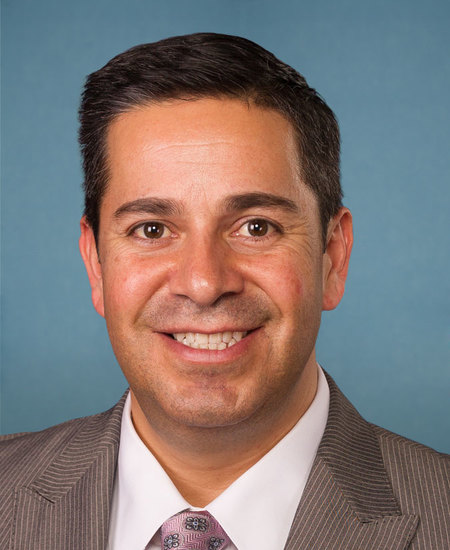
Sen. Ben Ray Luján
Sponsored bills
Maddy summarySRES 632 is a symbolic Senate resolution introduced on April 10, 2024, supporting National Public Health Week (April 1-7, 2024), which focused on the theme "Protecting, Connecting and Thriving: We Are All Public Health." The resolution recognizes public health professionals' efforts in preventing disease, responding to outbreaks like COVID-19, addressing health disparities, and improving community health. It encourages increased resources to strengthen the public health system and advance the goal of making the U.S. "the healthiest nation in the world" within one generation. As a non-binding resolution, it does not create new laws or allocate funding but formally acknowledges the importance of public health work.
Maddy summaryThis bill requires random assignment of certain civil cases challenging laws to a district court judge, rather than allowing parties to strategically choose courts. It directly affects individuals or groups filing lawsuits seeking nationwide challenges to federal laws or statewide challenges to state laws. The key provision mandates that cases asking courts to block, invalidate, or order enforcement of laws (including regulations or agency policies) must be randomly assigned to a judge in the filing district. This aims to prevent "judge shopping" by eliminating the ability to select a court based on perceived judicial bias. The rule applies to both federal and state law challenges filed in district courts.
Maddy summaryThis bill establishes the "Expanding Childcare in Rural America Initiative" within the USDA to improve childcare access in rural and agricultural communities. It directs the USDA to prioritize funding through existing programs (like rural business grants and essential community facilities loans) for projects addressing childcare availability, quality, or cost in rural areas, with special focus on farming-dependent counties. The initiative requires a balanced geographic distribution of funds and allows USDA to work with childcare networks or nonprofits to support facility upgrades and provider assistance. The USDA must evaluate the initiative's impact and report results to Congress within three years.
Maddy summaryThis bill reauthorizes two existing federal programs focused on recovering endangered and threatened fish species in the Upper Colorado River Basin and San Juan River Basin. It extends funding through fiscal year 2031 (previously ending in 2024), authorizing $50 million annually adjusted for inflation, and updates definitions to explicitly include "threatened" species. The programs continue to rely on partnerships with states, tribes, water users, and environmental groups to fund habitat restoration and fish conservation efforts. The bill also clarifies that federal funds can include power revenues from the Colorado River Storage Project and streamlines how non-Federal contributions are accepted.
Maddy summarySRES 333 is a symbolic Senate resolution designating 2024 as the "Year of Democracy" to highlight the U.S. government system's global contributions to freedom. It does not create new laws or directly affect citizens, but encourages states, local governments, and the public to observe the year through activities that honor democratic principles. The resolution urges reflection on the U.S. system's role in promoting global freedom, appreciation for historical sacrifices, and respectful civic engagement. It has no binding effect and serves solely as a commemorative gesture.
Maddy summarySRES 621 is a symbolic Senate resolution designating March 24, 2024, as "National Women of Color in Tech Day." It recognizes the contributions of women of color in technology and highlights their underrepresentation in STEM fields and the tech workforce. The resolution urges the public to observe the day, commits the Senate to increasing diversity and inclusion in tech through recruitment and retention efforts, and supports strengthening partnerships with minority-serving educational institutions to build a more diverse tech pipeline. As a commemorative resolution, it does not create new laws or funding but serves as a formal acknowledgment of ongoing challenges and goals.
Maddy summaryThe State Public Option Act creates a new Medicaid buy-in program allowing previously uninsured residents (who don't have other health insurance) to purchase Medicaid coverage starting January 1, 2025. Participants can receive premium tax credits and cost-sharing reductions, with premiums capped at 8.5% of family income. States must update quality measures for this population by 2029 and can enroll participants through state health insurance exchanges. This program expands coverage options for individuals who don't qualify for traditional Medicaid but can't afford private insurance.
Maddy summaryThis bill creates a new Office of Colonias and Farmworker Initiatives within the USDA to improve access to federal programs for border colonias communities, farmworkers, and their families. The office will coordinate with other agencies (like HUD, HHS, and FEMA) on housing, health, education, and infrastructure, and set measurable goals to increase participation in USDA programs. It establishes a Colonias Coordinator position and a federal coordinating committee with representatives from multiple agencies to share best practices and address barriers. The bill authorizes $2.5 million annually for the office from 2024 through 2029.
Maddy summaryThis bill designates the Texas and New Mexico portions of the future Interstate-designated segments of the Port-to-Plains Corridor as Interstate Route 27, along with specific designations for different segments (I-27E, I-27W, and I-127N). It amends the Intermodal Surface Transportation Efficiency Act of 1991 to establish these numbering designations for future highway planning. This legislation affects transportation planning and signage in Texas and New Mexico for the Port-to-Plains Corridor, providing a standardized numbering system for these highway segments.