

Maddy summaryS 1138 requires U.S. Customs and Border Protection to deploy up to 50 additional scanning systems and hire 100 new agents focused on inspecting vehicles and people traveling *from the U.S. to Mexico*. It mandates that by March 2027, at least 10% of southbound conveyances must undergo inspection, using methods like scanning or physical checks. The bill also requires quarterly reports on seized currency, firearms, and ammunition from outbound inspections, along with annual reports detailing resource use and inspection rates. These provisions apply specifically to the U.S.-Mexico border and expire after five years.
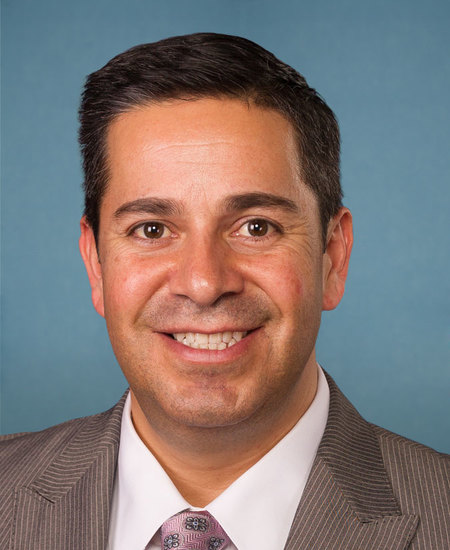
Sen. Ben Ray Luján
Sponsored bills
Maddy summaryThis bill amends the Senior Farmers' Market Nutrition Program by expanding the list of eligible foods. It replaces "and herbs" with "herbs, and tree nuts (including shelled tree nuts)" in the program's provisions. This change directly affects seniors participating in the program, allowing them to receive tree nuts as part of their benefits when purchasing fresh produce at farmers' markets. The policy change is a technical update to the program's food eligibility list, with no new funding or administrative requirements.
Maddy summaryThe Families Care Act amends the Older Americans Act to improve support for family caregivers. It adds peer support services alongside counseling for caregivers and requires states to specifically consider the needs of children caring for older relatives affected by substance use disorders, including opioid addiction. The bill also changes reporting requirements so the Assistant Secretary must regularly publish and disseminate program information instead of making it available by specific deadlines. This directly affects family caregivers, particularly those navigating complex situations involving elder care and substance use. The changes aim to make support services more responsive to diverse caregiver circumstances.
Maddy summaryThis resolution (SRES 138) designates March as "Deep Vein Thrombosis and Pulmonary Embolism Awareness Month" to raise public awareness about two serious but preventable blood clot conditions. It supports efforts to educate the public on deep vein thrombosis (DVT, blood clots in deep veins) and pulmonary embolism (PE, a clot traveling to the lungs), which affect up to 900,000 people annually in the U.S. and cause 60,000-100,000 deaths each year. The resolution does not create new laws or allocate funding; it is a non-binding symbolic gesture recognizing the importance of awareness for at-risk populations, including cancer patients and postpartum individuals. It aims to highlight prevention and the significant health burden of these conditions.
Maddy summaryThe Paycheck Fairness Act strengthens equal pay protections by modifying the Equal Pay Act of 1963 to require employers to prove that non-sex factors used in pay decisions are job-related, consistent with business necessity, and account for the entire pay difference. It prohibits employers from relying on salary history when setting pay for new hires and enhances protections for workers who discuss wages or file pay discrimination claims. The bill requires the Equal Employment Opportunity Commission to collect and publish compensation data disaggregated by sex, race, and ethnicity to better enforce pay discrimination laws. These provisions directly affect workers in the private and public sectors, particularly women and women of color who face the largest pay gaps. The act also establishes a National Award for Pay Equity to recognize employers making significant efforts to eliminate pay disparities.
Maddy summaryThe Mining Schools Act of 2025 creates a Department of Energy grant program to fund mining education at eligible colleges and universities. It directly affects accredited mining engineering programs and specific public university departments in states with significant mining economies, aiming to recruit students and strengthen training in critical mineral extraction, environmental reclamation, and domestic supply chains. Grants - limited to 10 annually - must support curriculum focused on rare earth elements, recycling technologies, reducing environmental impacts, and meeting U.S. energy mineral needs. The program authorizes $10 million yearly for fiscal years 2026-2033, with oversight by a Mining Professional Development Advisory Board.
Maddy summaryS 1022 amends Section 547 of the Public Health Service Act to increase annual funding for community recovery programs from $5 million to $16 million, covering fiscal years 2025-2029. It updates the program's name from "Building Communities of Recovery" to "Strengthening Communities of Recovery" and adjusts the funding period. This directly affects communities receiving federal support for substance use disorder recovery services under the Public Health Service Act.
Maddy summaryS 1021 establishes a new program within the Supplemental Nutrition Assistance Program (SNAP) to increase purchases of "naturally nutrient-rich dairy" (like fluid milk, yogurt, and cheese made from cow's milk) by SNAP households. It provides point-of-sale incentives at checkout, meaning SNAP users would receive immediate discounts when buying qualifying dairy products. The program allocates $10 million annually for grants to state/local governments or nonprofits to run projects, with priority given to initiatives maximizing direct incentives and using electronic systems. Projects must be evaluated for effectiveness, and results will be publicly reported, while transitioning existing dairy incentive programs to this new framework.
Maddy summaryThis bill amends the Communications Act to give the Federal Communications Commission (FCC) direct authority to enforce unpaid forfeiture penalties for violations of telemarketing rules (Section 227), which restrict unwanted automated calls. If the Attorney General doesn't act within 120 days on a referred penalty, the FCC can sue to recover the amount itself. The law prioritizes enforcement for penalties exceeding $25 million, focusing on major violations of robocall restrictions. It directly affects businesses that violate telemarketing laws by requiring them to pay penalties the FCC can now pursue independently.
Maddy summaryThis bill amends an existing fellowship program under the Public Health Service Act to specifically include "addiction medicine" as a qualifying specialty. It modifies Section 597 to expand the program's scope, allowing medical professionals training in addiction medicine to participate in the Minority Fellowship Program. The change directly affects physicians and medical trainees seeking fellowship opportunities in addiction medicine, particularly those from underrepresented groups, by making this specialty eligible for the program. The bill does not create new funding or programs but adjusts the existing program's eligibility criteria.