

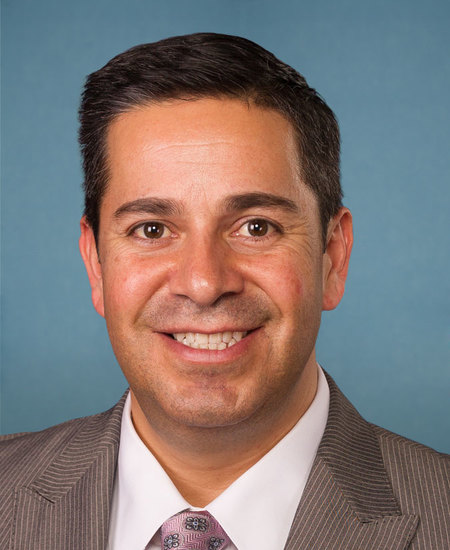
Photo of Ben Ray Luján
D United States Senate · New Mexico On the 2026 ballot

Sen. Ben Ray Luján

Compare
Total votes
1,044
all sessions
Attendance
99%
12 missed
Higher than 92% of chamber peers
With party
96%
of cast votes
Near the chamber average
Bipartisan score
2%
crosses aisle rarely
Near the chamber average
Sponsored
1,588
bills & resolutions
Higher than 80% of chamber peers
Committees
15
assignments
1,588 bills and resolutions

Sponsored bills

Total
1,588
Primary
222
Co-sponsor
1,366
This page
1,588
matching current filters
Co-sponsor SRES 250
Passed · United States Senate · Co-sponsor
A resolution recognizing National Foster Care Month as an opportunity to raise awareness about the challenges of children in the foster care system, and encouraging Congress to implement policies to improve the lives of children in the foster care system.

Maddy summarySRES 250 is a symbolic Senate resolution designating May 2025 as National Foster Care Month. It recognizes the challenges faced by the approximately 368,530 children in foster care in the U.S. and encourages Congress to develop policies improving their lives. The resolution does not create new laws or funding; it solely raises awareness and acknowledges foster parents, workers, and youth. It highlights issues like prolonged care (average 22.6 months), educational instability, and the need for better support for youth aging out (18,538 in 2022). As a procedural resolution, it has no binding effect on policy changes.

Passed May 22, 2025 1 co-sponsor
Co-sponsor SRES 253
Passed · United States Senate · Co-sponsor
A resolution congratulating His Holiness Pope Leo XIV on his election to the papacy.

Maddy summarySRES 253 is a ceremonial Senate resolution congratulating Pope Leo XIV on his election as Pope, recognizing him as the first U.S. citizen elected to the papacy. The resolution highlights his global role in promoting peace, justice, and interfaith dialogue, and expresses hope for continued strong U.S.-Holy See relations based on shared values. It does not create policy changes or affect any specific group, as it is a symbolic gesture of goodwill. The resolution was introduced by multiple senators and unanimously adopted by the Senate on May 22, 2025.

Passed May 22, 2025 1 co-sponsor
Primary SRES 256
In committee · United States Senate · Lead sponsor
A resolution designating May 2025 as "American Stroke Month".

Maddy summaryThis Senate resolution designates May 2025 as "American Stroke Month" to raise public awareness about stroke prevention, symptoms (using the F.A.S.T. warning signs), and the importance of immediate emergency response. It encourages Americans to learn stroke risk factors, recognize symptoms, and call 911 at first signs to reduce long-term disability and mortality. The resolution recognizes federal and community efforts to combat stroke - identified as the fifth-leading cause of death in the U.S. - while promoting existing initiatives like the American Stroke Association's "Together to End Stroke" campaign. It does not create new laws or allocate funding, serving purely as a symbolic designation to support ongoing public health education.

In committee May 22, 2025 0 co-sponsors
Primary SRES 249
In committee · United States Senate · Lead sponsor
A resolution expressing support for the designation of May 2025 as "Mental Health Awareness Month".

Maddy summarySRES 249 is a symbolic Senate resolution expressing support for designating May 2025 as "Mental Health Awareness Month." It does not create new laws or allocate funding but aims to raise public awareness about mental health challenges. The resolution emphasizes removing stigma, declares mental health a national priority, and encourages efforts to improve access to services and support for all populations, including children, veterans, and those affected by suicide. It specifically highlights concerns about social media's impact on youth mental health and the need for early intervention. This resolution serves as a non-binding statement of support, not a policy change.

In committee May 22, 2025 0 co-sponsors
Co-sponsor S 1881
In committee · United States Senate · Co-sponsor
Public Service Worker Protection Act

Maddy summaryThis bill expands workplace safety protections under the Occupational Safety and Health Act to cover public employees, including those working for federal, state, or local government agencies. It amends the law to explicitly include "the United States, a State, or a political subdivision of a State" in the definition of covered workers, removing previous exclusions. The key provision requires all public workplaces to follow OSHA safety standards, with a 36-month transition period for states or localities without their own OSHA-approved plans. This directly affects government workers like teachers, police, and sanitation staff who were previously excluded from federal OSHA coverage.

In committee May 22, 2025 1 co-sponsor
Primary S 1905
In committee · United States Senate · Lead sponsor
SNAP Administrator Retention Act of 2025

Maddy summaryThis bill requires state agencies administering the Supplemental Nutrition Assistance Program (SNAP) to pay staff at least the same rate as federal employees (based on 5 U.S.C. §5303) and adjust wages annually with federal pay increases. It mandates 100% federal reimbursement for all state administrative costs related to SNAP staffing, including hiring, training, and maintaining staff at the required wage levels. States must use these federal funds to supplement, not replace, existing state funding for SNAP administration and must maintain or increase staffing levels compared to fiscal year 2024. The law directly affects state SNAP program staff and agencies by ensuring competitive wages and covering full staffing costs through federal funding.

In committee May 22, 2025 0 co-sponsors
Co-sponsor S 1918
In committee · United States Senate · Co-sponsor
Access Technology Affordability Act of 2025

Maddy summaryS 1918, the Access Technology Affordability Act of 2025, creates a new federal tax credit for expenses related to access technology for blind individuals. It allows taxpayers to claim a credit of up to $2,000 per 3-year period for qualified hardware, software, or IT tools that convert visual information into accessible formats for themselves, their spouse, or a blind dependent. The credit amount adjusts annually for inflation starting in 2026 and expires after 2030. This policy directly affects taxpayers who pay for such technology for blind family members, reducing their tax liability for these qualifying expenses.

In committee May 22, 2025 1 co-sponsor
Co-sponsor S 1852
In committee · United States Senate · Co-sponsor
IBEM Act of 2025

Maddy summaryThe IBEM Act of 2025 amends the International Bridge Act of 1972 to update terminology and streamline permitting for border infrastructure. It replaces "international bridge" with "international bridge or land port of entry" throughout the law, specifically covering crossings between the U.S. and Mexico or Canada. Crucially, it prohibits the Secretary from considering environmental reviews under NEPA (42 U.S.C. 4321 et seq.) when processing Presidential permits for these border projects. The bill directly affects federal permitting for U.S. border crossings with Mexico and Canada, removing a specific environmental review step for such applications.

In committee May 21, 2025 1 co-sponsor
Co-sponsor S 1836
In committee · United States Senate · Co-sponsor
SMART Prices Act

Maddy summaryThe SMART Prices Act (S 1836) changes how Medicare negotiates drug prices. It increases the number of drugs eligible for negotiation from 15 to 50 per year starting in 2028, shortens the time drugs must be the sole source for eligibility from 7 to 3 years, and adjusts price ceiling percentages for negotiated drugs (e.g., raising the maximum fair price from 75% to 76% for some drugs). These changes directly affect Medicare Part D beneficiaries and pharmaceutical companies by altering the negotiation process and pricing caps. The bill modifies existing Medicare drug pricing rules without creating new programs, applying to initial price negotiations beginning in 2028.

In committee May 21, 2025 1 co-sponsor
Co-sponsor S 1593
In committee · United States Senate · Co-sponsor
Small Business Liberation Act

Maddy summaryS 1593, the Small Business Liberation Act, exempts small business concerns from import duties imposed under Executive Order 14257 (related to national emergencies). This applies to goods imported by or for small businesses defined by the Small Business Act (15 U.S.C. 632). The bill directly affects small businesses importing goods during declared national emergencies by removing a specific tariff burden. It provides a concrete policy change by excluding qualifying small businesses from duties that would otherwise apply to their imports under the emergency order. The exemption is limited to duties from this specific executive order, not broader tariff policies.

In committee May 21, 2025 1 co-sponsor
Showing 421 to 430 of 1,588 bills
Previous 1 … 42 43 44 … 159 Next