

Maddy summaryThis bill establishes a 7-year pilot program to test and deploy innovative wildfire technologies through partnerships between federal agencies and private entities. It directly affects federal land management agencies (like the Forest Service and FEMA), state/local fire departments, and private companies, nonprofits, or universities developing fire prevention, detection, and response tools. The program will identify priority technology areas - such as remote sensing, community resilience tools, and autonomous suppression systems - and connect innovators with agencies for real-world testing, with evaluations focused on effectiveness, scalability, and cost-efficiency. Annual reports to Congress will track progress, costs, and barriers to adopting these technologies at scale. The goal is to accelerate the use of proven tools to improve wildfire management across federal and local operations.
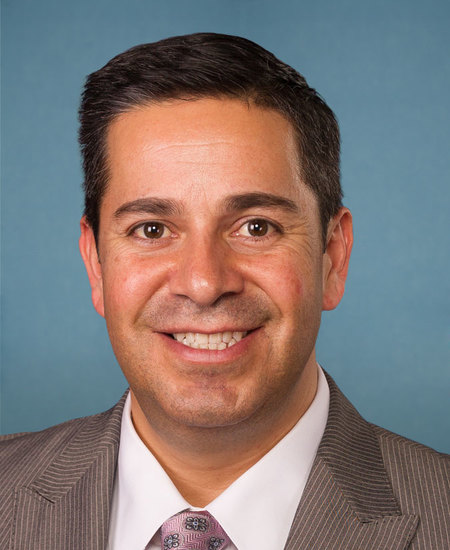
Sen. Ben Ray Luján
Sponsored bills
Maddy summaryThe Stop Ballroom Bribery Act restricts donations for specific properties tied to the President or Vice President, including White House grounds, Number One Observatory Circle, and monuments honoring them. It prohibits donations from individuals or entities involved in government litigation, seeking contracts/grants, lobbying the executive branch, or pursuing pardons or appointments. The bill requires prior approval from the National Park Service and Office of Government Ethics, mandates disclosure of meetings with officials, and bans donor recognition or anonymous contributions. It also imposes a two-year lobbying cooling-off period for donors and sets civil/criminal penalties for violations, including fines and disgorgement of benefits.
Maddy summaryThis bill (S 3195) repeals a specific section (Section 213) from the 2026 appropriations law and restores an older provision (Section 10 of the 2005 Legislative Branch Appropriations Act) as if the repealed section had never existed. It directly affects how legislative branch funding is administered, correcting a technical error in the appropriations process. The bill makes no new policy changes but restores the original funding mechanism that was inadvertently altered by the 2026 law. It is purely procedural, with no direct impact on public programs or citizens' daily lives.
Maddy summaryThis resolution expresses support for designating November 8, 2025, as "National First-Generation College Celebration Day." It honors students whose parents did not earn bachelor's degrees, recognizing their contributions to the workforce and the role of the Higher Education Act of 1965 in supporting them. The resolution encourages nationwide recognition of this day and celebrates the Act's programs like Federal TRIO and Pell Grants. As a symbolic gesture, it does not create new laws or alter existing policies.
Maddy summaryThis bill codifies existing practices for school meal programs under the National School Lunch Act. It allows states to continue using Medicaid data to automatically certify children for free or reduced-price school meals beyond the 2024 school year, maintaining current eligibility conditions. It also establishes a fixed 1.6 multiplier for determining school eligibility under the community eligibility provision, replacing prior variable calculations. The bill directly affects public schools and low-income children participating in federal meal programs, ensuring continuity of current certification and eligibility rules without introducing new benefits or funding.
Maddy summaryS 3146 (Restoring Access for Detainees Act) would require U.S. Immigration and Customs Enforcement (ICE) to provide immigration detainees in DHS custody with specific communication services. It mandates 200 free monthly minutes for calls to family or legal representatives, unlimited free minutes for communications with legal entities (like courts, immigration officials, or the UN Refugee Agency), and private communication opportunities with lawyers or oversight officials during initial detention and location changes. The bill also prohibits facilities from restricting legal call duration or monitoring protected communications, while requiring clear public policies on call timing and location. This directly affects detained immigrants seeking legal assistance or family contact during immigration proceedings.
Maddy summaryThe LEAF Act of 2025 requires the U.S. Forest Service to give preference in awarding contracts for wildfire prevention projects to "appropriate local contractors" meeting specific criteria. These contractors must either be based in the state where work occurs with at least 26% of their workforce residing there, or within 60 miles of their business location. The bill covers projects like forest thinning, hazard tree removal, and fuel breaks aimed at reducing wildfire risks on federal lands. The Forest Service must also submit annual reports tracking contract awards to such contractors and assessing the policy's economic impact.
Maddy summaryThis bill ensures uninterrupted funding for Head Start programs in fiscal year 2026 by appropriating necessary funds from the Treasury if regular or continuing appropriations for that year are not enacted by September 30, 2026. It directly affects Head Start programs and the children and families they serve by preventing service disruptions during funding gaps. The key mechanism requires funding to continue under the same conditions as fiscal year 2025 (as established by the Full-Year Continuing Appropriations and Extensions Act, 2025) until either regular appropriations are passed, a specific appropriations resolution is enacted, or September 30, 2026. The bill does not create new funding but maintains current levels to avoid program interruptions.
Maddy summaryThis bill waives cost-sharing requirements for state, tribal, local, or individual parties affected by wildland fires caused by U.S. Department of Agriculture (USDA) management activities on National Forest System land. It ensures these parties are eligible for 100% federal funding to repair direct and indirect damages, including watershed impairment, through existing recovery programs. The Secretary of Agriculture can automatically waive any required matching funds for projects related to qualifying "covered wildland fires" defined as those resulting from USDA actions. This policy change directly affects communities and entities impacted by USDA-led fire management, providing full federal reimbursement for recovery costs.
Maddy summaryThis bill requires the U.S. government to obtain congressional approval before conducting any explosive nuclear testing, directly affecting the President and Defense Department. It mandates that the President submit a detailed 180-day notice to Congress - including reasons for testing, alternatives considered, and state engagement - before proceeding. Congress must then pass a joint resolution with a two-thirds vote in both chambers to approve testing for "technical need" (e.g., nuclear weapon safety), or if another country tests first. The bill explicitly excludes subcritical experiments and fusion tests from the definition of "explosive nuclear testing."