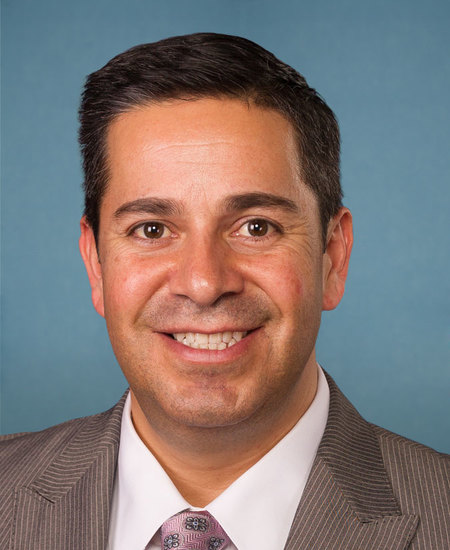
Photo of Ben Ray Luján
D United States Senate · New Mexico On the 2026 ballot

Sen. Ben Ray Luján

Compare
Total votes
1,044
all sessions
Attendance
99%
12 missed
Higher than 92% of chamber peers
With party
96%
of cast votes
Near the chamber average
Bipartisan score
2%
crosses aisle rarely
Near the chamber average
Sponsored
1,571
bills & resolutions
Higher than 80% of chamber peers
Committees
15
assignments
1,571 bills and resolutions

Sponsored bills

Total
1,571
Primary
220
Co-sponsor
1,351
This page
1,571
matching current filters
Co-sponsor S 2821
In committee · United States Senate · Co-sponsor
ESP Family Leave Act

ESP Family Leave Act This bill allows education support professionals to meet the hours of service requirements for family and medical leave if they have worked a number of hours equal to not less than 60% of the total monthly hours expected for their job descriptions and duties, as assigned for the previous school year. Education support professionals are employees within a public school or public institution of higher education which may include specified staff, such as paraeducators, administrative support staff, custodians, skilled trade workers, and nursing support staff. The Department of Labor may provide a method for calculating such leave for these professionals.

In committee Sep 23, 2021 1 co-sponsor
Co-sponsor SRES 379
Passed · United States Senate · Co-sponsor
A resolution expressing support for the designation of the week of September 13, 2021, through September 17, 2021, as "National Small Business Week" to celebrate the contributions of small businesses and entrepreneurs in every community in the United States.

This resolution honors the contributions of small businesses in the United States and supports the designation of National Small Business Week.

Passed Sep 22, 2021 1 co-sponsor
Co-sponsor S 2791
In committee · United States Senate · Co-sponsor
Tyler Clementi Higher Education Anti-Harassment Act of 2021

Tyler Clementi Higher Education Anti-Harassment Act of 2021 This bill addresses harassment at institutions of higher education (IHEs). Specifically, the bill requires each IHE to include in its annual security report a statement of policy regarding harassment on the basis of a student's actual or perceived race, color, national origin, sex (including sexual orientation, gender identity, pregnancy, childbirth, a medical condition related to pregnancy or childbirth, and a sex stereotype), disability, or religion. In addition, the Department of Education may award grants to IHEs to initiate, expand, or improve programs to (1) prevent the harassment of students; (2) provide counseling or redress services to students who have been harassed or accused of subjecting other students to harassment; or (3) educate and train students, faculty, or staff to prevent harassment or address harassment if it occurs.

In committee Sep 22, 2021 1 co-sponsor
Co-sponsor S 2798
In committee · United States Senate · Co-sponsor
Radiation Exposure Compensation Act Amendments of 2021

Radiation Exposure Compensation Act Amendments of 2021 This bill expands two programs that compensate individuals who were exposed to radiation during certain nuclear testing or uranium mining and subsequently developed medical conditions, including cancers. First, the bill expands and extends a program that compensates individuals who were exposed to radiation from atmospheric nuclear testing or other sources and subsequently developed specified cancers. Under current law, this program compensates individuals who were present in a designated geographic area during a period of nuclear testing and certain individuals employed in uranium mining. The bill expands the designated areas to include Colorado, Idaho, Montana, New Mexico, and Guam and additional areas in Arizona, Nevada, and Utah; makes more individuals who worked in uranium mining eligible for the program; increases the amount of compensation awarded to and provides medical benefits for eligible claimants; and extends for 19 years following the bill's enactment the fund that supports this program and the statute of limitations for filing claims (currently, the program terminates on July 10, 2022). Second, the bill makes certain individuals employed in uranium mines or mills eligible for a program that compensates workers, including Department of Energy employees and contractors, for illnesses caused by occupational exposure to radiation and hazardous substances during development and testing of the nation's nuclear weapons stockpile. The bill also establishes a grant program in the National Institute of Environmental Health Sciences for institutions of higher education to study the epidemiological impacts of uranium mining and milling among individuals without occupational exposure.

In committee Sep 22, 2021 1 co-sponsor
Co-sponsor S 2425
In committee · United States Senate · Co-sponsor
Suicide Prevention Lifeline Improvement Act of 2021

Suicide Prevention Lifeline Improvement Act of 2021 This bill reauthorizes through FY2027 and expands the requirements for the National Suicide Prevention Lifeline Program. Specifically, the Substance Abuse and Mental Health Services Administration (SAMHSA) must undertake efforts to raise awareness about the program and improve data collection and analysis of demographic information related to the program. In addition, SAMHSA must develop a plan to ensure the provision of high-quality service. The bill also directs the Government Accountability Office to study the program.

In committee Sep 21, 2021 1 co-sponsor
Co-sponsor SJRES 25
In committee · United States Senate · Co-sponsor
A joint resolution proposing an amendment to the Constitution of the United States relating to contributions and expenditures intended to affect elections.

This joint resolution proposes a constitutional amendment authorizing Congress and the states to set reasonable limits on the raising and spending of money by candidates and others to influence elections. The amendment grants Congress and the states the power to implement and enforce this amendment by legislation. They are allowed to distinguish between natural persons and corporations or other artificial entities created by law, including by prohibiting such entities from spending money to influence elections.

In committee Sep 20, 2021 1 co-sponsor
Co-sponsor S 2752
In committee · United States Senate · Co-sponsor
Do No Harm Act

Do No Harm Act This bill prohibits the application of the Religious Freedom Restoration Act of 1993 (RFRA) to specified federal laws or the implementation of such laws. Currently, RFRA prohibits the government from substantially burdening a person's exercise of religion even if the burden results from a rule of general applicability, except in furtherance of a compelling governmental interest when using the least restrictive means. Under the bill, RFRA is inapplicable to laws or the implementation of laws that protect against discrimination or the promotion of equal opportunity (e.g., the Civil Rights Act of 1964); require employers to provide wages, other compensation, or benefits, including leave; protect collective activity in the workplace; protect against child labor, abuse, or exploitation; or provide for access to, information about, referrals for, provision of, or coverage for, any health care item or service. The bill prevents RFRA from being used to deny (1) goods or services the government has contracted, granted, or made an agreement to provide to a beneficiary of or participant in a program or activity funded by such government contract, grant, agreement, or other award; or (2) a person's full and equal enjoyment of a government-provided good, service, benefit, facility, privilege, advantage, or accommodation. In order for a person to assert a RFRA claim or defense in a judicial proceeding, the government must be a party to the proceeding.


In committee Sep 15, 2021 1 co-sponsor
Co-sponsor S 2729
In committee · United States Senate · Co-sponsor
Device Access for Every American Act

Device Access for Every American Act This bill requires the Federal Communications Commission (FCC) to establish a program that provides a $400 voucher to a low-income individual for the purchase of a connected device (i.e., a desktop, laptop, or tablet computer) for which the FCC shall reimburse the retailer. The FCC must (1) collaborate with retailers to ensure the wide acceptance of vouchers and the wide availability of covered devices, (2) establish a website that links to offerings by retailers of eligible connected devices, (3) establish a catalog of such offerings that is accessible to consumers without internet access, and (4) advertise the availability of the program.

In committee Sep 14, 2021 1 co-sponsor
Co-sponsor S 2716
In committee · United States Senate · Co-sponsor
American Beef Labeling Act of 2021

American Beef Labeling Act of 2021 This bill reinstates mandatory country-of-origin labeling requirements for beef. Specifically, the bill requires the Office of the U.S. Trade Representative (USTR) to develop a means of reinstating the requirements that complies with the rules of the World Trade Organization. The USTR and the Department of Agriculture must implement the means within one year.

In committee Sep 13, 2021 1 co-sponsor
Showing 1,361 to 1,370 of 1,571 bills