

Assessing Monetary Influence in the Courts of the United States Act or the AMICUS Act This bill requires certain disclosures in relation to amicus briefs (i.e., briefs that are filed by those who are not a party to a case but have an interest in the case). Specifically, each amicus brief that is filed in a U.S. court of appeals or the Supreme Court must list the name of any person who contributed (1) to the preparation or submission of the brief, (2) at least 3% of the gross annual revenue of the entity filing the brief for the previous year, or (3) more than $100,000 in the previous year to the filer. Such requirements do not apply to routine commercial transactions that are unrelated to amicus brief filings. The bill also prohibits those who file amicus briefs from giving gifts or providing travel to a judge of a U.S. court of appeals or a justice of the Supreme Court, except for reimbursements for travel expenses in relation to law school appearances. Violators are subject to civil penalties.
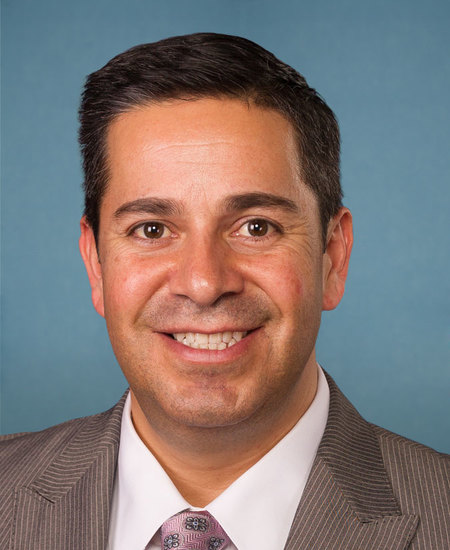
Sen. Ben Ray Luján
Sponsored bills
Cerebral Cavernous Malformations Clinical Awareness, Research, and Education Act of 2021 or the CCM-CARE Act of 2021 This bill requires the National Institutes of Health (NIH) and other agencies to expand and coordinate their efforts to research cerebral cavernous malformation. (Cerebral cavernous malformation is a condition in which blood vessels in the brain and spinal cord become enlarged, which can lead to seizures, paralysis, hearing or vision loss, and bleeding in the brain.) The NIH must (1) award grants for medical, clinical, and pharmacological research; (2) award grants to support a network of clinical research centers intended to develop a cure for the condition; and (3) convene a Cerebral Cavernous Malformations Research Consortium to develop programs for clinicians, scientists, and patients. The Centers for Disease Control and Prevention must award grants to research entities for collecting and reporting data about cerebral cavernous malformation. The Food and Drug Administration must accelerate the clinical trial process for cerebral cavernous malformation by supporting (1) appropriate laboratory indicators of the condition, (2) the qualification of clinical outcome measures related to quality of life, (3) investigational drug applications, and (4) expedited peer-review pathways.
Helping Foster and Homeless Youth Achieve Act This bill requires an institution of higher education, as a condition of receiving certain federal funding, to waive application fees for homeless children and youth and certain foster care youth.
EDUCATORS for America Act This bill provides resources to support the recruitment, retention, and preparation of educators. These resources include, among others, expanding the Teacher Quality Partnership program to include training and professional development opportunities for principals and other school leaders, updating the Augustus F. Hawkins Centers of Excellence program to support underrepresented candidates in educator preparation programs, and revising the Teacher Education Assistance for College and Higher Education (TEACH) grant program to raise the maximum amount for TEACH grants. The bill also directs the Department of Education to carry out a program to provide loan credits to eligible educator borrowers enrolled in income-contingent or income-based repayment plans.
Maddy summaryThis is a ceremonial Senate resolution (SRES 470) commemorating the death of former U.S. Senator Bob Dole of Kansas. It formally expresses the Senate's sorrow, requests the Secretary of the Senate transmit a copy to Dole's family, and directs the Senate to adjourn as a mark of respect. The resolution has no policy or legal effect - it solely serves as a symbolic tribute to Dole's public service career. It does not affect any individuals or enact new laws.
Robocall Trace Back Enhancement Act This bill provides liability protection for specified information-sharing activities undertaken to trace the origins of unlawful robocalls, illegally spoofed calls, and other illegal calls. Specifically, the bill protects a designated consortium that conducts private-led efforts to trace unlawful robocalls from liability for receiving, sharing, or publishing information about illegal calls, including their origin or source. The bill also applies liability protection to a voice service provider (i.e., a provider of any service that enables real-time, two-way voice communications) or other entity or person that shares information with the consortium.
Native Youth and Tribal Officer Protection Act This bill extends tribal jurisdiction over certain crimes, including violence against children and assault of tribal justice personnel. Additionally, the bill authorizes the Department of Justice to provide reimbursements and grants to tribal governments for exercising their tribal criminal jurisdiction.
Justice for Native Survivors of Sexual Violence Act This bill expands the special criminal jurisdiction of tribal courts over crimes of domestic violence to include other crimes and types of defendants. Specifically, the bill expands jurisdiction to include the crimes of obstruction of justice, sexual violence, sex trafficking, and stalking. The bill also allows tribal courts to exercise jurisdiction over defendants regardless of whether the defendant has ties to the tribe. The bill also (1) authorizes the Department of Justice (DOJ) to reimburse tribal governments for related expenses (e.g., arrests, prosecution, and detention); and (2) reauthorizes DOJ grants to support tribal criminal justice systems and services.
This resolution expresses that the International Atomic Energy Agency (IAEA) plays an indispensable role in strengthening nuclear security and safety around the globe. The resolution also reaffirms that the United States has a vital interest in preventing the spread of nuclear weapons and securing nuclear materials.
Biking on Long-Distance Trails Act This bill establishes requirements related to long-distance bike trails. The Department of the Interior and the Department of Agriculture shall identify not fewer than 10 long-distance bike trails; identify not fewer than 10 areas in which there is an opportunity to develop or complete long-distance bike trails; and coordinate with stakeholders on the feasibility of, and identifying any resources necessary for, completing the development of such trails.