

Maddy summaryThis resolution recognizes the contributions of care workers in the U.S., including childcare providers, home health aides, and support staff for older adults and people with disabilities. It expresses support for designating April 2023 as "Care Worker Recognition Month" to honor their essential role in supporting families and communities. The resolution highlights care workers' impact on economic stability, family caregiving, and community well-being without creating new laws or funding. As a symbolic gesture, it does not impose legal requirements or alter existing policies.
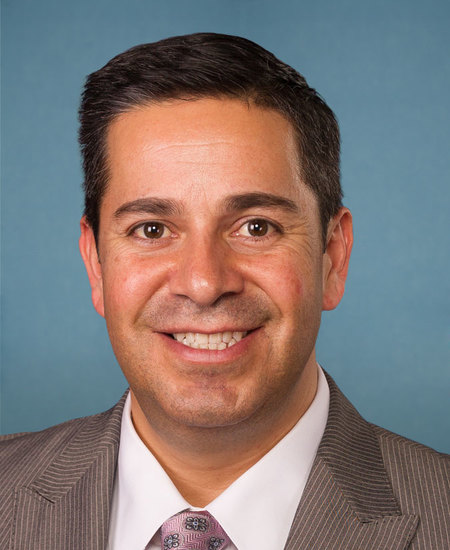
Sen. Ben Ray Luján
Sponsored bills
Maddy summarySRES 120 is a ceremonial Senate resolution designating March 23, 2023, as "National Women in Agriculture Day." It recognizes the significant contributions of women in U.S. agriculture, citing that they represent over one-third of agricultural producers and generated $148 billion in sales in 2017. The resolution encourages citizens to acknowledge women in the field and supports their roles as producers, educators, mentors, and leaders. As a symbolic gesture, it does not create new laws or funding but aims to highlight their impact on the agricultural workforce and food systems.
Maddy summaryS 1098, the Global Health, Empowerment and Rights Act, changes U.S. aid rules for foreign nongovernmental organizations (NGOs) receiving funding under the Foreign Assistance Act. It removes eligibility barriers for these NGOs if they provide health services (like counseling) using their own funds, as long as those services comply with local laws and would be legal in the U.S. It also eliminates extra restrictions on how foreign NGOs can use non-U.S. government funds for advocacy or lobbying, making these rules the same as those applied to U.S. NGOs receiving similar aid. This directly affects foreign health-focused NGOs working in international development and rights advocacy.
Maddy summaryThis bill requires businesses selling goods or services with automatic renewals or free trials to clearly disclose renewal terms and cancellation options to consumers. Specifically, businesses must provide at least 7 days' notice before charging for renewals, obtain explicit consumer consent for each renewal, and offer easy cancellation methods (online, phone, email, or mail). The law also prohibits using deceptive "dark patterns" (tricky website designs) to trick consumers into agreeing to charges and voids automatic renewals if businesses fail to comply, requiring refunds for violations. It directly affects subscription-based businesses, app stores, and online service providers that use automatic renewal features or free-to-pay conversions.
Maddy summaryThe End Racial and Religious Profiling Act of 2023 (ERRPA) prohibits law enforcement agencies at all levels from engaging in racial profiling, defined as using race, ethnicity, national origin, religion, gender, or sexual orientation in stops and searches without specific evidence. The bill requires federal, state, local, and tribal law enforcement agencies to collect and submit data on stops and searches disaggregated by race, ethnicity, gender, and religion, and to implement training programs on racial profiling. It establishes grant programs to fund data collection demonstration projects and best practices development for eliminating racial profiling, with funds reserved for small and rural law enforcement agencies. The bill also mandates annual reports to Congress on racial profiling data and implementation progress, with enforcement available through civil actions for individuals or the government.
Maddy summaryThis bill authorizes the U.S. Forest Service to fund native seed collection, seed maintenance, and seedling production for habitat restoration through contracts, grants, or agreements with state forestry agencies, local nonprofits, private entities, and universities. It specifically adds these seed-related activities to the existing Collaborative Forest Landscape Restoration Program. The key mechanism allows federal funding to support the creation of native plant materials needed for ecological restoration projects. This directly affects organizations that collect seeds or grow seedlings for land rehabilitation efforts. The policy change streamlines federal support for sustainable habitat restoration by expanding eligible activities under current law.
Maddy summaryThis bill repeals two specific legal authorizations for U.S. military force against Iraq: the 1991 authorization (Public Law 102-1) and the 2002 authorization (Public Law 107-243). If enacted, it would end the legal basis for military operations in Iraq under these two resolutions. The repeal directly affects the executive branch’s authority to use military force against Iraq under these specific laws. It does not create new policy but removes existing legal permissions.
Maddy summaryThis bill raises the salary threshold for white-collar workers (executives, administrators, professionals) to qualify for overtime pay under federal law. It sets new annual salary minimums: $45,000 starting in 2023, increasing to $55,000 in 2024, $65,000 in 2025, $75,000 in 2026, and then automatically adjusting yearly based on the 55th percentile of full-time salaried workers' earnings. The bill also limits exempt employees to no more than 20 hours per week on duties not directly related to their exempt roles. It directly affects millions of salaried workers currently excluded from overtime pay due to the current $35,568 annual threshold. The changes aim to restore overtime protections to historic levels by updating the threshold to reflect modern wages.
Maddy summaryThe EACH Act of 2023 requires federal health programs - including Medicaid, Medicare, the Indian Health Service, and others - to cover abortion services regardless of income or insurance type. It directly affects millions of low-income individuals, women of color (who are disproportionately enrolled in Medicaid), LGBTQ+ people, and people in states that currently restrict abortion coverage. Key provisions mandate that all federally funded health programs provide abortion coverage (Section 4), repeal a prior law restricting abortion coverage in private insurance (Section 5), and prohibit federal interference with private insurance coverage of abortion services. The bill aims to remove financial barriers to abortion care by ensuring coverage through federal programs and private plans.
This resolution designates March 2023 as National Women's History Month. The resolution also recognizes the celebration of such month as a time to reflect on the contributions that women have made to the United States.