Work Opportunity Tax Credit and Jobs Act This bill makes the work opportunity tax credit permanent.
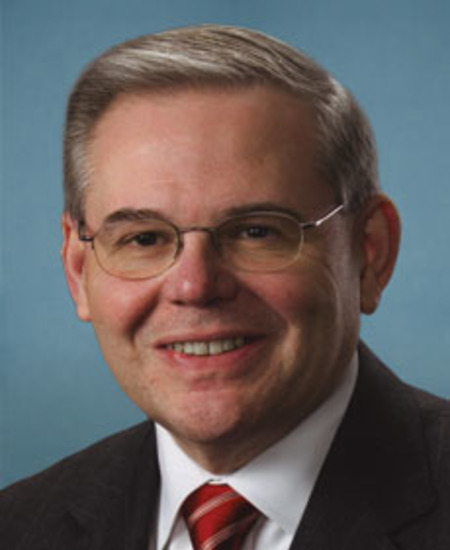
Sen. Robert Menendez
Sponsored bills
Child and Dependent Care Tax Credit Enhancement Act of 2021 This bill modifies the tax credit for employment-related expenses incurred for the care of a taxpayer's dependent to (1) increase to $400,000, the adjusted gross income threshold level above which the credit is incrementally reduced; (2) increase the dollar limits on the allowable amount of the credit; (3) specify rules for married couples filing separate returns; (4) allow an inflation adjustment to the adjusted gross income threshold and the maximum credit amounts, beginning after 2022; and (5) make the credit refundable.
Promoting Restoration of Emergency Preparedness and Advancing Response to Epidemics in Long-Term Care Act or the PREPARE LTC Act This bill provides statutory authority for certain infection control and emergency preparedness requirements for Medicare skilled nursing facilities and Medicaid nursing facilities, and expands certain requirements to apply to other infectious disease outbreaks beyond COVID-19 (i.e., coronavirus disease 2019). Specifically, the bill provides statutory authority for regulations that require, and set standards for, infection control programs and emergency preparedness programs in such facilities. The bill requires facilities to report information concerning any infectious disease outbreak that results in a state or national emergency in accordance with the standards for COVID-19 reporting. It also prohibits the Centers for Medicare & Medicaid Services from reducing the frequency of compliance surveys or waiving direct care staffing reports during such outbreaks. Additionally, the Government Accountability Office must report on deficiencies relating to COVID-19 infection control and direct care staffing requirements for skilled nursing facilities.
Worker Health Coverage Protection Act This bill provides health insurance premium assistance to individuals who become unemployed or are furloughed during the period beginning on March 1, 2020, and ending on September 30, 2021. Specifically, the bill treats premiums as paid for individuals who (1) are terminated from employment and elect to continue insurance coverage through the COBRA (Consolidated Omnibus Budget Reconciliation Act) program during such period, or (2) receive more than a 30% reduction in work hours during such period but remain eligible for coverage under a group health plan. The bill also specifies requirements for individuals changing, or enrolling in, health plans under the program. Additionally, the bill requires employers to provide eligible individuals specified written notice about this health insurance premium assistance, including, among other information, available health plan enrollment options and the date that such assistance expires. The Department of the Treasury must reimburse employers, group health plans, and insurance issuers through a payroll tax credit or refund for unpaid premiums that were treated as paid under the program. Premium assistance is not considered income for federal income tax purposes or for determining eligibility for federal or state benefits or assistance.
This bill provides funds for assistance to homeowners to prevent mortgage defaults, foreclosures, and displacements of individuals and families experiencing financial hardship after January 21, 2020. The Department of the Treasury must disburse the funds to state housing finance agencies, territories, and Indian tribes for the provision of such assistance.
Family and Medical Insurance Leave Act or the FAMILY Act This bill entitles every employee to a family and medical leave insurance (FMLI) monthly benefit payment of two-thirds of the employee's regular pay, limited to a maximum of $4,000, for not more than 60 days of qualified caregiving. The bill establishes the Office of Paid Family and Medical Leave within the Social Security Administration to administer the FMLI program. An FMLI benefit payment must be coordinated with any periodic benefits received under a state or local temporary disability insurance or family leave program. The bill imposes a tax on employers, employees, and self-employed individuals to fund FMLI benefits. It also establishes the Federal Family and Medical Leave Insurance Trust Fund to hold tax revenues.
United States-Israel PTSD Collaborative Research Act This bill establishes a grant program for collaborative efforts between the United States and Israel to advance research on post-traumatic stress disorders. The Department of Defense, in coordination with the Department of Veterans Affairs and the Department of State, shall award grants to eligible academic institutions or nonprofit entities in the United States. Work shall be conducted by the eligible entity and an entity in Israel under a joint research agreement.
Paycheck Fairness Act This bill addresses wage discrimination on the basis of sex. Specifically, it (1) limits an employer's defense that a pay differential is based on a factor other than sex to only bona fide job-related factors in wage discrimination claims, (2) enhances nonretaliation prohibitions, (3) makes it unlawful to require an employee to sign a contract or waiver prohibiting the employee from disclosing information about the employee's wages, and (4) increases civil penalties for violations of equal pay provisions. Additionally, the Equal Employment Opportunity Commission (EEOC) and the Office of Federal Contract Compliance Programs must train EEOC employees and other affected parties on wage discrimination. The bill directs the Department of Labor to (1) establish and carry out a grant program for negotiation skills training for girls and women, (2) conduct studies to eliminate pay disparities between men and women, and (3) make available information on wage discrimination to assist the public in understanding and addressing such discrimination. The bill also establishes the Secretary of Labor's National Award for Pay Equity in the Workplace for an employer who has made a substantial effort to eliminate pay disparities between men and women. Finally, the bill requires the EEOC to issue regulations for collecting from employers compensation and other employment data according to the sex, race, and national origin of employees for use in enforcing laws prohibiting pay discrimination.
Spotlight Act This bill renders null and void final Internal Revenue Service (IRS) regulations published on May 28, 2020, relating to the reporting requirements of tax-exempt organizations. The bill requires tax-exempt organizations that fall under sections 501(c)(4), 501(c)(5), and 501(c)(6) of the Internal Revenue Code (e.g., social welfare organizations, labor organizations, business leagues) to disclose the names and addresses of all substantial contributors (persons who contribute more than $5,000 per year to such organizations) on their information returns. The bill also eliminates the authority of the IRS to provide exceptions to the disclosure requirements for tax-exempt organizations. This provision does not apply to determinations made by the IRS before July 16, 2018.

Ethan's Law This bill establishes a framework to regulate the storage of firearms on residential premises at the federal, state, and tribal levels. At the federal level, the bill establishes statutory requirements for firearms on residential premises to be safely stored if a minor is likely to gain access without permission or if a resident is ineligible to possess a firearm. An individual who violates the requirements is subject to criminal penalties. A firearm stored in violation of the requirements is subject to seizure and forfeiture. At the state and tribal levels, the bill requires the Department of Justice to award grants to implement functionally identical requirements for the safe storage of firearms.