

COVID - 19 Hate Crimes Act This bill requires a designated officer or employee of the Department of Justice (DOJ) to facilitate the expedited review of hate crimes and reports of hate crimes. DOJ must issue guidance for state, local, and tribal law enforcement agencies on establishing online hate crime reporting processes, collecting data disaggregated by protected characteristic (e.g., race or national origin), and expanding education campaigns. Additionally, DOJ and the Department of Health and Human Services must issue guidance aimed at raising awareness of hate crimes during the COVID-19 (i.e., coronavirus disease 2019) pandemic. The bill establishes grants for states to create state-run hate crimes reporting hotlines. It also authorizes grants for states and local governments to implement the National Incident-Based Reporting System and to conduct law enforcement activities or crime reduction programs to prevent, address, or respond to hate crimes. Finally, in the case of an individual convicted of a hate crime offense and placed on supervised release, the bill allows a court to order that the individual participate in educational classes or community service as a condition of supervised release.
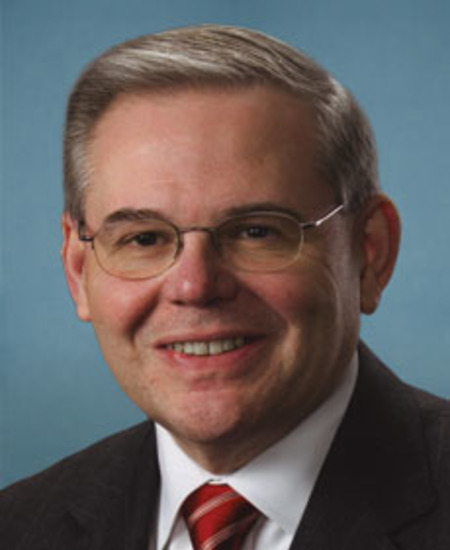
Sen. Robert Menendez
Sponsored bills
Concentrating on High-value Alzheimer's Needs to Get to an End (CHANGE) Act of 2021 This bill modifies the requirements under Medicare for diagnosing and treating Alzheimer's disease and other cognitive impairments in older adults. Specifically, the bill expands the cognitive impairment detection benefit during annual wellness visits to require the use of validated detection tools and documentation of the results in the patient's medical record. Further, when a cognitive impairment is detected, the patient must be referred to an appropriate diagnostic service provider and other specified supports. Additionally, the Centers for Medicare & Medicaid Services must implement Medicare policies that increase the identification and response to patients' Alzheimer's disease risk factors and incentivize providers to utilize high-quality cognitive impairment diagnosis practices.
This resolution expresses support for the goals and ideals of National Sexual Assault Awareness and Prevention Month.
This resolution recognizes the historic struggle of the people of Mexico for independence and freedom, which Cinco de Mayo commemorates.
Real Education and Access for Healthy Youth Act of 2021 This bill requires the Department of Health and Human Services (HHS) to establish grants to support sex education and sexual health services for young people (ages 10 through 29) and repeals requirements that apply to certain federally funded sex education programs. HHS must award grants, in coordination with the Department of Education, to (1) provide sex education to young people through elementary and secondary schools, institutions of higher education, and youth-serving organizations; and (2) train education professionals to effectively teach, and otherwise support, sex education. Sex education refers to high quality teaching and learning that follows, to the maximum extent practicable, specified educational standards; covers a variety of topics concerning sex and sexuality; explores values and beliefs about those topics; and helps young people gain skills to navigate relationships and manage sexual health. Additionally, HHS must award grants for the provision of sexual health services to marginalized youth to youth-serving organizations and health care entities that are eligible to receive covered outpatient drugs at reduced prices through the 340B drug discount program. Recipients of any of these grants must comply with certain nondiscrimination requirements. In addition, they may not use funds for sex education programs or sexual health services that provide incomplete or inaccurate medical information or fail to address specified issues. The bill also eliminates prohibitions regarding the content of specified federally funded sexual health education and information programs and repeals the Abstinence Only Until Marriage program.
Military Retiree Survivor Comfort Act This bill addresses the overpayment of retired or retainer pay to a joint account (bearing the name of the decedent and the decedent's designated beneficiary) during the month of the death of a retired member of the armed forces. Specifically, the bill authorizes the Department of Defense (DOD) to forgive or offset the overpayment if the decedent was enrolled in the Survivor Benefit Plan (SBP). In the case of an offset, each of the first 12 SBP annuity payments after the death of the retired service member must be reduced by one-twelfth of the overpayment. If the decedent was not enrolled in the SBP, DOD is authorized to forgive the overpayment.
This resolution urges the United Kingdom (UK) and the European Union (EU) to support peace on the island of Ireland and the principles, objectives, and commitments of the Good Friday Agreement. The resolution also expresses support for subsequent agreements relating to the relationship between Northern Ireland and the Republic of Ireland, including the agreement concerning the UK's withdrawal from the EU. (The island of Ireland is divided between Northern Ireland, which is part of the UK, and the Republic of Ireland, an EU member state.)
This resolution welcomes President Moon Jae-in of South Korea to the United States. It also reaffirms the importance of the U.S.-South Korea relationship to peace, security, and prosperity on the Korean Peninsula and in the Indo-Pacific region.
This resolution designates the week of May 9-May 15, 2021, as National Police Week.
Gym Mitigation and Survival Act of 2021 or the GYMS Act of 2021 This bill establishes a grant program to provide economic support to eligible fitness facilities in response to the COVID-19 (i.e., coronavirus disease 2019) pandemic. Specifically, the bill authorizes the Small Business Administration to make initial and supplemental grants to privately owned fitness facilities that primarily provide health or fitness services and that do not offer golf, hunting, sailing, or riding facilities. The total amount of grant funds for a recipient may not exceed $25 million, and the recipient must use these funds for payroll costs, rent or mortgage obligations, and other ordinary and necessary business expenses.