

Supreme Court Ethics Act This bill establishes a new statutory requirement for the Judicial Conference of the United States to issue a judicial code of conduct for judges and justices of U.S. courts, including Justices of the Supreme Court. Currently, the Judicial Conference issues a code of conduct for judges of U.S. courts (but not for Justices of the Supreme Court).
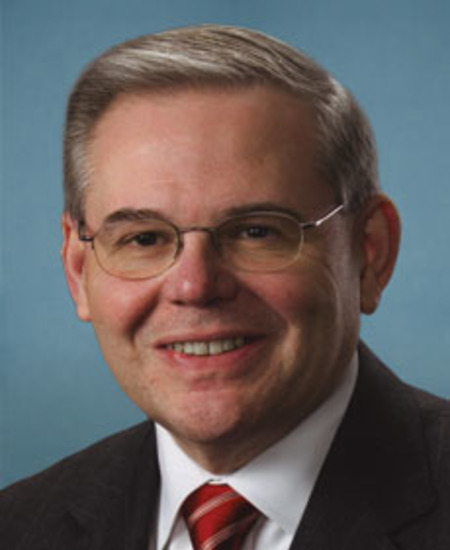
Sen. Robert Menendez
Sponsored bills
Provider Relief Fund Deadline Extension Act This bill extends the period during which health care providers may use payments received from the Provider Relief Fund to cover a variety of costs related to COVID-19.
United States Cadet Nurse Corps Service Recognition Act of 2021 This bill recognizes service as a member of the U.S. Cadet Nurse Corps between July 1, 1943, and December 31, 1948, as active duty service. The active duty designation entitles qualifying individuals to certain benefits afforded to veterans, such as burial benefits (not including interment at Arlington National Cemetery) and honorary veteran status. Under the bill, the Department of Defense (DOD) must issue individuals who served in the corps during the specified period a discharge from their service under honorable conditions if such a discharge is warranted based on the duration and nature of the service. Such individuals are not entitled to Department of Veterans Affairs benefits aside from those related to burials and memorials. The bill also authorizes DOD to produce a service medal or other commendation, memorial plaque, or grave marker to honor the individuals.
This bill expands eligibility for Department of Veterans Affairs hospital care, medical services, and nursing home care to include veterans of World War II who are not already covered.
Providing Adequate Resources to Enhance Needed Time with Sons and daughters Act of 2021 or the PARENTS Act of 2021 This bill expands the use of federal incentive payments to states under the Child Support Enforcement Program to include establishing agreements for how much time a child spends with each parent as agreed to by the parents under a child support or medical support order. Generally, the incentive payments program provides funding based on a state's performance measures related to (1) establishing paternity, (2) the number of cases with child support orders in place, (3) the collection of current and past-due support payments, and (4) cost-effectiveness.
Territory Economic Development Tax Credit Act This bill establishes a new tax credit for wages and tangible investments made by U.S. domestic corporations with branches operating in U.S. territories. It requires that 80% of credible income must be derived from a territory during a 3-year period, and 75% must come from an active trade or business in a territory. The credit is equal to 40% of eligible wages and benefits paid or provided to employees in the territory, subject to certain limitations.
Fair Sugar Policy Act of 20 21 This bill makes several modifications to the Department of Agriculture's sugar program. Among other modifications, the bill decreases the rate for price support loans, repeals the marketing allotments, revises the administration of import quotas, and repeals the Feedstock Flexibility Program.
American Opportunity Tax Credit Enhancement Act of 2021 This bill modifies the American Opportunity and Lifetime Learning tax credits to make the American Opportunity tax credit 100% refundable. It also modifies the provision denying the American Opportunity tax credit to students convicted of a federal or state felony relating to the possession or distribution of a controlled substance. Students may not be denied such credit unless the prison term for the drug offense is at least 15 years.
Broadcast Varied Ownership Incentives for Community Expanded Service Act or the Broadcast VOICES Act This bill requires the Federal Communications Commission (FCC) to take certain actions to increase diversity of ownership in the broadcasting industry and establishes related tax incentives. Specifically, the bill requires the FCC to report to Congress regarding (1) recommendations for increasing the total number, and the value, of broadcast stations that are owned by socially disadvantaged individuals; (2) the total number of broadcast stations that are owned by socially disadvantaged individuals; and (3) whether there is a nexus between diversity of ownership or control of broadcast stations and the diversity of the viewpoints expressed on the stations. In addition, the bill allows companies engaged in the qualifying sale of a broadcast station to receive favorable tax treatment by electing nonrecognition of the gain or loss resulting from the sale. To qualify for this treatment, the sale must result in or preserve ownership of a broadcast station by socially disadvantaged individuals. Finally, the establishes a tax credit for certain contributions toward the training of socially disadvantaged individuals in the management and operation of broadcast stations.
Encouraging Americans to Save Act This bill sets forth provisions to provide matching payments for retirement savings and Individual Retirement Account (IRA) contributions for individuals who have attained the age of 18 years, excluding taxpayer dependents. Specifically, it allows an enhanced 50% tax credit, up to $2,000, for deductible retirement savings contributions and for IRA contributions. The bill also directs the Internal Revenue Service (IRS) to establish the R-Bond Program as a permanent program for the establishment and maintenance of individual retirement plans and directs the IRS to educate taxpayers on the benefits of the savings programs provided by this bill.