

Maddy summarySRES 221 is a Senate resolution supporting National Minority Health Month in April 2023 by raising awareness of health disparities affecting specific minority populations. It highlights documented inequities, such as higher rates of diabetes, cancer, and mortality among American Indians, Alaska Natives, Asian Americans, African Americans, Hispanics, and Native Hawaiians or Pacific Islanders compared to non-Hispanic White populations. The resolution does not create new laws or allocate funding but serves as a symbolic acknowledgment of these disparities through a series of cited statistics from health data. It aims to promote public understanding of these issues during the designated awareness month.
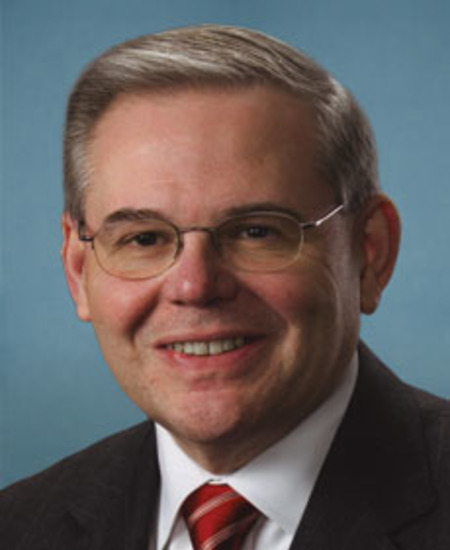
Sen. Robert Menendez
Sponsored bills
Maddy summaryThis resolution (SRES 209) is a symbolic Senate measure recognizing May as Asian American, Native Hawaiian, and Pacific Islander Heritage Month. It formally celebrates the historical contributions of these communities to the United States, highlighting their diverse cultural impact and achievements. The resolution does not create new laws or policies - it simply encourages the Senate to observe the month with recognition of these communities' roles in U.S. history. It follows longstanding tradition, as May was chosen to honor key milestones including the arrival of Japanese immigrants and Chinese laborers on the transcontinental railroad.
Maddy summaryThis bill imposes federal funding sanctions on states implementing congestion pricing systems similar to New York's Manhattan CBD Tolling Program (referenced in its April 2023 environmental assessment). Starting October 1, 2023, it withholds 50% of a state's annual federal highway funds (for both highway and transit programs) if the state uses such a system. It also requires project sponsors to obtain consent from affected states before launching value pricing pilot programs. The bill directly affects states like New York that have advanced congestion pricing plans, targeting their access to federal transportation funds.
Maddy summaryThe Democracy Restoration Act of 2023 (S 1677) would restore voting rights for most U.S. citizens with criminal convictions who are not serving a felony sentence in prison. It requires states to notify individuals when they regain voting rights, with specific timelines for notification after sentencing or release from custody. The bill prohibits states from requiring payment of fines or fees to restore voting rights, affecting over 4.6 million disenfranchised citizens. It applies only to federal elections and would take effect for elections held after enactment.
Maddy summaryThis bill would create a federal paid family and medical leave insurance program, providing wage replacement benefits for workers who need time off for family or medical reasons. Eligible workers would receive up to $4,000 per month (with a minimum of $580), calculated as 85% of the first $1,257 in monthly earnings, 69% of the next $2,243, and 50% of any amount above that. The program would be funded through 0.2% payroll taxes on both employees and employers, administered by the Social Security Administration. It would directly affect workers who meet income requirements, with benefits available for up to 60 caregiving days per benefit period.
Maddy summaryThis bill creates a federal grant program to fund training for law enforcement officers on interacting with people with disabilities and older adults with cognitive impairments. Nonprofit disability organizations will receive grants to develop training programs requiring at least 8 hours of mandatory training for new officers (including 4 hours of interactive learning with covered individuals) and 4 hours of annual refresher training for existing officers. The training covers communication strategies, de-escalation techniques, identifying disabilities, and community resources, with a requirement that covered individuals serve as instructors. Funded at $100 million annually through 2026, the program aims to reduce violent encounters based on findings that people with disabilities are 2.5 times more likely to be victims of violent crime and disproportionately affected by police violence.
Maddy summaryThis bill requires law enforcement agencies to collect and report disability status data during interactions with individuals with disabilities. It establishes an advisory council (with over 50% members having disabilities) to develop standardized data collection methods, which the Bureau of Justice Statistics must implement in its Police-Public Contact Survey. The bill also amends death-in-custody reporting to mandate inclusion of disability status in all federal submissions. These requirements apply to state and federal law enforcement agencies that report to federal databases.
Maddy summaryThis bill directs federal health programs to prioritize services for racial and ethnic minority groups experiencing mental health disparities. It creates a new grant program (amending the Public Health Service Act) requiring special consideration for community health centers serving these populations, and mandates a National Institutes of Health study on disparities in mental health outcomes, including impacts of trauma and bias. The bill also requires training standards for health professionals in culturally appropriate care and funds a national outreach strategy to reduce stigma and improve access to evidence-based treatments. Key funding includes $750 million annually for the National Institute on Minority Health and $150 million for NIH mental health research through 2029.
Maddy summaryThe Responsible Firearms Marketing Act requires the Federal Trade Commission (FTC) to study firearm advertising practices, specifically examining ads that may target minors, imply illegal use, or promote semiautomatic assault weapons. Within two years, the FTC must report findings and recommend regulations to ban such deceptive practices. If enacted, the FTC would create rules prohibiting firearm manufacturers, dealers, and importers from using ads that appeal to children, suggest illegal activity, or market assault weapons. The law would apply existing FTC enforcement authority under the Federal Trade Commission Act to these new regulations. This directly affects gun industry businesses by restricting certain advertising tactics.
Maddy summaryThe HELP Act of 2023 allocates federal funding to strengthen 211 information and referral services and 988 mental health crisis services nationwide. It requires states to coordinate these services to ensure 24/7 availability, improve accessibility for people with disabilities, and reduce inappropriate 911 calls by connecting individuals with human services instead of law enforcement. The bill authorizes $550 million annually for 2024-2025 (split between 211 and 988 services) and $450 million annually for 2026-2030, with states required to establish oversight bodies to monitor service quality and racial equity. States must use funds to expand access to mental health and human services, particularly in underserved communities, while tracking how many 911 calls are diverted to appropriate services.