

Maddy summaryThe ICEE HOT Act of 2024 establishes a federal rebate program to promote energy-efficient building electrification products. It provides 30% rebates to contractors, distributors, and manufacturers for eligible products like heat pumps, water heaters, and electric stoves, with 40% of funds required to support disadvantaged businesses or those with 40% disadvantaged employees. The program mandates that 85% of rebates be passed through to end consumers and offers additional incentives for union labor and high-efficiency products exceeding Energy Star standards. The bill authorizes $10 billion for states to implement these rebates from 2025-2032, aiming to increase product availability and address equity in the energy transition.
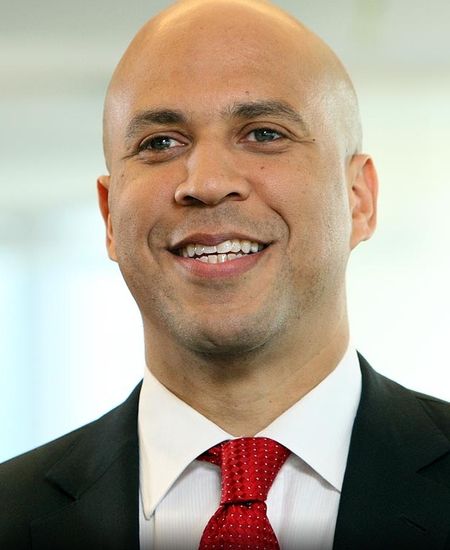
Sen. Cory A. Booker
Sponsored bills
Maddy summaryS 5637 establishes the Biomedical Innovation Fund in the Treasury, requiring annual $10 billion transfers from the general fund starting September 1, 2025, through 2034. The fund distributes amounts to the National Institutes of Health (NIH) and Food and Drug Administration (FDA) based on their discretionary appropriations relative to minimum funding levels, with 20% of each annual allocation available for obligation each year over five fiscal years. Funds must support specific research activities including basic disease research, innovative treatments for unmet medical needs, early-career scientist programs, and studies targeting conditions disproportionately affecting Medicare/Medicaid populations. The bill strictly prohibits non-compliant uses and mandates annual reports on fund operations and research outcomes to Congress.
Maddy summarySRES 933 is a Senate resolution calling on the United Nations Security Council to enforce the existing arms embargo on Darfur and extend it to cover all of Sudan, including dual-use equipment like items usable for both civilian and military purposes. It also urges the UN to strengthen sanctions enforcement against violators and create mechanisms for humanitarian aid and civilian protection. The resolution directs the U.S. government to support monitoring of weapons deliveries, improve tracking of arms flows, and work with international partners to pressure Sudan’s warring parties. This resolution directly addresses the UN Security Council and U.S. agencies, aiming to address ongoing conflict and atrocities documented since the April 2023 Sudan war began.
Maddy summaryThe MAGNET Act creates a new grant program to help magnet schools promote racial and socioeconomic diversity in education. It provides funding for evidence-based practices like weighted lotteries for enrollment, free transportation, culturally responsive curricula, and inclusive family engagement. Schools receiving these grants must report on diversity metrics, academic outcomes, and progress in reducing segregation, particularly in highly segregated districts. The grants can be used for up to 5 years with a maximum of $7.5 million per recipient. The bill targets improving educational opportunities for students of color and low-income students in segregated schools through concrete policy changes to magnet school programming.
Maddy summaryThis bill establishes the Historic Greenwood District - Black Wall Street National Monument in Tulsa, Oklahoma, to preserve and interpret the history of the Greenwood District (known as "Black Wall Street") and the 1921 Tulsa Race Massacre. The monument, defined by a specific map, protects private property rights and allows the Secretary of the Interior to acquire land via donation, purchase, or exchange. It creates an 11-member Advisory Commission (including 7 descendants of 1921 residents, 3 preservation experts, and one appointed with Tulsa Mayor input) to advise on management. The bill ensures private property owners retain land use rights and zoning authority within or near the monument boundary.
Maddy summaryThis bill establishes a Federal Flood Risk Management Standard requiring federal agencies to consider flood risks in planning and construction of federally funded projects. It mandates that agencies use climate-informed science to evaluate flood risks, requiring new construction to be elevated 2-3 feet above base flood elevation (depending on whether it's a "critical action"), and requires agencies to consider alternatives to building in floodplains. The law also requires agencies to provide public notice and allow for comment on projects in floodplains, and to annually reassess implementation based on the latest science. These requirements apply to all federal agencies undertaking actions in or affecting floodplains, including construction, improvements, and planning activities involving federal funds.
Maddy summaryS 5567, the SAFE SEX Workers Study Act, mandates two federal studies to examine how the 2018 SESTA/FOSTA law impacted sex workers' health and safety. The bill requires the Health and Human Services Secretary to study changes in sex workers' access to safety tools (like client screening), violence exposure, housing stability, and health risks (including HIV transmission), focusing on vulnerable groups like transgender women of color. Simultaneously, the Attorney General must assess how SESTA/FOSTA affected human trafficking investigations and prosecutions, including disparities for marginalized communities. Both studies will involve interviews with service organizations and report findings to Congress within one year of the bill's enactment. The bill does not change laws but seeks data to inform future policy.
Maddy summaryThe CREATE AI Act of 2024 establishes a National Artificial Intelligence Research Resource (NAIRR) to improve access to computational resources, data, and AI testbeds for researchers and students. The NAIRR will be managed by the National Science Foundation with an Operating Entity selected through a competitive process, providing resources to eligible users at universities, non-profits, government agencies, and certain small businesses. The bill requires the NAIRR to prioritize projects focused on privacy, ethics, civil rights, safety, and trustworthiness of AI systems. It creates governance structures including an NAIRR Steering Subcommittee chaired by the Director of the Office of Science and Technology Policy to oversee the resource's development and operations. The goal is to democratize AI research by making resources more accessible to a broader range of researchers and students, particularly those from underrepresented groups in STEM.
Maddy summarySRES 927 is a symbolic Senate resolution commemorating World AIDS Day (December 1) and expressing support for global efforts to end the HIV/AIDS epidemic. It commends existing programs like the Ryan White CARE Act, PEPFAR, and the Global Fund, while urging continued funding, expanded testing/treatment access, and action to address disparities. The resolution does not create new laws or allocate funds; it is a non-binding expression of support for achieving zero new HIV infections, zero discrimination, and zero AIDS-related deaths by 2030. It directly affects no individuals or entities, as it serves only to recognize ongoing efforts and encourage future action.
Maddy summaryThe FDA Modernization Act 3.0 requires the FDA to issue a final rule within 180 days of enactment to implement regulations for nonclinical testing methods used in drug development. This affects pharmaceutical companies developing new drugs by establishing standardized requirements for preclinical safety testing before human trials. The bill also makes a technical amendment to renumber a subsection related to clinical trial diversity plans, clarifying existing provisions without changing their substance. The key change is the FDA's obligation to finalize these testing regulations, aiming to modernize the drug approval process.