Maddy summaryThis bill directs the Department of Education to use the International Holocaust Remembrance Alliance (IHRA) definition of antisemitism when reviewing discrimination complaints under Title VI of the Civil Rights Act. It specifically applies to cases involving discrimination based on Jewish ancestry or ethnic characteristics in schools and programs receiving federal funding. The bill clarifies that this guidance does not expand the Department’s authority, alter existing discrimination standards, or affect First Amendment rights. It aims to ensure consistent enforcement against antisemitism in federally funded education settings, building on existing Department practices since 2019.
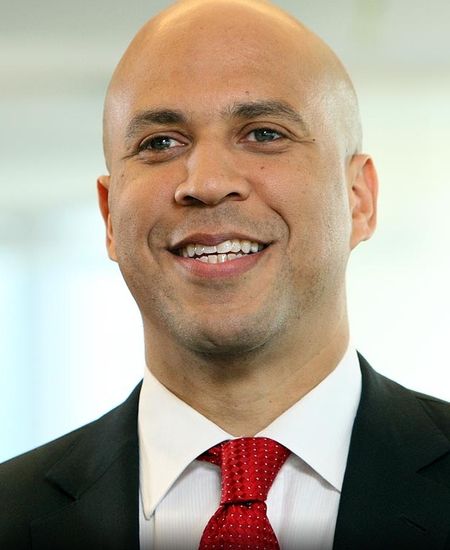
Sen. Cory A. Booker
Sponsored bills
Maddy summaryThe Equality Act (S 1503) amends existing civil rights laws to explicitly prohibit discrimination based on sexual orientation and gender identity in employment, housing, public accommodations, credit, and jury service. It expands the definition of "sex" in federal civil rights laws to include sexual orientation and gender identity, clarifying that discrimination based on these factors is prohibited under current law. The bill directly affects individuals, businesses, government entities, and service providers by requiring compliance with these expanded anti-discrimination protections. It does not create new rights but makes clear that existing protections against sex discrimination already cover sexual orientation and gender identity, as affirmed by the Supreme Court in Bostock v. Clayton County. The legislation aims to provide consistent nationwide protections against discrimination that LGBTQ+ people have historically faced in key areas of public life.
Maddy summaryThe Medicare for All Act would establish a government-run health insurance program providing comprehensive coverage to all U.S. residents, replacing current private insurance, Medicare, and Medicaid. The program would cover all medically necessary services including hospital care, prescription drugs, dental, vision, mental health, and reproductive care without patient cost-sharing (except for limited prescription drug cost-sharing under specific conditions). It would prohibit private insurers from selling duplicate coverage and require employers to stop providing duplicate benefits, while allowing supplemental coverage for additional services not included in the core benefits package. The bill includes a transition period with immediate coverage for children and a gradual phase-in for full implementation, with benefits first available for most individuals in 2027. The program would be funded through a new Medicare for All Trust Fund, consolidating current health care program revenues.
Maddy summary# Summary of the Agriculture Resilience Act of 2025 This proposed legislation contains comprehensive provisions to enhance agricultural resilience, reduce food waste, and promote sustainable farming practices. Key components include: 1. **Conservation Programs**: - Enhanced conservation reserve program with new "Grassland 30" contracts for long-term grassland protection - Private grazing land conservation assistance focusing on soil health, climate resilience, and advanced grazing management - Support for producers transitioning from confinement systems to managed grazing 2. **Food Waste Reduction**: - Standardized "quality date" (BEST If Used By) and "discard date" (USE By) labeling requirements - Mandatory food donation clauses for Federal contracts over $10,000 - School food waste reduction grant program for local educational agencies - National media campaigns to decrease food waste incidence 3. **Sustainable Agriculture Practices**: - Establishment of agrivoltaic systems (combining solar energy with agriculture) - Alternative manure management program to reduce methane emissions - Composting recognized as a conservation practice - Support for anaerobic digestion systems to reduce methane emissions 4. **Renewable Energy**: - Enhanced Rural Energy for America Program with carbon accounting requirements - New provisions for agrivoltaic systems research and demonstration - AgSTAR program transition to USDA for anaerobic digestion support 5. **Food Donation and Recovery**: - Amendments to the Federal Food Donation Act requiring donation of excess food - Grants for large-scale composting and anaerobic digestion food waste-to-energy projects - Food Waste Research Program to coordinate nationwide efforts The Act includes significant funding allocations for these programs (e.g., $50 million annually for grazing land conservation, $1.5 billion for alternative manure management, $100 million annually for composting/anaerobic digestion projects) with a focus on supporting beginning farmers, socially disadvantaged producers, and underserved communities.

Maddy summaryThis bill (S 1519) designates approximately 1.56 million acres of the Arctic National Wildlife Refuge in Alaska as wilderness under federal law. It permanently protects this specific area from development like oil drilling or road construction by adding it to the National Wilderness Preservation System. The designation directly affects the refuge's management, ensuring this coastal plain ecosystem remains preserved in its natural state.
Maddy summarySRES 183 is a symbolic Senate resolution designating April 2025 as "Earth Month" to encourage nationwide environmental action. It does not create new laws but urges U.S. citizens to engage in specific activities like planting trees, reducing pollution, conserving energy, and supporting Indigenous environmental knowledge. The resolution specifically encourages communities to address climate challenges, center frontline voices, improve energy efficiency, and educate others about year-round environmental protection. It directly affects the general public by promoting voluntary participation in environmental stewardship during April 2025. The resolution aligns with Earth Day's legacy but focuses on sustained action beyond a single day.
Maddy summaryThe New Start Act of 2025 creates a federal grant program to fund entrepreneurship training and support for formerly incarcerated individuals and currently incarcerated individuals in federal prisons. Organizations receiving grants must provide business planning, financial literacy, and mentorship services, while connecting participants to small business loan resources like Community Advantage Lending Companies. Grants of $100,000 to $500,000 annually will support these programs for five years, with requirements for geographic diversity and partnerships with groups like small business development centers. The program mandates annual reports tracking participant demographics, program participation, and outcomes like recidivism rates and business success.
Maddy summarySRES 172 is a symbolic Senate resolution designating the week of April 11-17, 2025, as the eighth annual "Black Maternal Health Week," established by the Black Mamas Matter Alliance, Inc. It aims to raise national awareness about the severe maternal health disparities affecting Black women and birthing people in the U.S., citing data showing Black women are 2-3 times more likely to die from pregnancy-related causes than white women. The resolution does not create new laws or allocate funding but formally recognizes systemic inequities, such as the 2023 maternal mortality rate of 50.3 deaths per 100,000 live births for Black women, and emphasizes the need for culturally responsive care. It serves as a platform to amplify community-led efforts and policy solutions, like the Black Maternal Health Momnibus Act, without implementing direct policy changes.
Maddy summaryThis resolution designates the week of April 19-27, 2025, as "National Park Week" in the U.S. Senate. It encourages the public to responsibly visit, experience, and support national parks across the United States. The resolution highlights the National Park System’s role in preserving natural and cultural resources while acknowledging its economic impact and recreational value. It does not create new laws or alter funding, focusing solely on recognition and public engagement.
Maddy summaryThe PROSPECT Act creates grants to improve childcare access for student parents attending community colleges and minority-serving institutions. It provides access grants for free, high-quality childcare for up to 500,000 children under age 3, requiring centers to offer non-traditional hours, disability accommodations, and culturally responsive care. Impact grants will expand childcare supply through training, mentorship, and funding for providers in underserved areas, while pipeline grants support early childhood educator preparation programs to grow the childcare workforce. The bill mandates that childcare centers prioritize low-income student parents, maintain staff wages comparable to elementary educators, and provide accessible care for children with disabilities. These grants aim to reduce barriers to college completion for student parents while strengthening the infant and toddler childcare workforce.