

Maddy summaryThis bill creates a new federal grant program to fund public transit improvements in cities. It provides 80% federal funding for urban transit systems to cover operating costs (like vehicle service), security enhancements (including personnel), and safety projects identified by safety committees. Recipients must certify they will maintain or increase their own funding levels for these services and cannot use funds to switch to third-party on-demand transit providers. The grants are allocated based on each city's reported transit operating expenses from the previous year.
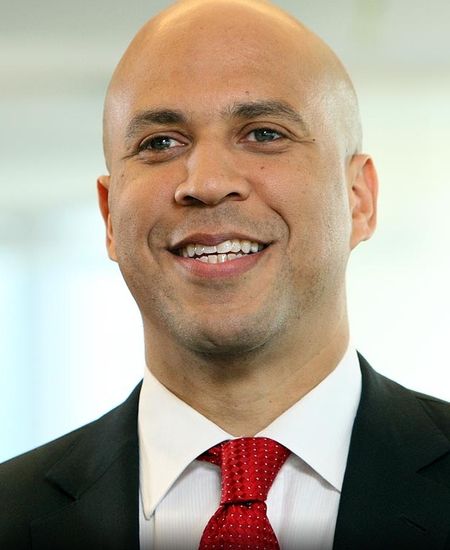
Sen. Cory A. Booker
Sponsored bills
Maddy summaryThe Zero Food Waste Act (S 3443) creates a federal grant program to reduce food waste by 50% by 2035 (compared to 2015 levels). It authorizes the EPA Administrator to award competitive grants to eligible entities - including state/local governments, tribes, nonprofits, and partnerships - for three key activities: studying food waste sources and reduction strategies, collecting and reporting food waste data, and implementing projects like food rescue, prevention, or landfill disposal restrictions. Grants prioritize communities of color, low-income areas, and tribal communities disproportionately impacted by food waste, with $650 million annually allocated for 2026-2035. The program requires grantees to report results and tracks progress toward the 2035 target through annual EPA reports to Congress.
Maddy summaryThe NOTICE Act (S 3449) requires the President to notify Congress within 24 hours before deploying National Guard members into federal service under specific circumstances (like invasions, rebellions, or law enforcement failures). The notification must detail the exact reason for deployment, location, duration, unit training, and command structure. For deployments lasting over 48 hours, the President must provide written updates every 72 hours with specific details on ongoing conditions. This bill directly affects the President’s authority to deploy National Guard forces and enhances congressional oversight of such actions.
Maddy summaryThe International Human Rights Defense Act of 2025 establishes a permanent U.S. Special Envoy for LGBTQI+ rights at the Department of State, with the authority to coordinate all federal government efforts addressing discrimination and violence against LGBTQI+ people globally. The bill requires the development of a U.S. global strategy to prevent and respond to criminalization, discrimination, and violence against LGBTQI+ individuals, along with annual briefings to Congress on progress. It mandates that the Department of State's Country Reports on Human Rights Practices include detailed information about laws criminalizing or discriminating against LGBTQI+ people in all countries. The legislation also requires all U.S. government-funded programs to adopt inclusive nondiscrimination policies covering sexual orientation, gender identity, and sex characteristics. These provisions aim to strengthen U.S. foreign policy efforts to protect LGBTQI+ rights worldwide through coordinated diplomatic, humanitarian, and development initiatives.
Maddy summaryThe Justice for Breonna Taylor Act bans federal law enforcement officers from executing search warrants without first providing notice of their identity and purpose. It also requires state and local police departments receiving Department of Justice funding to provide such notice before entering a home. The bill directly affects federal, state, and local law enforcement agencies that use search warrants. Key provisions mandate that officers must announce their presence and reason for entry prior to entering a residence, eliminating no-knock entries for covered agencies.
Maddy summaryThis bill mandates free admission to all national parks and public lands on six specific annual dates, including Martin Luther King Jr. Day, Juneteenth, and Veterans Day. It directly affects all visitors to these sites by eliminating entrance fees on those days, encouraging broader public access and engagement. The key provision replaces the Secretary's previous discretion with a legal requirement for these six designated days each year. The law aims to align fee-free access with meaningful dates that promote community service and national celebration.
Maddy summarySRES 483 is a ceremonial Senate resolution honoring Dr. Jane Goodall, who passed away on October 1, 2025. It pays tribute to her lifelong work as a primatologist, conservationist, and founder of the Jane Goodall Institute and Roots & Shoots program, which engages youth globally in environmental action. The resolution recognizes her scientific contributions - including groundbreaking chimpanzee research at Gombe - and her advocacy for wildlife protection, education, and community-based conservation efforts like Tanzania's TACARE program. As a non-binding resolution, it does not enact policy changes but formally commemorates her legacy.
Maddy summaryThe PATHS to Tutor Act of 2025 establishes a federal grant program to fund high-quality tutoring in high-need schools, directly affecting students in schools with high teacher turnover or many novice teachers. It requires local consortia (combining schools, universities, and community partners) to apply for competitive grants, mandating tutoring that uses a 1:4 tutor-to-student ratio, aligns with school curriculum, includes tutor training, and avoids replacing teachers. Grant funds must cover tutor stipends, materials, transportation, and meals for students (with 85% allocated directly to student support), while prohibiting the use of funds to supplant existing teaching staff. Priority is given to consortia using tutors from educator preparation programs or minority-serving institutions.
Maddy summaryThis bill establishes comprehensive labor protections for domestic workers, including house cleaners, nannies, personal care aides, and other employees working in private homes. It directly affects approximately 2.2 million domestic workers, predominantly women of color and immigrants who have historically been excluded from key labor protections. Key provisions include requiring written employment agreements outlining wages and hours, providing earned sick days for health and safety needs, establishing fair scheduling practices with advance notice requirements, protecting privacy rights, and prohibiting unfair wage deductions. The bill also extends civil rights protections under Title VII of the Civil Rights Act to domestic workers and creates a Domestic Employee Standards Board to recommend workplace standards.
Maddy summaryS 3400, the Ally’s Act, requires most private health insurance plans and group health plans to cover hearing implants and related services for eligible individuals. It mandates coverage for cochlear implants, bone conduction devices, maintenance, repairs, upgrades every five years, hearing assessments, pre- and post-surgery care, and aural rehabilitation. Insurers cannot impose stricter cost-sharing or treatment limits for these services than for other medical care, and cannot deny coverage based on medical necessity determinations by a physician or audiologist. The law applies to plans covering individuals with hearing loss (including unilateral or bilateral) who meet medical criteria, effective for plan years starting January 1, 2026.