

Toll Credit Marketplace Act of 202 1 This bill directs the Department of Transportation (DOT) to establish and implement a toll credit exchange pilot program to identify the extent of the demand to purchase toll credits, identify the cash price of toll credits through bilateral transactions between states, analyze the impact of the purchase or sale of toll credits on transportation expenditures, test the feasibility of expanding the pilot program to allow all states to participate on a permanent basis, and identify any other repercussions of the toll credit exchange. In carrying out the pilot program, DOT must provide that an originating state may transfer or sell to a recipient state a credit not previously used by the originating state. DOT must also make available a public website on which originating states must post the amount of toll credits that are available for sale or transfer to a recipient state. States may purchase toll credits on behalf of metropolitan planning organizations or local governments in such states. DOT may terminate the pilot program or the participation of any state in the pilot program if the program is not serving a public benefit or it is not cost effective.
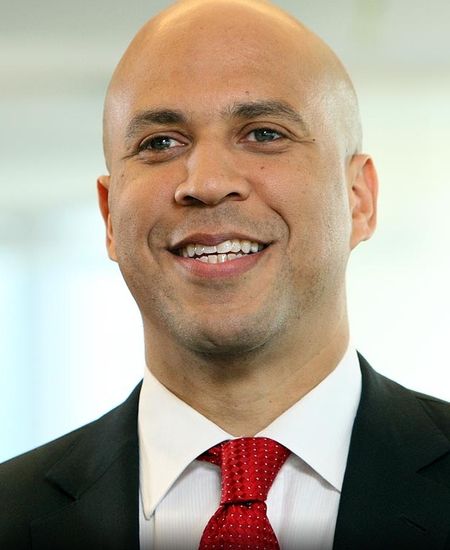
Sen. Cory A. Booker
Sponsored bills
Allowing Steady Savings by Eliminating Tests Act or the ASSET Act This bill prohibits the use of asset tests or resource limits in certain means-tested public assistance programs and increases the resource limits to qualify for Supplemental Security Income (SSI). SSI is a federal income supplement program designed to help aged, blind, and disabled individuals with limited income and resources meet basic needs. Under the bill, states may not use asset or resource limits to determine eligibility for (1) programs funded by Temporary Assistance for Needy Families grants, (2) the Supplemental Nutrition Assistance Program, or (3) the Low-Income Home Energy Assistance Program. In addition, an individual may have up to $10,000 in certain resources (or up to $20,000 for a couple) and qualify for SSI. Under current law, the limit is $2,000 for an individual (or $3,000 for a couple).
Extreme Risk Protection Order Act of 2021 This bill establishes grants to support the implementation of extreme risk protection order laws at the state and local levels, extends federal firearms restrictions to individuals who are subject to extreme risk protection orders, and expands related data collection. Extreme risk protection order laws, or red flag laws, generally allow certain individuals (e.g., law enforcement officers or family members) to petition a court for a temporary order that prohibits an at-risk individual from purchasing and possessing firearms. Among its provisions, the bill directs the Department of Justice to establish a grant program to help states, local governments, Indian tribes, and other entities implement extreme risk protection order laws; extends federal restrictions on the receipt, possession, shipment, and transportation of firearms and ammunition to individuals who are subject to extreme risk protection orders; and requires the Federal Bureau of Investigation to compile records from federal, tribal, and state courts and other agencies that identify individuals who are subject to extreme risk protection orders.
This resolution congratulates the students, families, teachers, administrators, and staff of public charter schools across the United States for (1) making ongoing contributions to public education, (2) making impressive strides in closing the academic achievement gap in U.S. schools, and (3) improving and strengthening the public school system. The resolution supports the ideals and goals of the 22nd annual National Charter Schools Week.
Pursuing Equity in Mental Health Act This bill establishes and expands programs to address racial and ethnic disparities in mental health. Specifically, the Department of Health and Human Services (HHS) must award grants to establish interprofessional behavioral health care teams in areas with a high proportion of racial and ethnic minority groups. In addition, HHS may award grants to incorporate best practices and competencies to address mental health disparities in curricula for training social workers, psychologists, and other behavioral health professionals. HHS must also promote behavioral and mental health and reduce stigma associated with mental health conditions and substance use disorder through outreach to racial and ethnic minority groups. HHS must consult with appropriate advocacy groups and behavioral health organizations to develop a strategy for this outreach. The bill also (1) reauthorizes the minority fellowship program to support the education of mental health professionals who provide services to racial and ethnic minorities, and (2) requires studies on mental health disparities and the effects of social media use on adolescents.
Rescuing Every Contributor from Unwanted Recurrences (RECUR) Act This bill requires certain disclosures for recurring political contributions or donations. Specifically, the bill requires any person who is soliciting a recurring contribution or donation for a political committee, an independent expenditure, or an electioneering communication to receive the affirmative consent of the contributor or donor. This affirmative consent cannot be a passive action by the contributor or donor, such as failing to uncheck a prechecked box. In addition, any person who accepts a recurring contribution or donation must (1) provide a receipt for the initial contribution or donation and for each recurrence that clearly and conspicuously discloses all material terms, (2) provide all information needed to cancel the recurring contribution or donation in each communication with the contributor or donor, and (3) immediately cancel recurring contributions or donations upon request of the contributor or donor.
This resolution designates May 15, 2021, as Kids to Parks Day. The resolution recognizes the importance of outdoor recreation and the preservation of open spaces to the health and education of young people of the United States.
Diversifying by Investing in Educators and Students To Improve Outcomes For Youth Act or the Diversify Act This bill revises the Teacher Education Assistance for College and Higher Education (TEACH) grant program. The TEACH program awards grants to undergraduate and graduate students who commit to teaching in a high-need field and in an elementary or secondary school that serves low-income students. First, the bill raises the maximum amount for TEACH grants. Second, the bill allows TEACH grants to cover the full cost of attendance. Currently, these grants may be used only for tuition, fees, and on-campus housing. The bill allows teaching in a high-need early childhood education program to count toward service requirements for the program. Next, the bill eliminates the process for converting a TEACH grant to a loan if a recipient does not complete the requirements of the program. Further, the bill prohibits the Department of Education (ED) from instituting or creating a monetary penalty for failure or refusal to complete the service requirement. In addition, the bill requires ED to send an electronic certificate to grant recipients who have completed their service requirement. The bill also exempts the TEACH program from sequestration, which is a process of automatic, usually across-the-board spending reductions under which budgetary resources are permanently cancelled to enforce specific budget policy goals.
Trees for Residential Energy and Economic Savings Act of 2021 or the TREES Act of 2021 This bill directs the Department of Energy (DOE) to establish a grant program for states, local governments, Indian tribes, and other entities to facilitate tree planting projects that reduce residential energy consumption. Under the program, DOE must award grants to facilitate the planting of at least 300,000 trees annually in residential neighborhoods.
COVID - 19 Hate Crimes Act This bill requires a designated officer or employee of the Department of Justice (DOJ) to facilitate the expedited review of hate crimes and reports of hate crimes. DOJ must issue guidance for state, local, and tribal law enforcement agencies on establishing online hate crime reporting processes, collecting data disaggregated by protected characteristic (e.g., race or national origin), and expanding education campaigns. Additionally, DOJ and the Department of Health and Human Services must issue guidance aimed at raising awareness of hate crimes during the COVID-19 (i.e., coronavirus disease 2019) pandemic. The bill establishes grants for states to create state-run hate crimes reporting hotlines. It also authorizes grants for states and local governments to implement the National Incident-Based Reporting System and to conduct law enforcement activities or crime reduction programs to prevent, address, or respond to hate crimes. Finally, in the case of an individual convicted of a hate crime offense and placed on supervised release, the bill allows a court to order that the individual participate in educational classes or community service as a condition of supervised release.