This resolution recognizes September 28, 2021, as National Voter Registration Day and encourages those eligible to vote to register, verify their personal information on record with local election officials, and vote.
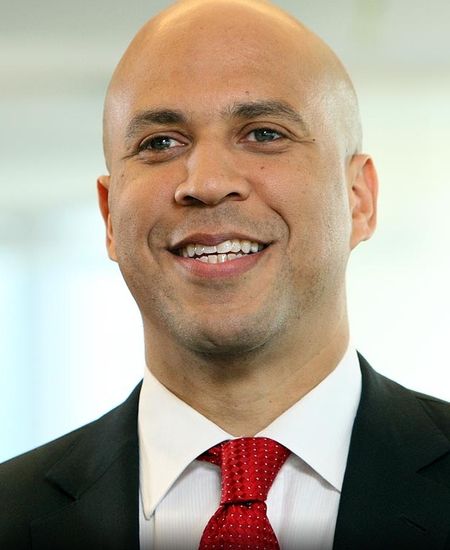
Sen. Cory A. Booker
Sponsored bills
Save our Stages Extension Act This bill extends to March 11, 2023, the time frame during which Shuttered Venue Operators Grant recipients may use grant funds to cover their expenses. These grants provide funds to certain types of entities in the arts and entertainment industry affected by the COVID-19 pandemic. Currently, a recipient may use such funds to cover expenses incurred between March 1, 2020, and December 31, 2021.
Preventing and Addressing Trauma with Health Services Act or the PATHS Act This bill establishes grants to increase access to trauma support and mental health care for individuals who have experienced gun violence in communities with higher rates of violence-related deaths than the national average. The Substance Abuse and Mental Health Services Administration (SAMHSA) must award the grants to nonprofit or community organizations, government agencies, or health care institutions that offer mental health services. In awarding these grants, SAMHSA may give preference to community health centers, federally qualified health centers, and applicants proposing to work in partnership with other eligible entities.
This bill authorizes the Department of the Treasury to certify or decertify (for incompetence or willful misrepresentation) the practice of tax return preparers and impose fees on such preparers. It also authorizes Treasury to require tax return preparers to provide disclosures to person receiving tax return preparation services and regarding refund anticipation payment arrangements. Treasury may impose a penalty on tax return preparers who fail to make required disclosures.
Opportunities for Fairness in Farming Act of 20 21 This bill establishes restrictions and requirements for checkoff programs, which are programs overseen by the Department of Agriculture (USDA) to promote and provide research and information for a particular agricultural commodity without reference to specific producers or brands. The bill prohibits boards established to carry out a checkoff program or a USDA order issued under a checkoff program from entering into a contract or agreement to carry out program activities with a party that engages in activities to influence any government policy or action that relates to agriculture. A board or its employees or agents acting in their official capacity may not engage in any act that may involve a conflict of interest; anticompetitive activity; unfair or deceptive act or practice; or act that may be disparaging to, or in any way negatively portray, another agricultural commodity or product. Upon approval of USDA, a board may enter directly into contracts and agreements to carry out generic promotion, research, or other activities authorized by law if the agreement or contract requires records accounting for the funds received to be submitted to the board. The board must meet specified requirements regarding the publication of budgets and disbursements of funds. The USDA Inspector General and the Government Accountability Office must conduct specified audits regarding checkoff programs.
This resolution honors the life of Robert Dove, Parliamentarian Emeritus of the Senate, and offers the condolences of the Senate regarding his death.
This resolution designates September 2021 as National Prostate Cancer Awareness Month.
Tyler Clementi Higher Education Anti-Harassment Act of 2021 This bill addresses harassment at institutions of higher education (IHEs). Specifically, the bill requires each IHE to include in its annual security report a statement of policy regarding harassment on the basis of a student's actual or perceived race, color, national origin, sex (including sexual orientation, gender identity, pregnancy, childbirth, a medical condition related to pregnancy or childbirth, and a sex stereotype), disability, or religion. In addition, the Department of Education may award grants to IHEs to initiate, expand, or improve programs to (1) prevent the harassment of students; (2) provide counseling or redress services to students who have been harassed or accused of subjecting other students to harassment; or (3) educate and train students, faculty, or staff to prevent harassment or address harassment if it occurs.
Radiation Exposure Compensation Act Amendments of 2021 This bill expands two programs that compensate individuals who were exposed to radiation during certain nuclear testing or uranium mining and subsequently developed medical conditions, including cancers. First, the bill expands and extends a program that compensates individuals who were exposed to radiation from atmospheric nuclear testing or other sources and subsequently developed specified cancers. Under current law, this program compensates individuals who were present in a designated geographic area during a period of nuclear testing and certain individuals employed in uranium mining. The bill expands the designated areas to include Colorado, Idaho, Montana, New Mexico, and Guam and additional areas in Arizona, Nevada, and Utah; makes more individuals who worked in uranium mining eligible for the program; increases the amount of compensation awarded to and provides medical benefits for eligible claimants; and extends for 19 years following the bill's enactment the fund that supports this program and the statute of limitations for filing claims (currently, the program terminates on July 10, 2022). Second, the bill makes certain individuals employed in uranium mines or mills eligible for a program that compensates workers, including Department of Energy employees and contractors, for illnesses caused by occupational exposure to radiation and hazardous substances during development and testing of the nation's nuclear weapons stockpile. The bill also establishes a grant program in the National Institute of Environmental Health Sciences for institutions of higher education to study the epidemiological impacts of uranium mining and milling among individuals without occupational exposure.
Startup Opportunity Accelerator Act of 2021 or the SOAR Act This bill requires the Small Business Administration to develop and implement a program to award cash grants of at least $1,000,000 to organizations that support new small businesses. These awards may be used for construction costs, space acquisition, and programmatic purposes, but they may not be used to provide capital or professional services to small businesses directly or through the subaward of funds. The organization must have the support of new small businesses as a primary purpose and be often classified as an accelerator. The term accelerator means an organization that (1) supports new businesses with a focus on technology, research, and development; (2) frequently provides, but is not exclusively designed to provide, seed investment in exchange for a small amount of equity; (3) works with a startup for a predetermined amount of time; (4) provides mentorship and instruction to scale businesses; or (5) offers startup capital or the opportunity to raise capital from outside investors.