

Correctly Recognizing Educational Achievements To Empower Graduates Act or the CREATE Graduates Act This bill directs the Department of Education (ED) to take specified actions to increase postsecondary degree attainment. Specifically, the bill requires ED to provide grants to states to support institutions of higher education in awarding associate degrees to students who have accumulated enough credits. Additionally, the bill allows the release of a transfer student's educational records from an institution of postsecondary education where a student earned credit for coursework to an institution of postsecondary education where the student was previously enrolled in order to apply the student's coursework and credits toward completion of a recognized postsecondary credential, such as an associate's degree. In particular, the bill allows ED to provide funding to an institution of postsecondary education that releases a student's records of postsecondary coursework and credits without the consent of the student or the student's parents if the student provides written consent prior to receiving the credential.
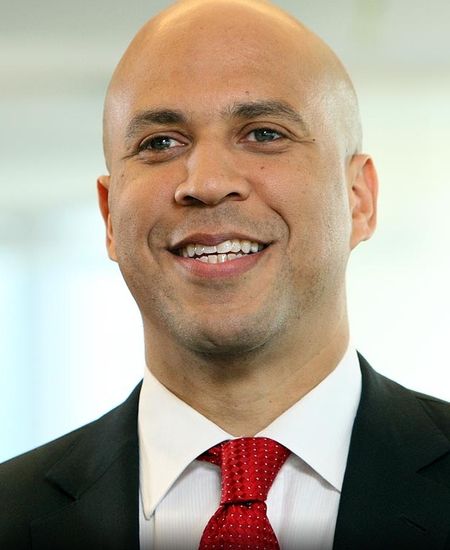
Sen. Cory A. Booker
Sponsored bills
Humane Cosmetics Act of 2021 This bill generally prohibits animal testing in the evaluation of cosmetic products, and it prohibits the sale or transport of cosmetics developed using animal testing, subject to civil penalties. These prohibitions begin one year after enactment. The bill specifies exceptions to these prohibitions, including if such animal testing (1) is conducted outside the United States to comply with a foreign regulatory authority; (2) is pursuant to a specified finding that there are no nonanimal alternatives to test the safety of a potentially dangerous cosmetic product or ingredient; (3) is of a product or ingredient for a drug or device subject to regulation by the Food and Drug Administration (FDA); or (4) is required for a noncosmetic purpose pursuant to a state, federal, or foreign regulatory authority. Further, no animal-testing evidence may be used to establish the safety of a cosmetic product or ingredient that is regulated by the FDA after the effective date of this bill, subject to limited exceptions.
Elementary and Secondary School Counseling Act This bill directs the Department of Education to award formula grants to state educational agencies and, through them, subgrants to local educational agencies to increase access to school-based, mental-health-services providers at high-need public elementary and secondary schools.
Preserve Access to Affordable Generics and Biosimilars Act This bill authorizes the Federal Trade Commission (FTC) to initiate proceedings against parties to any agreement resolving or settling a patent infringement claim in connection with the sale of a drug or biological product. Such an agreement is presumed to have anticompetitive effects and is a violation of this bill if the filer of the generic drug or biosimilar application receives anything of value and agrees to limit or forego research, development, manufacturing, marketing, or sales of the generic drug or biosimilar. An agreement is exempted if the only consideration granted to the generic manufacturer is (1) the right to market and secure final approval for its product prior to the expiration of any statutory exclusivity, (2) a payment for reasonable litigation expenses, or (3) a covenant not to sue on any claim that the generic drug or biosimilar infringes a patent. An agreement is also exempt if the agreement's pro-competitive benefits outweigh the anticompetitive effects. When a generic or biosimilar drug manufacturer enters into an agreement with another drug manufacturer related to the manufacturing, marketing, or sale of a drug, the manufacturers must certify that the material they have given the FTC concerning the agreement contains the complete agreement and any agreements related to that main agreement, including descriptions of any oral agreements or representations. The bill imposes penalties for violations of this bill, including the forfeiture of the 180-day marketing exclusivity period for a generic drug.
Maddy summaryThis is a ceremonial Senate resolution (SRES 470) commemorating the death of former U.S. Senator Bob Dole of Kansas. It formally expresses the Senate's sorrow, requests the Secretary of the Senate transmit a copy to Dole's family, and directs the Senate to adjourn as a mark of respect. The resolution has no policy or legal effect - it solely serves as a symbolic tribute to Dole's public service career. It does not affect any individuals or enact new laws.
Stop Significant and Time-wasting Abuse Limiting Legitimate Innovation of New Generics Act or the Stop STALLING Act This bill makes it an unfair method of competition to submit an objectively baseless petition to the Food and Drug Administration (FDA) in an attempt to interfere with a competitor's application for market approval of a drug. The bill authorizes the Federal Trade Commission to sue an individual or entity that submits such a petition to the FDA. A party found liable in such a lawsuit shall be subject to civil penalties, such as a fine of up to $50,000 for each day that the FDA spent reviewing the baseless petition.
MUSIC Act This bill expands eligibility for the Shuttered Venue Operators Grant program, which provides emergency assistance for eligible venues affected by COVID-19, to include service and support companies. These companies (1) provide stages, lighting, sound, casts, or other support for live performing arts events; or (2) showcase performers or prepackaged productions to potential buyers.
Outdoors for All Act This bill directs the Department of the Interior to establish an outdoor recreation legacy partnership grant program under which Interior may award grants to states, certain political subdivisions of a state, special purpose districts, Indian tribes, or Alaska Native or Native Hawaiian communities or organizations. Funds must be used for projects to (1) acquire land and water for parks and other outdoor recreation purposes in qualifying areas, and (2) develop new or renovate existing outdoor recreation facilities that provide outdoor recreation opportunities to the public in qualifying areas. A qualifying area is an area that has a population of 30,000 or more in the most recent census, or that is administered by an Indian tribe or an Alaska Native or Native Hawaiian community organization. Interior shall give priority to projects that create or significantly enhance access to park and recreational opportunities in an urban neighborhood or community, engage and empower underserved communities and youth, provide opportunities for employment or job training for youth or underserved communities, establish or expand public-private partnerships, and take advantage of coordination among various levels of government.
Parks, Jobs, and Equity Act This bill directs the Department of the Interior to establish the Parks, Jobs, and Equity Program to support park development and delivery of recreation services, and in so doing, help create or preserve jobs, and provide economic stimulus in communities impacted by the COVID-19 (e.g., coronavirus disease 2019) pandemic. A grant recipient may use a grant awarded under this bill for acquiring land or water that will be used to provide outdoor recreation opportunities to the public, developing or renovating outdoor recreational facilities that provide outdoor recreation opportunities to the public, improving delivery of recreation services to the public, and developing Native American event sites and cultural gathering spaces.
PrEP Access and Coverage Act This bill requires private health insurance plans to cover prescription drugs that prevent HIV, including related screenings, diagnostic procedures, administrative fees, and clinical follow-ups, without any cost-sharing obligation for the plan holder. Further, insurance plans must not impose any preauthorization requirement for this coverage. These coverage requirements also apply to public health insurance programs, including Medicare, Medicaid, and the Children's Health Insurance Program. Additionally, the bill prohibits denying, limiting, or qualifying coverage or increasing premiums for disability insurance, long-term care insurance, or life insurance policies based on an individual taking medication for HIV prevention. The bill further requires the Department of Health and Human Services to award grants to states, or directly to eligible local organizations, to provide uninsured individuals and underinsured individuals access to prescription drugs and related services that prevent HIV. The Centers for Disease Control and Prevention also must develop a public awareness campaign that focuses efforts in communities with a high need for HIV prevention treatment.