

Advancing Student Services In Schools Today Act or the ASSIST Act This bill requires the Department of Health and Human Services to award grants to, among others, local educational agencies to increase the number of mental health and substance use disorder care providers in schools and school-based health centers. It also increases the federal government's share of Medicaid costs for behavioral health services furnished in those settings.
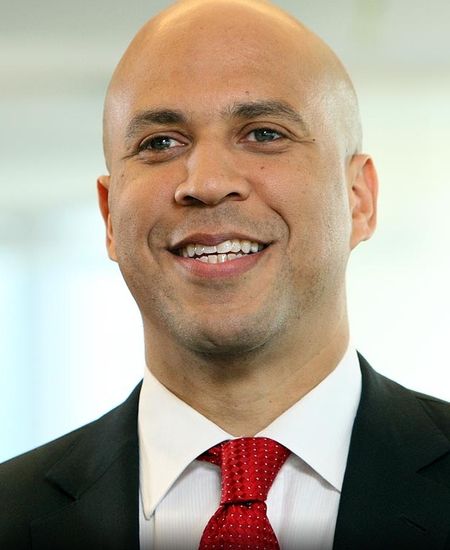
Sen. Cory A. Booker
Sponsored bills
Affordable Insulin Now Act This bill limits cost-sharing for insulin under private health insurance and the Medicare prescription drug benefit. Specifically, the bill caps cost-sharing under private health insurance for a month's supply of selected insulin products at $35 or 25% of a plan's negotiated price (after any price concessions), whichever is less, beginning in 2023. The bill caps cost-sharing under the Medicare prescription drug benefit for a month's supply of covered insulin products at (1) $35 between October 1, 2022, and January 1, 2024; and (2) $35 or 25% of a plan's negotiated price, whichever is less, beginning in 2024. The bill provides funds for FY2022 for the Centers for Medicare & Medicaid Services (CMS) to implement the bill. Currently, the CMS is testing a voluntary model under the Medicare prescription drug benefit (the Part D Senior Savings Model) in which the copayment for a month's supply of insulin is capped at $35 through participating plans. The model is set to expire on December 31, 2025.
Neighbors Not Enemies Act This bill repeals provisions authorizing the President to apprehend and remove from the United States the citizens of a particular nation, if the United States has declared war against that nation or that nation has threatened an invasion against the United States.
Anna Westin Legacy Act This bill requires the Substance Abuse and Mental Health Services Administration to maintain the National Center of Excellence for Eating Disorders (NCEED). The bill specifies required activities for NCEED, including providing training for frontline health care providers and other professionals.
Open App Markets Act This bill establishes rules related to the operation of an app store by a covered company (i.e., the owner or controller of an app store with more than 50 million U.S. users). An app is a software application or electronic service that may be run or directed by a user on a computer or mobile device. An app store is a publicly available website, software application, or other electronic service that distributes apps from third-party developers to users. The bill prohibits a covered company from (1) requiring developers to use an in-app payment system owned or controlled by the company as a condition of distribution or accessibility, (2) requiring that pricing or conditions of sale be equal to or more favorable on its app store than another app store, or (3) taking punitive action against a developer for using or offering different pricing terms or conditions of sale through another in-app payment system or on another app store. A covered company may not interfere with legitimate business communications between developers and users, use non-public business information from a third-party app to compete with the app, or unreasonably prefer or rank its own apps (or those of its business partners) over other apps. The bill provides for enforcement of its provisions by the Federal Trade Commission and the Department of Justice, as well as through suits brought by developers that are injured by reason of anything prohibited by this bill.
This resolution expresses that the Senate stands in solidarity with the people of Afghanistan and with vulnerable groups, including women and children; religious and ethnic minorities; lesbian, gay, bisexual, transgender, queer, and intersex (LGBTQI) persons; civil society actors; journalists; and other at-risk populations in Afghanistan; calls on the Taliban to uphold the protection of universal human rights, including the commitments set forth in the Universal Declaration of Human Rights and enshrined in the International Covenant on Civil and Political Rights, to which Afghanistan is a party; calls for the international community to condemn human rights violations committed by the Taliban; and calls on the U.S. government to work closely with the international community and nongovernmental organizations, particularly such organizations based in Afghanistan, to support at-risk Afghan minority populations and other vulnerable communities.
This resolution supports the designation of February 2022 as Career and Technical Education Month to celebrate career and technical education across the United States.
Transportation Equity Act This bill directs the Department of Transportation (DOT) to reestablish the Transportation Equity Committee. The committee must study, advise DOT about, and develop a strategic plan concerning transportation equity issues. The committee must also evaluate the work of DOT in connecting people to economic and related forms of opportunity; revitalizing communities through strategic, research, technological, regulatory, community engagement, and economic policy activities related to transportation and opportunity; and ensuring equal access to transportation for all residents. In addition, DOT must appoint a full-time federal employee to serve as coordinator and act as the designated federal officer for the committee.
Schedules That Work Act This bill provides employees with the right to request changes to their work schedules related to the number of hours they are required to work or be on call, the location of the work, the amount of notification about work schedule assignments, and fluctuations in work hours. Employers must negotiate in good faith with employees who make such requests and comply with certain work schedule notice and split shift pay requirements for retail, food service, cleaning, hospitality, or warehouse employees.
Part-Time Worker Bill of Rights Act This bill modifies various employment, leave, and pension rules with respect to part-time workers. Specifically, the bill removes the requirement that employees work a minimum number of hours during the preceding 12-month period before becoming eligible for family and medical leave. The bill also sets the maximum length of service on which employers may condition the eligibility of part-time employees for a qualified pension plan (e.g., 401(k) retirement plan). Except as required by an applicable collective bargaining agreement, such service requirement may be no longer than two consecutive 12-month periods of at least 500 hours of service for part-time employees who have reached the age of 21 by the end of such period. The bill further prohibits employers of more than 15 employees from setting disparate terms of employment or working conditions for part-time employees, including with respect to compensation, notice of work hours, and promotion opportunities. Additionally, the bill requires such employers to offer available, qualified part-time employees additional work hours before hiring new employees for such hours. Among other enforcement methods, employers must maintain three years of records for offers of additional hours and employee responses to such offers. The bill also provides a private right of action for employees to enforce the nondiscrimination requirements of this bill.