Increasing Home Ownership for Servicemembers Act This bill requires the Department of Defense to seek to enter into an agreement with a federally funded research and development center or nonprofit entity to study and report on the barriers to home ownership for members of the Armed Forces.
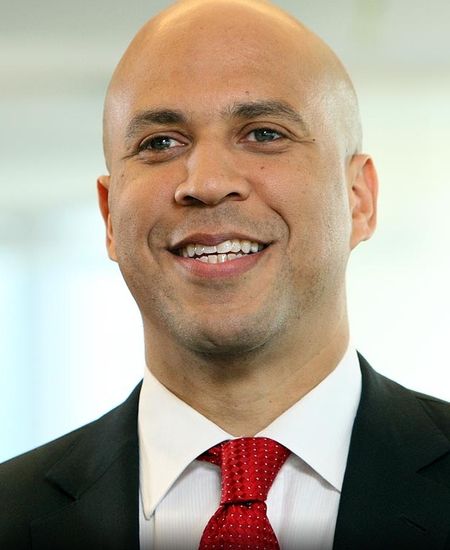
Sen. Cory A. Booker
Sponsored bills
Building More Housing for Servicemembers Act This bill addresses the availability and quality of housing for members of the Armed Forces. First, the bill requires the Department of Defense (DOD) to report to Congress on the housing shortage for members of the Armed Forces. DOD must prescribe guidance for eligible entities and landlords regarding acceptable housing standards for privatized military housing. Under the bill, an eligible entity is any private person, corporation, firm, partnership, company, or state or local government that is prepared to enter into a contract for the construction of housing units and ancillary supporting facilities. DOD must establish a five-year pilot program to assess the feasibility of using the rental partnership programs of the Armed Forces to assure tenants for eligible entities to secure financing to construct privatized military housing. Additionally, DOD must coordinate with the Department of Housing and Urban Development (HUD) to develop a five-year pilot program to provide financial incentives to eligible entities to build privatized military housing, or to purchase or lease existing facilities, to house members of the Armed Forces and their dependents and low-income individuals and families. Finally, DOD and HUD may jointly operate a grant program through the Office of Local Defense Community Cooperation within DOD to build housing for members of the Armed Forces and their dependents, and low-income individuals and families. Household income limits for eligible entities to receive a grant must not differ based on whether a household includes a member of the Armed Forces.
Right to Try Clarification Act This bill specifies that investigational drugs that are provided directly to individuals from manufacturers without the need for federal regulatory approval (i.e., via the Right to Try pathway) are exempt from restrictions that would otherwise apply under the Controlled Substances Act (e.g., restrictions on the use or possession of schedule I controlled substances).
BAH Calculation Improvement Act This bill requires the Department of Defense to submit to Congress a report on the basic allowance for housing for members of the uniformed services that includes elements related to the calculation of such allowance.
BAH Restoration Act This bill increases the monthly amount of the basic housing allowance for members of the uniformed services inside the United States. Specifically, the monthly amount of allowance for a member must be the amount of the monthly cost of adequate housing in the area, as determined by the Department of Defense, for members of the uniformed services serving in the same pay grade and same dependency status as the member.
Right to Contraception Act This bill sets out statutory protections for an individual's right to access and a health care provider's right to provide contraception and related information. Contraception refers to an action taken to prevent pregnancy, including the use of contraceptives (i.e., a device or medication used to prevent pregnancy), fertility-awareness based methods, and sterilization procedures. Generally, the bill prohibits measures that single out and impede access to contraception and related information. However, a party may defend against a claim that a measure violates the bill's prohibitions by demonstrating, through clear and convincing evidence, that the measure significantly advances access to contraception and cannot be achieved through less restrictive means. The Department of Justice, individuals, or health care providers may bring a lawsuit to enforce this bill, and states are not immune from suits for violations.
Respect for Marriage Act This bill provides statutory authority for same-sex and interracial marriages. Specifically, the bill repeals and replaces provisions that define, for purposes of federal law, marriage as between a man and a woman and spouse as a person of the opposite sex with provisions that recognize any marriage that is valid under state law. (The Supreme Court held that the current provisions were unconstitutional in United States v. Windsor in 2013.) The bill also repeals and replaces provisions that do not require states to recognize same-sex marriages from other states with provisions that prohibit the denial of full faith and credit or any right or claim relating to out-of-state marriages on the basis of sex, gender, race, ethnicity, or national origin. (The Supreme Court held that state laws barring same-sex marriages were unconstitutional in Obergefell v. Hodges in 2015; the Court held that state laws barring interracial marriages were unconstitutional in Loving v. Virginia in 1967.) The bill allows the Department of Justice to bring a civil action and establishes a private right of action for violations.
Expanding Access to Family Planning Act This bill provides, subject to specified conditions, funding through FY2032 for federally funded family planning services and clinics. In particular, the funds must be used for (1) grants and contracts that support the provision of family planning services, and (2) clinic infrastructure (e.g., construction and renovation of clinics). Clinics that receive funding to provide family planning services must offer each patient with a positive pregnancy test the opportunity for nondirective counseling on (1) prenatal care and delivery; (2) infant care, foster care, and adoption; and (3) pregnancy termination. This counseling must include referrals if requested by a patient. Additionally, if a funding recipient makes subawards for the provision of family planning services, the recipient may not prohibit an entity from participating in a subaward program for reasons other than the entity's inability to provide family planning services.
Democracy Is Strengthened by Casting Light On Spending in Elections Act of 2021 or the DISCLOSE Act of 2021 This bill addresses campaign finance, including by expanding the prohibition on campaign spending by foreign nationals, requiring additional disclosures of campaign expenditures, and requiring additional disclosures regarding certain political advertisements. First, the bill prohibits foreign nationals from participating in the decision-making process regarding an election expenditure. Additionally, the bill expands existing foreign money prohibitions to include disbursements for paid web-based or digital communications and federal judicial nomination communications. It also prohibits foreign nationals from contributing to campaigns related to ballot initiatives and referenda. The Federal Election Commission (FEC) must conduct an audit after each federal election cycle to determine the incidence of illicit foreign money. Next, the bill makes it unlawful to establish or use a corporation, company, or other entity with the intent to conceal an election contribution or donation by a foreign national. A violator is subject to criminal penalties—a fine, a prison term of up to five years, or both. Covered organizations (e.g., corporations, labor organizations, and political organizations) must, within 24 hours, file reports with the FEC to disclose campaign expenditures of more than $10,000 during an election cycle. Finally, the bill requires organizations to provide additional disclosures regarding political advertisements, including the donors who contributed the most money to that organization in the last year.

This resolution expresses that the House of Representatives is committed to building upon the 20 years of success of the George McGovern-Robert Dole International Food for Education and Child Nutrition Program, complementing humanitarian assistance efforts and development programs through the continued implementation of the McGovern-Dole Program to address global food insecurity and create conditions for peace and stability, and supporting U.S. farmers, millers, shippers, and commodity groups that provide agricultural commodities for use in the McGovern-Dole Program to help combat global malnutrition and food insecurity and advance global education.