

This bill makes eligible under the Supportive Services for Veteran Families program former members of a reserve component of the Armed Forces who have retired or separated from service after serving a term of enlistment. This includes families in which the head of household or spouse of the head of household is a former member of a reserve component who has retired or separated from service after serving a term of enlistment.
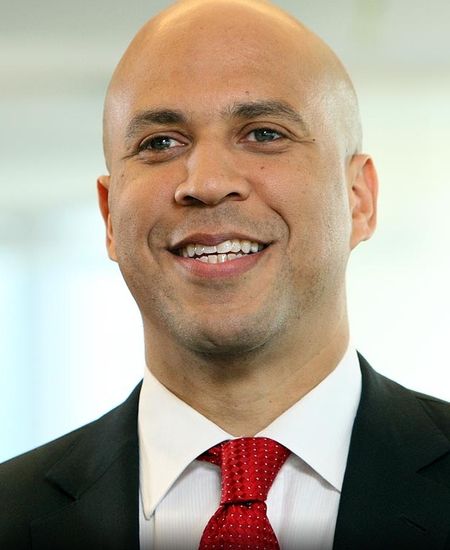
Sen. Cory A. Booker
Sponsored bills
Maddy summarySRES 875 is a non-binding Senate resolution declaring racism a public health crisis in the United States. It directly affects racial and ethnic minority communities, which face documented health disparities including lower life expectancy, higher maternal mortality, and worse pandemic outcomes due to systemic inequities. The resolution commits the Senate to establishing a nationwide strategy to address health disparities, dismantle systemic racism, and advance reforms for communities disproportionately impacted by racism. It cites evidence from public health experts and historical data showing racism meets all criteria of a public health crisis: widespread impact, unfair distribution, preventable nature, and lack of current preventive measures. The resolution is symbolic, urging cross-government action but not creating new laws or funding.
Federal Clarity for Kratom Consumers Act This bill requires the Food and Drug Administration (FDA) to hold a hearing and establish a task force on the health and safety of products with kratom (an herbal substance that produces opioid- and stimulant-like effects). It also prohibits the FDA from regulating kratom products in a manner that is more restrictive as compared to regulations for food, dietary supplements, or dietary ingredients.
Gun Violence Prevention and Community Safety Act of 2022 This bill makes various changes to the federal framework governing the sale, transfer, and possession of firearms and ammunition. Among other changes, the bill generally requires individuals to obtain a license to purchase, acquire, or possess a firearm or ammunition; raises the minimum age—from 18 years to 21 years—to purchase firearms and ammunition; establishes new background check requirements for firearm transfers between private parties; creates a statutory process for a family or household member to petition a court for an extreme risk protection order to remove firearms from an individual who poses a risk of committing violence; restricts the import, sale, manufacture, transfer, or possession of semiautomatic assault weapons and large capacity ammunition feeding devices; restricts the manufacture, sale, transfer, purchase, or receipt of ghost guns (i.e., guns without serial numbers); requires federally licensed gun dealers to submit and annually certify compliance with a security plan to detect and deter firearm theft; removes limitations on the civil liability of gun manufacturers; allows the Consumer Product Safety Commission to issue safety standards for firearms and firearm components; establishes a community violence intervention grant program; and promotes research on firearms safety and gun violence prevention.
Maternal Health Pandemic Response Act of 2022 This bill addresses data collection, public education, workplace safety, and other matters related to maternal health during public health emergencies. Specifically, the bill supports (1) the collection of maternal data (including racial, ethnic, and other demographic data) through surveillance systems of the Centers for Disease Control and Prevention (CDC), and (2) research activities of the National Institute of Child Health and Human Development. Additionally, the CDC and the Centers for Medicare & Medicaid Services must make publicly available and periodically update pregnancy and postpartum data that is collected across COVID-19 surveillance systems. The data must be disaggregated by factors such as race, ethnicity, insurance status, and location. The bill also requires the CDC to educate pregnant people, their employers, and their health care providers about evidenced-based health information concerning COVID-19 and pregnancy; the Department of Health and Human Services to convene a task force to develop recommendations on the provision of maternity care during the COVID-19 (and future) public health emergencies with a particular focus on communities of color and rural populations; the Occupational Safety and Health Administration to issue an emergency temporary standard to protect employees who are at risk from occupational exposure to COVID-19 that considers the risks and needs of pregnant and postpartum employees; and the Government Accountability Office to report on maternal health and public health preparedness, including prenatal, labor and delivery, and postpartum care during the COVID-19 emergency.
Expanding Disability Access to Higher Education Act This bill establishes and revises programs to increase access to higher education for students with disabilities and increase their graduation rates. Specifically, the bill requires the Department of Education (ED) to award additional funds under existing TRIO programs (i.e., programs designed to identify and support disadvantaged students) to increase the number of individuals with disabilities served by such programs; award grants to institutions of higher education to establish offices of accessibility on their campuses to support students and staff with disabilities; and collect data on students served by TRIO programs and Gaining Early Awareness and Readiness for Undergraduate Programs, including with respect to student persistence in such programs, graduation rates, postsecondary enrollment rates, and supports provided to enrolled students. The bill also directs the Government Accountability Office to review and report on how ED and TRIO program agencies identify and support students with disabilities.
Ethical Use of Facial Recognition Act This bill prohibits federal agencies from using facial recognition software until the enactment of legislation that implements certain guidance on its use, as recommended by a specialized commission created under this bill.
Maddy summaryThis bill designates September as "African Diaspora Heritage Month" in the U.S. Code (Section 3(a)). It requests the President and state/local officials issue annual proclamations encouraging communities to observe the month with programs and activities. The bill directly affects all Americans by creating a designated month for recognizing the African diaspora community's contributions, as outlined in the findings section. This is a procedural designation with no new funding or regulatory changes.
Equal Justice Under Law Act of 2022 This bill authorizes the use of class action suits as a remedy if a state or political subdivision of a state systemically fails to provide indigent defendants with effective counsel at critical stages of their prosecutions, including at bail hearings.
Opportunity Zones Transparency, Extension, and Improvement Act This bill revises rules and reinstates reporting requirements relating to qualified opportunity zones (economically distressed communities where new investments, under specified conditions, may be eligible for preferential tax treatment). Specifically, the bill terminates the designation of zones that are disqualified due to median family income exceeding 130% of national median family income and permits states to identify and expand terminations of such zones. The bill also reinstates reporting requirements for qualified opportunity zones and imposes penalties for noncompliance with such requirements, extends the opportunity zones temporary deferral period for qualifying capital gain through 2028, and establishes a State and Community Dynamism Fund to support public and private investment in qualified opportunity zones.