

Maddy summaryS 237, the Protecting Access to Medication Abortion Act of 2023, modifies federal safety requirements for mifepristone (used in medication abortions) to expand access. The bill requires the FDA to remove in-person dispensing rules, allow telehealth prescriptions, and permit certified pharmacies to mail the drug directly to patients. It directly affects patients seeking medication abortion and healthcare providers/pharmacies dispensing mifepristone. The law mandates these changes for mifepristone’s risk evaluation and mitigation strategy (REMS), while preserving FDA authority to adjust safety measures based on scientific evidence.
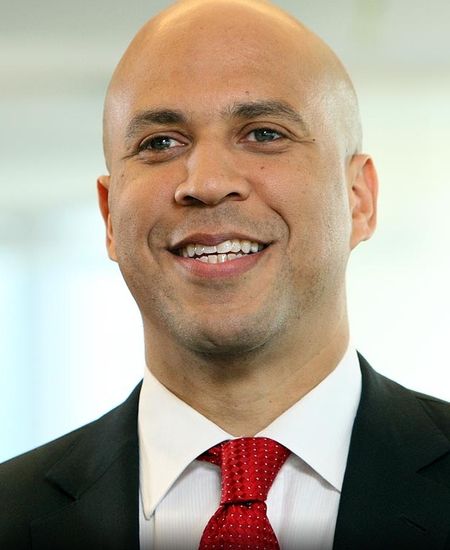
Sen. Cory A. Booker
Sponsored bills
Maddy summaryThe COMPOST Act (S 179) establishes composting as an official conservation practice under federal farm programs, making it eligible for support in initiatives like the Conservation Stewardship Program. It creates a new $200 million annual grant and loan guarantee program (2023-2032) to fund projects expanding food waste composting infrastructure, including facility construction, equipment, and community collection systems. Eligible entities include farms, local governments, schools, nonprofits, and community projects, with priority given to initiatives serving underserved areas, creating jobs with living wages, and using source-separated organic waste. The program requires projects to demonstrate food waste processing capacity, high-quality compost production, and alignment with environmental justice principles.
Maddy summaryThe JOBS Act of 2023 expands Federal Pell Grant eligibility to short-term job training programs that provide 150-600 clock hours (8-15 weeks) of instruction aligned with in-demand local industries. It directly affects students enrolled in eligible career-focused programs at institutions of higher education, requiring programs to offer industry-recognized credentials and meet validation standards from employers or sector partnerships. Key provisions include mandatory industry validation of program quality, institutional credit articulation for noncredit programs, and lowering the minimum Pell Grant percentage from 10% to 5% for qualifying students. The bill ensures these programs count toward students’ total Pell Grant eligibility period while maintaining standard Pell Grant terms and conditions.
Maddy summaryS 173, "Ethan's Law," requires firearm owners to store guns securely in homes where minors (under 18) or individuals ineligible to own firearms might access them. It amends federal law to make non-compliant storage an offense punishable by a $500 fine per violation, with enhanced penalties (up to 5 years in prison) if injury or death results. The bill creates a federal grant program to support states with laws matching its secure storage requirements, offering funding incentives for states that enact similar measures. It directly affects homeowners with firearms in households containing minors or prohibited persons, aiming to reduce accidental child access and firearm-related injuries.
Maddy summaryThis bill establishes EPA grants to help states, local governments, tribes, and nonprofits reduce food waste by funding specific activities. It authorizes $650 million annually (2023-2032) for competitive grants to support data collection, prevention programs (like redirecting surplus food), infrastructure for recycling, and policies discouraging landfill disposal. The program targets a 50% reduction in food waste sent to landfills by 2030 compared to 2010 levels, with priority for projects in communities disproportionately affected by waste-related health or environmental issues. Grantees must report on progress, and the EPA will track nationwide results through annual reports.
Maddy summaryThe Transition-to-Success Mentoring Act (S 182) creates a new federal grant program to support school-based mentoring for at-risk middle school students transitioning to high school. It directs the Secretary of Education to fund eligible entities (like school districts or nonprofit partnerships) to assign each participating student a "success coach" who develops a personalized plan with the student, parents, and school staff. Success coaches must meet with students monthly to address academic goals, social-emotional needs, and college/career exploration, and hold quarterly reviews with families and educators. The program requires grantees to track student outcomes like academic achievement, attendance, postsecondary enrollment, and social-emotional development through annual reports.
Maddy summaryThe Students Helping Young Students Act of 2023 amends the Higher Education Act to allow colleges to use Federal work-study funds for paying students who provide after-school educational activities at public elementary and secondary schools. It defines "after-school activities" as educational programs before, after, or during school breaks (including summer), and requires colleges to prioritize schools in low-income communities for these programs. The bill establishes a registration process for schools to join the program within 180 days of enactment and permits federal funding to cover more than 75% of student compensation costs. This directly affects colleges running work-study programs, public schools, and student workers providing after-school services.
Maddy summaryThis resolution (SRES 19) recognizes the importance of establishing a national "Fred Korematsu Day of Civil Liberties and the Constitution" to commemorate Fred Korematsu's lifelong fight against the unjust incarceration of Japanese Americans during WWII and his later warnings against post-9/11 civil liberties violations. It encourages the public to reflect on preserving civil liberties during national emergencies, building on existing state observances (California, Florida, Hawaii, Virginia, and Arizona) that already designate January 30 as Fred Korematsu Day. The resolution does not create new law or policy but formally urges national recognition of Korematsu's legacy for civic education.
Maddy summaryThis bill authorizes the posthumous award of a Congressional Gold Medal to Fred Korematsu, a Japanese American civil rights advocate who challenged the WWII internment of Japanese Americans. It directs the Treasury Secretary to create a single gold medal bearing Korematsu's image and name, which will be displayed at the Smithsonian Institution. The bill also permits the sale of bronze duplicates to cover production costs. The medal recognizes Korematsu's lifelong advocacy for civil liberties and his role in exposing the government's misleading claims that led to the Supreme Court's 1944 Korematsu v. United States decision. This is a commemorative measure with no new legal requirements or policy changes.
Maddy summaryS 129, the Korematsu-Takai Civil Liberties Protection Act of 2023, prohibits federal authorities from detaining individuals solely based on protected characteristics. The bill amends federal law to define "protected characteristics" as race, ethnicity, national origin, religion, sex, gender identity, sexual orientation, disability, and any additional characteristics the Attorney General may designate. It explicitly bans imprisonment or detention based exclusively on these traits, with no allowance for the Attorney General to remove any listed characteristic. This directly affects anyone subject to federal detention, ensuring protections against discrimination in custody decisions under current law.