

Maddy summaryS 2217, the IDEA Full Funding Act, mandates specific annual federal funding levels for the Individuals with Disabilities Education Act (IDEA) to support public education services for students with disabilities. It requires the federal government to appropriate increasing percentages of the total estimated cost - starting at 14.2% for FY 2024 and rising to 40% by FY 2033 - based on the number of eligible students and national average per-pupil spending. This directly affects public schools and state education agencies that receive IDEA funding, guaranteeing phased increases in federal support over a decade. The bill sets concrete, legally binding funding targets without altering eligibility or service requirements for students.
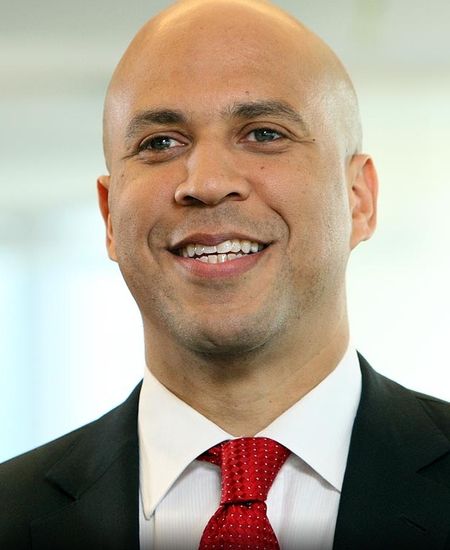
Sen. Cory A. Booker
Sponsored bills
Maddy summaryThis bill amends over 30 sections of the Internal Revenue Code to replace gendered language like "husband and wife" with gender-neutral terms such as "married couple" or "spouses." It directly affects all married taxpayers by ensuring the tax code refers to married couples in inclusive language, regardless of gender. The key mechanism is updating specific tax code provisions to use neutral terminology throughout, including changing "his spouse" to "the individual's spouse" in numerous sections. This is a technical correction to modernize the language of the tax code, not a change to tax rates, deductions, or policy. The bill does not alter tax obligations or benefits for married couples.
Maddy summarySRES 282 is a non-binding Senate resolution recognizing June 2023 as "LGBTQ Pride Month" to honor the contributions and resilience of lesbian, gay, bisexual, transgender, and queer individuals across the United States. It does not create new laws or policies but formally acknowledges historical challenges faced by the LGBTQ community, including discrimination, hate crimes (such as the Pulse and Club Q shootings), and barriers to equality in employment, healthcare, and housing. The resolution encourages all Americans to learn about the LGBTQ community's history of struggle and achievement during June 2023. Introduced by 44 bipartisan senators, it serves as a symbolic gesture of support without altering any legal rights or obligations.
Maddy summarySRES 276 is a non-binding Senate resolution opposing state laws that criminalize or punish individuals for seeking or providing essential health care, including abortion, contraception, and gender-affirming care. It specifically condemns state actions that penalize people for pregnancy outcomes (such as miscarriages or self-managed abortions) and criminalize health care providers who support access to these services. The resolution affirms that people should access sexual and reproductive health care without fear of legal repercussions and notes that such criminalization disproportionately impacts marginalized groups, including people of color, low-income individuals, and LGBTQI+ people. As a formal statement of Senate opposition, it does not change existing laws but highlights concerns raised by medical and human rights organizations.
Maddy summarySRES 286 is a Senate resolution recognizing African Americans' foundational contributions to U.S. musical heritage, including genres like jazz, blues, gospel, and hip-hop. It highlights disparities in music education access, citing data showing 13% of predominantly Black schools lack music programs and African-American students score lowest in national arts assessments. The resolution formally designates June 2023 as African-American Music Appreciation Month to celebrate this cultural legacy and emphasize the need for equitable music education opportunities. It does not create new programs but serves as a symbolic acknowledgment of historical contributions and current educational gaps affecting African-American students.
Maddy summaryThis resolution approves 1996 regulations governing labor-management relations for Senate employees. It applies standard federal labor rules (from Chapter 71) to specific Senate workplaces, including leadership offices, committees, and staff units like the Office of the Secretary of the Senate. The regulations define covered employees and outline how labor-management procedures - such as collective bargaining and grievance processes - will operate within these Senate offices. As a procedural approval of existing rules (not new policy), it does not change current workplace practices but formally adopts the 1996 framework for Senate staff.
Maddy summaryS 2193, the Fly PETS Act, allows U.S. federal employees and their dependents to use foreign airlines for in-cabin or checked pet transport (dogs or cats) when no U.S. airline is available to carry up to three animals. This exception applies to travel between the U.S. and overseas locations or entirely overseas, directly affecting federal personnel traveling with pets. The bill requires that costs using a foreign carrier not exceed what a U.S. carrier would charge, with the traveler covering any difference if the U.S. rate is lower. It amends the Fly America Act to provide this specific exception for pet travel under defined circumstances.
Maddy summaryThe Endowment Transparency Act (S 2187) requires colleges and universities participating in federal student aid programs (Title IV) to publicly disclose detailed information about their endowment investments. Specifically, institutions must report total assets managed by investment advisers - broken down by asset class and whether advisers are minority- or women-owned - along with the number of advisers by gender and race, and the percentage of bond issuances underwritten by minority- or women-owned firms. This data will be published annually on the College Navigator website within one year of the bill’s enactment. The Minority Business Development Agency must then analyze the data and issue biennial reports with recommendations to increase the use of minority- and women-owned investment firms, while also convening conferences to share best practices.
Maddy summaryS 2133 establishes a 4-year demonstration program testing whether Medicare-covered medically tailored home-delivered meals and nutrition therapy reduce hospital readmissions for high-risk patients. The program would select at least 20 hospitals (prioritizing rural and underserved areas) to provide, for 12 weeks to one year, meals designed by dietitians and medical nutrition therapy to Medicare beneficiaries with diet-impacted conditions like diabetes or heart failure who are at high risk of readmission. These services would be covered without patient cost-sharing (no deductibles or copays), and hospitals must screen patients using validated tools to confirm eligibility. The program will be evaluated for impacts on hospital readmissions, healthcare costs, and patient satisfaction, with reports to Congress after 3 and 6 years.
Maddy summaryThis bill removes restrictions that prevent people in jail before trial from accessing Medicaid, Medicare, CHIP, and VA health benefits. It directly affects individuals held in custody pending court proceedings, including veterans. Key provisions amend federal health laws to exclude "individuals in custody pending disposition of charges" from standard inmate exclusions in these programs. The changes ensure pretrial detainees can receive covered health services without losing eligibility. The VA regulations will also be updated to apply this exception to veterans in similar situations.