

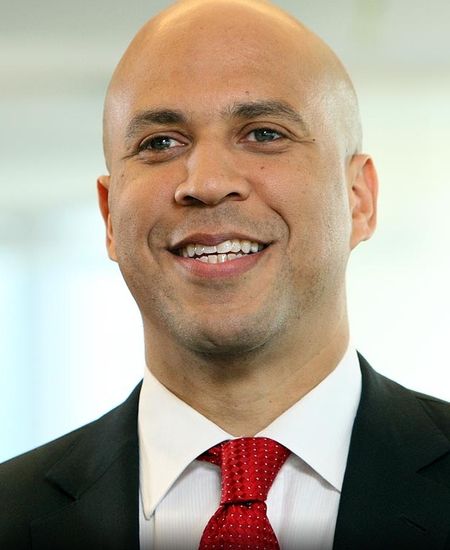
Maddy summaryS 2821, the PSA Screening for HIM Act, requires group health plans and individual health insurance issuers to cover prostate-specific antigen (PSA) screenings for high-risk men without out-of-pocket costs. It directly affects men aged 40+ who are at high risk due to being African-American or having a family history of prostate cancer (e.g., a father or brother diagnosed with the disease). The bill amends health coverage rules to mandate this specific screening coverage, effective for plan years starting January 1, 2024. This policy change aims to improve early detection rates, which have near 100% survival when caught early, addressing disparities in prostate cancer outcomes.
Sen. Cory A. Booker
Sponsored bills
Maddy summaryThe FABRIC Act (S 2817) would prohibit piece-rate pay in the garment industry, requiring employers to pay workers hourly wages at or above minimum wage. It would hold brand guarantors (companies contracting for garment manufacturing) jointly liable for wage violations with their contractors. The bill would require garment manufacturers and contractors to register with the Department of Labor, providing detailed information about ownership, employees, and compliance history. It would establish a new Office of the Garment Industry and create a grant program to support domestic garment manufacturing through workforce development and equipment investments.
Maddy summaryS 2789, the African Diaspora Heritage Month Act of 2023, would require the President to annually designate a month as "African Diaspora Heritage Month" through a formal proclamation. The proclamation would call on state and local governments and the public to observe the month with programs and activities celebrating the contributions of the African diaspora community. This bill does not create new government programs or funding but adds a recurring national observance to federal law. The African diaspora community - encompassing people of diverse African heritage living in the United States - would be the focus of this recognition.
Maddy summaryThe Stopping the Fraudulent Sales of Firearms Act would make it a federal crime to sell, manufacture, or import firearms or ammunition using false or fraudulent claims. It also prohibits transmitting communications about such sales via wire, radio, or television across state or international borders. This law directly affects sellers, manufacturers, and anyone involved in fraudulent firearm transactions or communications about them. The bill amends existing federal firearms law to add these specific prohibitions and update penalty provisions.
Maddy summaryS 2776, the Disarm Hate Act, prohibits firearm sales, possession, shipment, or transport for individuals convicted of a misdemeanor hate crime or receiving an enhanced sentence for such a crime. It directly affects people convicted under state, federal, or tribal law of a misdemeanor involving bias motivation (based on race, religion, gender, sexual orientation, gender identity, or disability) and physical threat or force. The bill amends federal gun laws (18 U.S.C. §§922(d) and 922(g)) to add this restriction, while excluding cases where convictions were expunged, pardoned, or where legal rights were waived improperly. This is a concrete policy change affecting firearm access for a specific category of offenders, not a broader hate crime prevention measure.
Maddy summaryThis bill provides $16 billion in federal funding over five years (2024-2028) to stabilize the child care sector. It directly affects child care providers by offering grants to offset operating costs, support higher wages for early childhood educators without increasing fees for families, and expand access to high-quality care. Key provisions include funding for providers in underserved areas (like rural communities, infant/toddler care, and inclusive services for children with disabilities) and a requirement that 99% of funds go directly to providers. The funds are administered through the existing framework of the American Rescue Plan Act's child care program.
Maddy summaryThis bill prohibits federal courts from considering acquitted conduct - conduct for which a defendant was found not guilty at trial or dismissed via motion - when determining a sentence, except to potentially reduce a sentence. It amends federal sentencing law to prevent judges from using such acquitted conduct as a basis for harsher penalties. The law applies only to cases with judgments entered after the bill's enactment date. It directly affects defendants in federal criminal cases where prior charges were dismissed or resulted in an acquittal.
Maddy summaryThis bill allows health officials to request microbial testing at large livestock operations (concentrated animal feeding operations) to investigate foodborne illness outbreaks and address public health needs. Owners must provide reasonable access for testing animals, water, and the environment, with the ability to set specific times or conditions for the visit, as long as it doesn't delay the investigation. It clarifies that the testing does not override existing meat, poultry, and egg product regulations overseen by the Agriculture Department. Health officials must share collected data with the Agriculture Department and other public health agencies to improve outbreak detection and prevention.
Maddy summaryThe Wage Theft Prevention and Wage Recovery Act requires employers to provide detailed paystubs showing wage calculations, timely final payments within 14 days of termination, and strengthens workers' ability to recover stolen wages. It increases civil penalties for wage theft violations from $10,000 to $22,030 per employee affected for initial violations, and extends the statute of limitations for wage theft claims from 2-3 years to 4-5 years. The bill creates a $50 million grant program to fund community partnerships that prevent wage theft and assist workers in recovering unpaid wages. These provisions target widespread wage theft that disproportionately affects low-wage workers, women, immigrants, and racial and ethnic minorities.
Maddy summaryThis bill increases federal funding for sickle cell disease (SCD) programs from $4.455 million annually to $8.205 million per year (2024-2028) and expands the scope of covered activities. It revises existing law to specifically include "the prevention and treatment of complications" of SCD alongside treatment itself, affecting patients with SCD and related heritable blood disorders. Key mechanisms include updating funding levels, changing contracting language to allow grants or cooperative agreements, and broadening the definition of covered services. The bill directly impacts medical research, patient care programs, and healthcare providers treating SCD patients. It aims to enhance research, surveillance, prevention, and treatment efforts for SCD and other heritable blood disorders.