

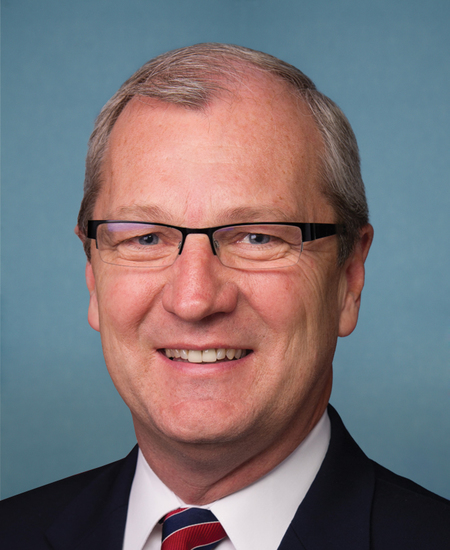
Maddy summaryThis bill requires the Committee on Foreign Investment in the United States (CFIUS) to respond within 30 days to formal requests from state governors about whether a specific foreign investment transaction qualifies as a "covered transaction" under CFIUS rules. It directly affects state governors, who can now formally seek CFIUS determinations regarding transactions in their states. The key mechanism adds a new process where CFIUS must confirm if a transaction is subject to review and notify the governor of its determination. The bill does not change CFIUS's substantive authority but creates a new procedural step for state governments to obtain clarity on foreign investment deals.
Sponsored bills
Maddy summarySRES 544 designates the week beginning February 5, 2024, as "National Tribal Colleges and Universities Week." The resolution recognizes Tribal Colleges and Universities (TCUs) for serving over 230 federally recognized tribes, preserving indigenous languages and cultural traditions, and providing accessible education in economically isolated areas. It calls on the public and organizations to observe the week with activities supporting TCUs, which offer open-enrollment higher education to American Indian, Alaska Native, and other students. This is a symbolic recognition resolution with no direct policy or funding changes.
Maddy summarySJRES 59 is a joint resolution that would disapprove a rule by the Securities and Exchange Commission (SEC) treating its Staff Accounting Bulletin No. 121 (SAB 121) as a binding regulation. The SEC had submitted this rule for congressional review under the Congressional Review Act, and the resolution would block it from taking effect. If enacted, the disapproval would prevent SAB 121 from being enforced as a regulation, meaning public companies would not be required to follow it as a legal rule. The bill directly affects the SEC's regulatory authority and the accounting practices of public companies.
Maddy summaryThis bill (S 3708) redirects existing U.S. federal funds that were previously allocated for the United Nations Relief and Works Agency for Palestine Refugees in the Near East (UNRWA) to construct a physical barrier along the U.S. southwest border. It also prohibits all future U.S. funding for UNRWA beginning upon the bill's enactment. The key provisions are the immediate reprogramming of unspent UNRWA funds for border wall construction and a permanent ban on new UNRWA funding. This directly affects UNRWA's funding stream and the federal budget allocation for border security infrastructure.
Maddy summaryThis bill amends the Natural Gas Act to give the Federal Energy Regulatory Commission (FERC) exclusive authority to approve or deny applications for LNG terminal construction, expansion, or operation for exporting or importing natural gas. It requires FERC to deem LNG exports consistent with the public interest when making decisions, streamlining the approval process for energy companies seeking to build or expand export facilities. The bill clarifies that this change does not affect other federal agencies' responsibilities regarding LNG facilities or existing laws governing imports/exports. It directly affects LNG terminal developers, energy exporters, and the federal regulatory process for natural gas trade.
Maddy summaryThe Protecting Life and Integrity in Research Act of 2024 prohibits federal agencies from funding or supporting research using human fetal tissue obtained from induced abortions. It permits federal research on tissue from miscarriages (before 20 weeks) or stillbirths (20 weeks or more), requiring compliance with existing Public Health Service Act regulations. The bill also bans soliciting or knowingly acquiring tissue obtained from induced abortions. These changes amend the Public Health Service Act to restrict federal research to tissue from natural pregnancy losses, not intentional procedures.
Maddy summaryThis resolution supports the New Heights Bid Committee's effort to secure the 2027 FIFA Women's World Cup for a U.S.-Mexico joint bid. It asks Congress to recognize the committee's work and encourages federal agencies to help meet hosting requirements. If selected, the resolution states Congress would consider future legislation to support the event's infrastructure and economic goals. The resolution does not create new laws or directly affect specific groups, as it is a formal expression of support for the bid process.
Maddy summaryThis bill requires the U.S. Census Bureau to add a citizenship status question to the 2030 and future decennial censuses, asking households to identify each member as a U.S. citizen, U.S. national (not citizen), lawfully residing alien, or unlawfully residing alien. It mandates that the Census Bureau publicly release state-level population data broken down by these four categories after each census. The bill also changes apportionment rules to exclude noncitizens from the population count used to determine the number of House seats and electoral votes each state receives, starting with the 2030 census. This directly affects how congressional representation and electoral votes are allocated among states based on population data.
Maddy summaryThe Insurance Data Protection Act (S 3349) requires federal financial regulators to coordinate with state insurance regulators before collecting data from insurance companies, ensuring they first check if the data is already available from existing sources to avoid duplication. It protects the confidentiality of data shared with federal regulators, preventing waivers of existing privacy protections or legal privileges under federal or state law. The bill applies to insurance companies and federal financial regulators (such as the Federal Reserve and Commodity Futures Trading Commission), mandating that any data-sharing agreements with state regulators maintain confidentiality. Key provisions include a "coordination step" to reduce redundant data requests and strict rules preserving privacy obligations for all data handled under this law.
Maddy summaryThis bill requires the U.S. Secretary of Energy to study and publicly report on greenhouse gas emissions intensity (emissions per unit of product) for 22 specific product categories, including aluminum, cement, lithium-ion batteries, and solar panels. It mandates comparing U.S. production emissions with those of "covered countries" (like G7 nations, U.S. trade partners, and major exporters). The study must create a public database of findings every five years, detailing methodology, data sources, and gaps in emissions data for both U.S. and foreign production. This is a data-gathering measure only - it does not impose new emissions regulations or affect current policies.