

Maddy summaryS 385, the Fairness for Servicemembers and their Families Act of 2025, requires the Secretary of Veterans Affairs to review the automatic maximum coverage amount for Servicemembers’ Group Life Insurance (SGLI) and Veterans’ Group Life Insurance (VGLI) every five years starting in 2026. The review compares the current coverage limit to a new amount calculated as $500,000 multiplied by the average change in the Consumer Price Index over the previous five years. This adjustment mechanism ensures coverage levels better reflect inflation, directly affecting active-duty servicemembers and veterans enrolled in these insurance programs. The bill mandates that the review results be submitted to congressional committees, potentially guiding future coverage increases within existing administrative structures.
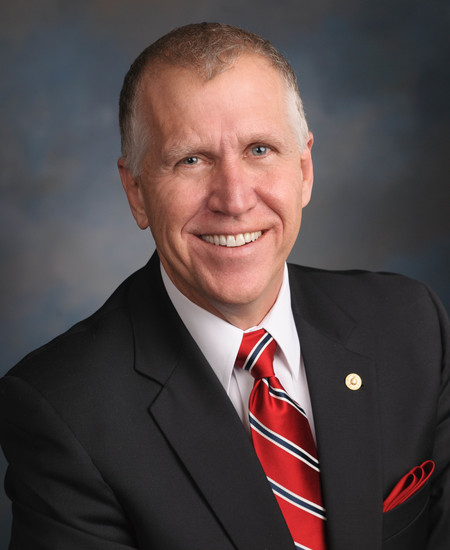
Sen. Thom Tillis
Sponsored bills
Maddy summaryThis bill prohibits critical skill pay supplements for Senior Executive Service (SES) employees working at the Department of Veterans Affairs' (VA) Central Office (including Veterans Health Administration, Benefits Administration, and National Cemetery Administration), regardless of where they perform duties. It allows limited exceptions for SES employees primarily working at non-Central Office facilities, requiring incentives to be proportional to time spent at those locations. The bill also mandates annual reports to Congress listing VA SES employees receiving such incentives, starting one year after enactment. The policy directly affects VA senior leadership positions at the Central Office and modifies existing pay incentive rules for these roles.
Maddy summaryS 400 enhances the tax credit for employers that provide paid family and medical leave to their workers. Employers can now choose to calculate the credit based on either wages paid to employees on leave or premiums paid for an insurance policy covering the leave. The bill clarifies that state or local government-paid leave counts toward the leave provided but does not count toward the credit amount, and extends the credit to cover up to six months of leave. Additionally, it requires the Small Business Administration and IRS to conduct outreach to help employers understand and use the credit.
Maddy summaryThe Fair Access to Banking Act (S 401) prohibits large financial institutions ($10 billion+ in assets) and payment networks from denying services to lawful businesses based on political or reputational factors, such as the type of legal business they operate. It requires banks to justify denials using objective, risk-based standards instead of category-based decisions, and mandates written explanations for denials. The law enables lawsuits against violators with treble damages and civil penalties up to 10% of service value (capped at $10,000 per violation). It directly affects major banks, payment processors, and credit unions that serve large-scale customers, ensuring fair access for businesses operating within federal law.
Maddy summaryThe SHOW UP Act of 2025 requires federal agencies to return to telework policies in effect on December 31, 2019, within 30 days of enactment. Agencies cannot expand telework beyond this baseline until they submit a detailed plan to Congress and receive certification from the Office of Personnel Management (OPM) Director, proving the expansion will improve mission performance, reduce costs, and provide adequate resources for teleworkers. This bill directly affects all federal executive agencies and their telework arrangements, mandating a study on pandemic-era telework impacts as part of the planning process. The legislation aims to standardize telework practices by requiring evidence-based changes rather than unilateral agency decisions.
Maddy summaryThis bill establishes a 5-year pilot program to create a performance-based pay system for certain federal employees. It affects senior federal workers (GS-11 to GS-15 or higher roles with measurable work, like managers, IT specialists, or customer service roles) at 1-10% of eligible employees per agency. Key provisions include tiered pay adjustments: employees exceeding goals get a 15% raise, those meeting goals see no change, and those falling short face a 15% pay cut plus mandatory training. Agencies must report annual productivity data and outcomes, with all implementation using existing agency funds.
Maddy summaryS 364, titled the "Hearing Protection Act" (though it regulates firearm silencers, not hearing protection), changes federal law to treat firearm silencers like firearms for tax and regulatory purposes. It imposes a 10% federal tax on silencers (similar to firearms), preempts state laws that tax or regulate silencers beyond federal rules, and requires the destruction of existing silencer registration records within one year. The bill clarifies definitions of "firearm silencer" in federal law and modifies licensing requirements for these devices. This directly affects silencer owners, manufacturers, and state governments that previously imposed additional restrictions or taxes.
Maddy summaryThis bill amends the Robert T. Stafford Disaster Relief Act to prohibit federal disaster assistance programs from discriminating based on political affiliation. It directly affects individuals and communities applying for federal disaster aid by adding "political affiliation" to the list of protected categories, alongside existing protections for race, gender, and economic status. The key mechanism updates Section 308(a) of the Stafford Act to explicitly state that aid cannot be denied due to a recipient's political views or party membership. This change ensures federal agencies, like FEMA, distribute disaster relief without considering applicants' political beliefs. The bill does not alter other non-discrimination protections or the criteria for eligibility.
Maddy summaryThis bill (S 353) creates a federal commission to study relocating non-security federal agencies currently based in the Washington, DC metropolitan area to other parts of the U.S. The commission, made up of senior agency leaders, must evaluate factors like cost of living, infrastructure, existing industry partnerships, telework participation rates, and technology readiness in potential relocation sites. It must submit a report to Congress within one year, prioritizing a goal of moving at least 100,000 agency employees out of the DC area. The bill itself does not relocate agencies - it only establishes the study process.
Maddy summaryThis bill excludes certain state-funded payments for disaster-resistant property improvements from taxable income. Homeowners who receive payments from state programs to make upgrades (like reinforcing roofs against windstorms or elevating homes to reduce flood damage) will not have those amounts counted as taxable income. The law specifically covers payments for "qualified catastrophe mitigation payments" made to reduce damage from windstorms, earthquakes, floods, or wildfires. It applies to payments received under state-established programs, including those managed by state insurance agencies or entities ensuring property insurance markets.