United States Foundation for International Conservation Act of 2022 This bill requires the Department of State to establish a foundation to provide grants for projects to manage protected and conserved areas in low- and middle-income countries with high levels of biological diversity or species and ecosystems of significant importance. Recipients of grants from this foundation must secure outside funding to match, at minimum, the amount of the grant.
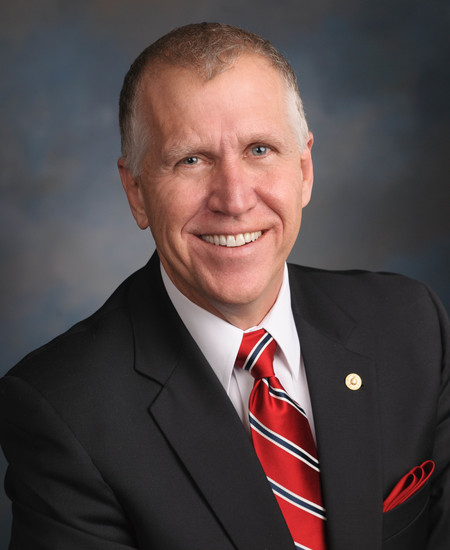
Sen. Thom Tillis
Sponsored bills
Maddy summaryThis bill grants a federal charter to the National American Indian Veterans, Incorporated, establishing it as a legally recognized nonprofit organization. It directly affects American Indian veterans by creating a formal entity to unite them, advocate for their needs with government agencies, and support tribal veterans services through outreach and training. Key provisions include requiring the organization to maintain tax-exempt status, prohibiting stock or dividends, mandating annual congressional reports on its activities, and granting exclusive rights to its name and emblems. The charter imposes strict governance rules to ensure the organization remains focused on veteran advocacy without distributing assets to members.
Hazard Eligibility and Local Projects Act This bill makes an entity seeking assistance under a hazard mitigation assistance program eligible to receive such assistance for certain projects already in progress. A covered project means a project that is an acquisition and demolition project for which an entity began implementation, including planning or construction, before or after requesting assistance for the project under a hazard mitigation assistance program; and qualifies for a categorical exclusion under the National Environmental Policy Act of 1969. The authority provided under this bill terminates three years after its enactment.
Electoral Count Reform and Presidential Transition Improvement Act of 2022 This bill revises the process of casting and counting electoral votes for presidential elections. The bill also revises provisions related to the presidential transition process. The bill specifies that the choice of electors must occur in accordance with the laws of the state enacted prior to election day. Additionally, the bill identifies each state's governor (unless otherwise identified in the laws or constitution of a state in effect on election day) as responsible for submitting the certificate of ascertainment identifying the state's electors. Further, the bill provides for expedited judicial review for any action brought by an aggrieved presidential or vice-presidential candidate arising under the U.S. Constitution or U.S. laws with respect to the issuance or transmission of such a certificate. The bill revises the framework for the joint session of Congress to count electoral votes and make a formal declaration of which candidates have been elected President and Vice President. Among other changes, the bill (1) specifies that the role of the Vice President during the joint session shall be ministerial in nature, and (2) raises the objection threshold in Congress to at least one-fifth of the duly chosen and sworn members of both the House of Representatives and the Senate. The bill also revises the presidential transition process, including to (1) allow more than one candidate to receive federal transition resources under certain circumstances, and (2) require additional reporting by the General Services Administration.

Healthcare Cybersecurity Act of 2022 This bill requires the Department of Health and Human Services (HHS) to undertake activities to improve the cybersecurity of the health care and public health sector. HHS must coordinate with the Cybersecurity and Infrastructure Security Agency (CISA) on these activities; in particular, CISA must make resources, including cyber-threat indicators and appropriate defense measures, available to federal and nonfederal entities that receive information through HHS programs. In addition, HHS must provide training on cybersecurity risks and mitigation strategies to owners of assets in the health care and public health sector. HHS must also update the Healthcare and Public Health Sector Specific Plan, which guides the sector's effort to enhance the security and resilience of critical infrastructure. The updates must address, among other topics, the impact of the risks on rural entities and small- and medium-sized entities, cybersecurity workforce shortages in the sector, and challenges related to the COVID-19 emergency.
Artistic Recognition for Talented Students Act or the ARTS Act This act directs the Copyright Office to waive various copyright registration-related fees for works that win certain competitions sponsored by the Congressional Institute or established by Congress. To qualify for the fee waiver, the copyright registration application must be filed within a specified time frame, but the Copyright Office may waive fees for a qualifying work even if the application is filed outside the time frame.
This resolution supports the designation of October 2-October 8, 2022, as National 4-H Week. It also (1) recognizes the important role of 4-H in youth development and education, and (2) encourages all citizens to recognize 4-H for the significant impact the organization and members have made and continue to make by empowering young people with the skills needed to lead for a lifetime.
Fair Hiring in Banking Act This bill generally exempts certain individuals convicted of a crime from requirements related to employment by an insured depository institution or an insured credit union. Specifically, written consent from the Federal Deposit Insurance Corporation or the National Credit Union Administration is not required for an institution to hire an individual convicted of a criminal offense involving dishonesty, a breach of trust, or money laundering 7 years after the individual meets sentencing requirements; for an individual who committed the offense while under the age of 21, 30 months after the individual meets sentencing requirements; or if the conviction was pardoned, sealed, or expunged. However, written consent is required for specified financial crimes (including theft by a bank employee) or for any person seeking to become a director or senior executive officer.
Billy's Law or the Help Find the Missing Act This bill provides statutory authority for the National Missing and Unidentified Persons System (NamUs) and requires certain data sharing between databases of the National Crime Information Center and NamUs. It also provides for grants to state, local, and tribal law enforcement agencies to support reporting to these systems.
Patrick Leahy and Orrin G. Hatch Justice For All Act of 2022 This bill reauthorizes, modifies, and establishes programs that address the quality of forensic science, the privacy of victims of crimes, and the integrity of criminal convictions.