

Public Health and Border Security Act of 2022 This bill requires the Department of Health and Human Services (HHS) to meet conditions related to notification and planning before terminating certain restrictions on imports and individuals entering the United States. Current law authorizes HHS to restrict entries and imports from foreign countries to prevent the introduction of communicable diseases. HHS exercised this authority as part of its COVID-19 response, including to allow for the expulsion of undocumented migrants at the border without any asylum processing. Under this bill, HHS may not terminate the restrictions for (1) at least 60 days after it notifies Congress of the end of the COVID-19 emergency, and (2) at least 30 days after it submits to Congress a plan for addressing the possible influx of migrants or imports resulting from lifting the restrictions.
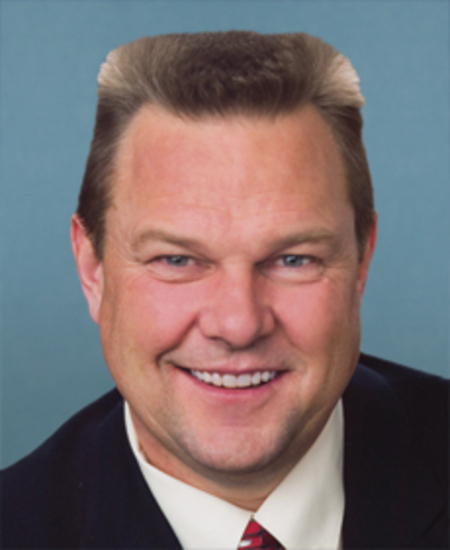
Sponsored bills
Chiropractic Medicare Coverage Modernization Act of 2022 This bill expands Medicare coverage of chiropractic services to include all services provided by chiropractors, rather than only subluxation corrections through manual manipulation of the spine.
This resolution designates April 16 through April 24, 2022, as National Park Week. The resolution also encourages the people of the United States and the world to responsibly visit, experience, recreate in, and support the treasured national parks of the United States.
Honoring Purple Heart Recipients Act of 2022 This bill requires the Department of Defense to include individuals who are awarded the Purple Heart for qualifying actions that occur after the date of the enactment of this bill on its publicly accessible website that lists individuals who are recipients of certain military awards. Under the bill, the individual or their next of kin must elect to have the individual included on the list and the public release of the individual's name must be determined to not pose a security risk.
Maddy summarySRES 565 is a ceremonial Senate resolution honoring the late Representative Don Young (R-AK), who served 49 years in the U.S. House of Representatives - the longest tenure of any Alaska representative and the 45th Dean of the House. The resolution commemorates his life, service, and legacy, including his work on landmark legislation like the Trans-Alaska Pipeline authorization and the Alaska Native Claims Settlement Act. It contains no policy changes or new laws; instead, it directs the Senate to mourn his passing, honor his bipartisan service, and transmit a copy to his family. This is a purely symbolic resolution with no direct impact on constituents or legislation.
Support Kids Not Red Tape Act of 2022 This bill extends and modifies the authority of the Department of Agriculture (USDA) to waive certain requirements related to the National School Lunch Program, the School Breakfast Program, the Child and Adult Care Food Program, and the Summer Food Service Program. Current law authorizes USDA to waive certain requirements, such as those related to nutritional content and congregate feeding, for the purpose of dealing with the COVID-19 pandemic. Under this bill, USDA shall have authority through FY2023 to grant such a waiver, with no waiver having effect past FY2023. Currently, USDA's authority to grant a waiver expires on June 30, 2022, with no waiver having effect past the 2021-2022 school year. If a state elects to receive a waiver that modifies the operation of a school breakfast or lunch program for the 2022-2023 school year, the state must provide a transition plan to USDA. USDA must provide technical assistance to help school food authorities and states meet nutritional standards and resume regular meal program operations for the 2023-2024 school year. While a waiver is in effect during the 2022-2023 school year, the state subject to the waiver must provide technical assistance in lieu of fiscal action for meal pattern violations due to supply chain disruptions. The bill also appropriates funds as necessary to carry out this bill's activities.
China Trade Cheating Restitution Act of 2022 This bill requires the Department of Homeland Security to deposit into special accounts certain interest earned on antidumping and countervailing duties collected by U.S. Customs and Border Protection on or after October 1, 2000. Currently, the applicable date is October 1, 2014. Amounts in special accounts are distributed to affected domestic producers.
This resolution designates March 24, 2022, as National Women in Agriculture Day. It also recognizes the important role of women in agriculture as producers, educators, leaders, mentors, and more
This resolution designates the first week of April 2022 as National Asbestos Awareness Week. It also urges the Surgeon General to warn and educate people about asbestos exposure, which may be hazardous to their health.
Cannabidiol and Marihuana Research Expansion Act This bill establishes a new, separate registration process to facilitate research on marijuana. Specifically, the bill directs the Drug Enforcement Administration (DEA) to follow specified procedures to register (1) practitioners to conduct marijuana research, and (2) manufacturers to supply marijuana for the research. The bill allows certain registered entities (including institutions of higher education, practitioners, and manufacturers) to manufacture, distribute, dispense, or possess marijuana or cannabidiol (CBD) for the purposes of medical research. Additionally, the bill directs the DEA to register manufacturers and distributors of CBD or marijuana for the purpose of commercial production of an approved drug that contains marijuana or its derivative. Finally, the bill includes various other provisions, including provisions that require the DEA to assess whether there is an adequate and uninterrupted supply of marijuana for research purposes; prohibit the Department of Health and Human Services (HHS) from reinstating the interdisciplinary review process for marijuana research; allow physicians to discuss the potential harms and benefits of marijuana and its derivatives (including CBD) with patients; and require HHS, in coordination with the National Institutes of Health and relevant federal agencies, to report on the therapeutic potential of marijuana for various conditions such as epilepsy, as well as the impact on adolescent brains and on the ability to operate a motor vehicle.