

National Flood Insurance Program Reauthorization and Reform Act of 2021 This bill generally revises the National Flood Insurance Program (NFIP) and reauthorizes the program through FY2026. The bill addresses NFIP coverage, cost, and availability, including by generally prohibiting the Federal Emergency Management Agency (FEMA) from raising certain premiums, surcharges, and fees more than 9% a year for five years; revising flood insurance coverage limits; establishing a means-tested program to provide financial assistance to low income households through policy discounts; and revising standards and certification requirements for flood insurance rate maps. The bill also revises administrative provisions of the NFIP, including by allowing for the continuous operation of the NFIP during a lapse in appropriations, and prohibiting the Department of the Treasury from charging FEMA interest for NFIP debt for five years. The bill sets forth requirements for Write Your Own companies related to reimbursements, agent commissions, and penalties for underpayment of claims. (A Write Your Own company writes and services federal standard flood insurance policies in its own name.) The bill establishes state or tribal government revolving funds for flood mitigation activities and also provides for loans, grants, and other incentives regarding mitigation.
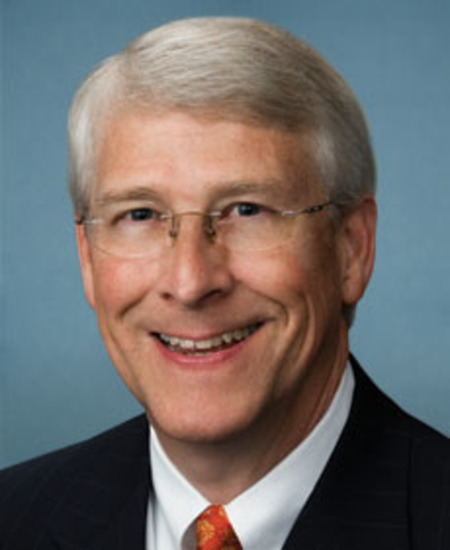
Sen. Roger F. Wicker
Sponsored bills
Western Balkans Democracy and Prosperity Act This bill addresses economic and political development in the Western Balkans (Albania, Bosnia and Herzegovina, Kosovo, Montenegro, North Macedonia, and Serbia), including by supporting anti-corruption and trade initiatives.
Data-Driven Foster Parent Recruitment and Retention Act of 2022 This bill requires state plans for child welfare services to provide for the development and implementation of a family partnership plan to improve foster care placement stability, increase rates of kinship placements, and align the racial and ethnic composition of foster and adoptive families with that of children in need of homes.
Recovering America’s Wildlife Act of 2022 This bill provides financial and technical assistance to states, territories, and the District of Columbia for the purposes of (1) recovering species listed as a threatened or endangered species under the Endangered Species Act or under state law, or (2) avoiding the need to list species under such laws. For example, the bill establishes the Endangered Species Recovery and Habitat Conservation Legacy Fund. A portion of the fund must be used to establish an Endangered Species Recovery Grant Program. It also provides funding for (1) the conservation or restoration of wildlife and plant species of greatest conservation need; (2) the wildlife conservation strategies of states, territories, or the District of Columbia; and (3) wildlife conservation education and recreation projects. The Department of the Interior must use a portion of the funding for a grant program. The grants must be used for innovative recovery efforts for species of greatest conservation need, species listed as endangered or threatened species, or the habitats of such species. In addition, the bill requires certain revenues generated from fees and penalties for violations of environmental requirements to be used as a source for the funding.
Maddy summarySRES 729 is a Senate resolution designating the week beginning November 7, 2022, as "National Pregnancy Center Week." It recognizes community-supported pregnancy centers across the United States for providing services like counseling, pregnancy testing, ultrasounds, and material resources to individuals facing pregnancy decisions. The resolution does not create new laws or allocate funds but formally acknowledges these centers' work through symbolic recognition. It highlights their role in serving over 2 million people annually, though the resolution itself has no binding policy effect.
Maddy summaryThis resolution designates July 30, 2022, as "National Whistleblower Appreciation Day" to commemorate the July 30, 1778, passage of the first U.S. whistleblower protection law by the Continental Congress. It directs federal agencies to inform employees and the public about whistleblower rights and acknowledge whistleblowers' contributions to preventing fraud, waste, and abuse of public funds. The resolution does not create new legal protections or penalties but encourages agencies to recognize whistleblowers' role in safeguarding taxpayer resources and ethical governance. As a ceremonial resolution, it focuses on raising awareness rather than implementing new policy.
Maximize Americans' Retirement Security Act This bill revises the fiduciary duties for a retirement or employee benefit plan that is regulated under the Employee Retirement Income Security Act of 1974. The bill generally requires a fiduciary to select and maintain investments for a plan based solely on pecuniary factors. Under the bill, a pecuniary factor is a factor that is expected to have a material effect on the risk or return of an investment based on appropriate investment horizons that are consistent with the plan's investment objectives and funding policy. A fiduciary may only use nonpecuniary factors if the fiduciary is unable to distinguish between investment alternatives on the basis of pecuniary factors alone. In such a case, the fiduciary must provide specified documentation to the plan's participants and beneficiaries, including an explanation of how the chosen nonpecuniary factors are consistent with their interests.
Benjamin Berell Ferencz Congressional Gold Medal Act This bill provides for the award of a Congressional Gold Medal to Benjamin Berell Ferencz in recognition of his service to the United States and the international community during the post-World War II Nuremberg trials and his lifelong advocacy for international criminal justice and the rule of law.
This resolution remembers former Prime Minister of Japan Shinzo Abe and his work to strengthen the alliance between the United States and Japan. It also extends condolences to his family and the people of Japan.
Puerto Rico Status Act This bill provides for a plebiscite to be held on November 5, 2023, to resolve Puerto Rico's political status. Specifically, the plebiscite shall offer eligible voters a choice of four options: independence for Puerto Rico, sovereignty in free association with the United States, statehood, or retaining the status of Puerto Rico as a commonwealth. The bill provides for a runoff plebiscite if no option receives a majority vote in the initial plebiscite. The Puerto Rico State Commission on Elections shall carry out a nonpartisan voter education campaign through traditional paid media and make available at all voting locations voter education materials related to the plebiscites. All voter educational materials and ballots used to carry out this bill shall be made available in English and Spanish. The bill sets forth transition and implementation provisions for each choice offered in the plebiscite.