

Maddy summaryThis bill, S 557, repeals Section 704B of the Equal Credit Opportunity Act, which required financial institutions to collect and report detailed data on small business loan applications. It directly affects banks and credit unions - especially smaller community institutions - that previously had to comply with these reporting rules. The key provision removes the data collection and reporting obligations, aiming to reduce administrative costs for lenders. This change would eliminate a specific regulatory requirement without altering how small business loans are issued or approved.
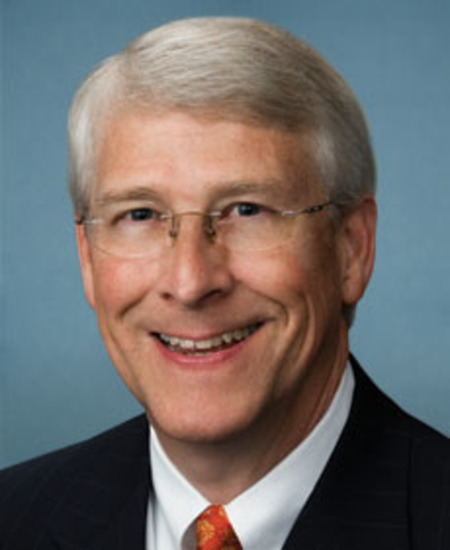
Sen. Roger F. Wicker
Sponsored bills
Maddy summarySRES 69 is a routine procedural resolution authorizing the Senate Committee on Armed Services to spend specific amounts for its operational expenses from March 2025 through February 2027. It sets annual spending limits ($6.1 million for 2025, $10.4 million for 2026, and $4.35 million for early 2027) covering personnel, consultant services (capped at $37,000-$65,000 annually), and staff training. The resolution specifies that these funds will come from the Senate's contingent fund and outlines which routine expenses (like salaries and office supplies) do not require formal vouchers. This resolution directly affects the Committee on Armed Services' ability to conduct hearings, investigations, and other committee work under Senate rules.
Maddy summaryThe Protect Medicaid Act (S 523) prohibits federal Medicaid funds from covering administrative costs for health benefits provided to unauthorized immigrants. It directly affects states that currently offer Medicaid-like benefits to noncitizens ineligible due to immigration status, requiring them to fund these administrative costs themselves. The bill amends the Social Security Act to explicitly ban such federal spending and mandates an Inspector General report detailing how states separate costs, ensure compliance, and finance these programs (e.g., via provider taxes). The report must also analyze drug pricing impacts when unauthorized immigrants receive covered medications through Medicaid or 340B programs. This is a procedural change restricting federal funding, not altering eligibility for Medicaid benefits.
Credit Union Board Modernization Act This bill revises the required frequency of meetings held by a credit union's board of directors. Specifically, new credit unions and credit unions with a low soundness rating must meet monthly. All other credit unions must hold at least six meetings annually, with at least one meeting held during each fiscal quarter. Currently, all credit union boards must meet at least once a month.
Maddy summaryThis bill transfers all U.S. Agency for International Development (USAID) responsibilities related to the Food for Peace Act - including managing food aid programs, grants, permits, and regulations - to the U.S. Department of Agriculture (USDA). It directly affects USAID's Food for Peace operations and shifts program administration to the USDA Secretary, who will now handle all associated duties, assets, and legal authorities. The bill ensures continuity by requiring legal references to USAID to automatically apply to the USDA, and mandates the USDA to continue operating the Famine Early Warning Systems Network. Key provisions include immediate regulatory adjustments for program continuity and ongoing consultation with the State Department on food aid efforts.
Maddy summaryThis bill allows states to waive the 35-mile rule for certain rural hospitals seeking Critical Access Hospital (CAH) designation under Medicare. It targets hospitals that are sole community hospitals, Medicare-dependent small rural hospitals, low-volume hospitals, or subsection (d) hospitals located in high-poverty or health professional shortage areas, with two consecutive years of negative margins. To qualify, hospitals must commit to adding high-demand services like obstetrics or behavioral health and submit annual reports on these services. The bill caps total CAH designations at 120 nationwide (5 per state) and requires transition to new payment models after 9 years. It also mandates studies by GAO and MedPAC to evaluate impacts on access and costs.
Maddy summaryThis joint resolution proposes a constitutional amendment to permanently set the number of justices on the Supreme Court at nine. It would require the Supreme Court to always consist of exactly nine justices, directly affecting the Court's composition. The amendment would become part of the Constitution only if ratified by three-fourths of state legislatures within seven years. This is a procedural change to the Constitution's structure, not a policy affecting other areas.
Maddy summarySRES 64 is a Senate resolution honoring the 67 victims of a mid-air collision between American Airlines Flight 5342 and a U.S. Army aircraft near Washington, D.C., on January 29, 2025. It directly affects the families, friends, and communities of the victims, who were from multiple U.S. states and several countries. The resolution formally commemorates the lives lost, offers condolences to grieving families, and expresses gratitude to the 42 emergency response agencies that assisted in rescue and recovery efforts. As a commemorative resolution, it has no policy or legal effect beyond expressing collective mourning and recognition.
This resolution supports the designation of Career and Technical Education Month to celebrate career and technical education across the United States.
Maddy summaryThis bill prevents private property restrictions, such as those in homeowners' associations or covenants, from blocking amateur radio operators from installing or maintaining antennas needed for emergency communications. It preempts such restrictions unless they are limited to reasonable safety requirements (like structural integrity), visual screening for certain antennas, or compliance with building codes. The bill requires that any prior approval process for antenna installation must be completed within 45 days or be deemed approved, and exempts small antennas (e.g., flagpoles under 43 feet, wire antennas) from needing prior approval. It directly affects over 770,000 licensed amateur radio operators in the U.S. who rely on these antennas for emergency response during disasters.