

Maddy summaryThe Find It Early Act requires health insurance plans and government health programs to cover breast cancer screenings with no cost-sharing for certain high-risk individuals. It affects people at increased breast cancer risk (based on medical guidelines), with dense breast tissue, or determined by healthcare providers to need screening due to factors like age, race, ethnicity, or family history. The bill mandates coverage for various screening methods including mammograms, ultrasounds, MRI, and molecular imaging without frequency limitations. This applies to group health plans, Medicare, Medicaid, TRICARE, and VA health care, with most provisions taking effect January 1, 2026.
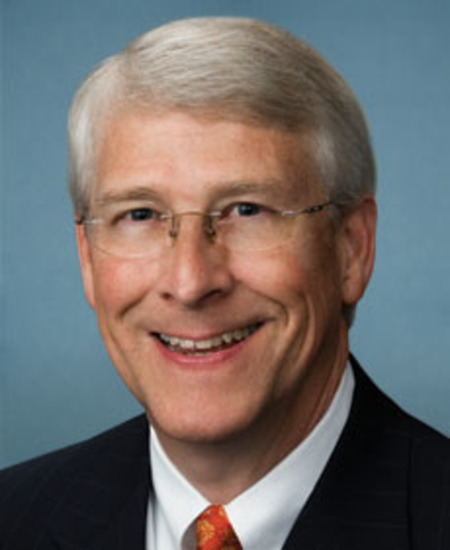
Sen. Roger F. Wicker
Sponsored bills
Maddy summaryThe POWER Act of 2025 amends the Stafford Act to help electric utilities recover from disasters more effectively. It allows utilities to combine hazard mitigation (like hardening infrastructure) with emergency power restoration efforts using federal disaster funds, and ensures that receiving emergency restoration aid doesn't block them from later qualifying for hazard mitigation assistance. This directly affects electric utilities that receive federal disaster relief under Section 403 of the Stafford Act. The changes apply only to funds appropriated after the bill's enactment.
Maddy summaryThis bill requires NASA to maintain its rocket engine testing capabilities at the Stennis Space Center for human spaceflight programs, including future Moon missions. It mandates that Stennis remain NASA's primary facility for testing rocket propulsion systems and ensures NASA preserves internal expertise in this area through private-sector partnerships. Within 180 days of enactment, NASA must report to Congress on its plans for testing rocket engines used in both low-Earth orbit and deep-space missions involving government astronauts. The bill directly affects NASA's operational structure and Stennis Space Center's role in space launch vehicle safety and development.
Maddy summaryThis bill makes the federal adoption tax credit refundable, allowing eligible taxpayers to receive a refund even if they owe no income tax. It directly affects families who paid qualified adoption expenses (like court fees or agency costs) but previously couldn't claim the full credit due to its non-refundable status. Key provisions include redesignating the credit in tax law as "section 36C" (making it refundable), adding standardized third-party affidavits to verify adoptions, and ensuring existing credit carryforwards are treated as refundable starting in 2025. The changes take effect for tax years beginning after December 31, 2024.
Maddy summaryThis bill directs NASA to modernize its rocket engine testing facilities to improve capabilities, safety, and support for both government and commercial space programs. It requires prioritizing investments for large rocket engines, multi-engine testing, and making underused facilities available to commercial companies on a reimbursable basis. The law also ensures that modernization efforts won't delay critical government projects like the Space Launch System or nuclear propulsion testing. Commercial space companies and NASA facilities are the primary entities directly affected by these infrastructure upgrades.
Maddy summaryS 1480 (American Infrastructure Bonds Act of 2025) creates a tax credit for state and local governments that issue qualifying infrastructure bonds. It allows issuers to receive a 28% credit from the Treasury on each interest payment made on these bonds, paid simultaneously with the interest. The bonds must meet specific criteria: interest would normally be tax-exempt under federal law, they cannot be private activity bonds, and the issuer must elect to use this credit. This provision reduces the cost of issuing infrastructure bonds for governments, making it cheaper to finance projects like roads, bridges, and water systems.
Maddy summaryThis bill (S 1481) repeals a specific provision (Section 13532 of Public Law 115-97) related to advance refunding bonds. It restores the previous rules allowing state and local governments to issue these bonds for infrastructure projects, as if the 2017 amendment had never been enacted. The change directly affects state and local governments seeking to refinance existing debt using advance refunding bonds. The bill takes effect upon enactment and does not create new funding or alter infrastructure project eligibility.
Maddy summaryThe FORECAST Act of 2025 requires the National Oceanic and Atmospheric Administration (NOAA) to improve subseasonal-to-seasonal weather and climate forecasting by developing new multi-model forecast systems, enhancing data collection across Earth systems (atmosphere, ocean, land, ice), and creating an online clearinghouse for forecast data. It establishes a workforce program to train and recruit professionals in weather modeling, data assimilation, and emerging technologies like AI, including scholarships and annual workforce planning. The bill authorizes $28.5 million annually for NOAA to implement these changes and fund partnerships with universities and research institutions. These provisions directly affect NOAA, climate researchers, and the broader weather forecasting community, aiming to strengthen forecast accuracy for extreme weather events and climate impacts.
Maddy summaryThis bill establishes 7 regional "Ocean Innovation Clusters" across U.S. coastal areas to grow the sustainable ocean-based economy (Blue Economy), directly benefiting coastal communities, Tribal nations, small businesses, and diverse populations. It requires the Commerce Secretary to designate these clusters - led by nonprofits and including partners like universities, tribes, and governments - prioritizing underserved regions and economic diversity. The bill authorizes $10 million annually (2026-2030) for grants to support cluster operations, with each cluster managing a local "Ocean Innovation Center" providing shared workspaces, training, and collaboration hubs. These centers will focus on expanding job opportunities in sustainable sectors like seafood processing, ocean energy, and coastal resilience while improving cross-sector partnerships.
Maddy summaryThis resolution (SRES 159) is a ceremonial Senate measure honoring the late Senator John Bennett Johnston, Jr. (1932-2024), who represented Louisiana in the U.S. Senate from 1972 to 1997. It commemorates his career, including his work on energy policy, flood control, and Louisiana conservation efforts, and requests the Senate adjourn in his memory while sending condolences to his family. As a non-binding resolution, it has no policy impact or direct effect on any individuals or laws.