

Maddy summarySRES 353 is a symbolic Senate resolution designating the week of September 16-23, 2023, as "National Estuaries Week." It expresses the Senate’s support for raising public awareness about the ecological and economic importance of estuaries. The resolution highlights estuaries’ role in supporting jobs, economic output, and critical habitats, while acknowledging threats like pollution and habitat loss. This procedural resolution has no direct regulatory or funding impact - it serves solely as a formal acknowledgment of estuaries’ value.
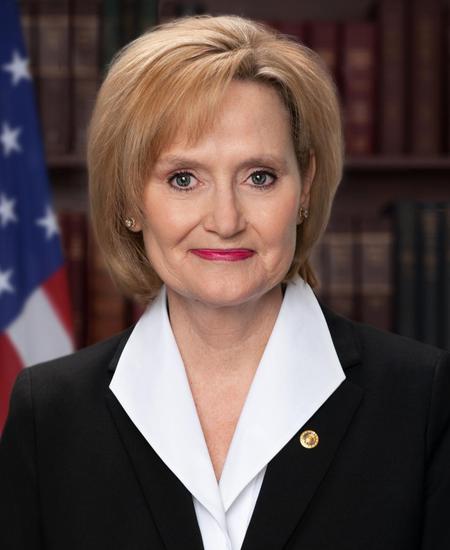
Sen. Cindy Hyde-Smith
Sponsored bills
Maddy summaryThis non-binding resolution expresses Congress's support for Israel by declaring it is not a racist or apartheid state, rejecting antisemitism and xenophobia, and affirming the U.S. as a steadfast partner. It serves as a symbolic statement of bipartisan backing without creating new laws, funding, or obligations. Introduced by Senators Cotton, Cruz, and others in July 2023, it reflects congressional sentiment rather than policy change.
Maddy summaryThis Senate resolution designates September 24-30, 2023, as "Gold Star Families Remembrance Week" to honor families who lost members in military service and veterans' families. It encourages Americans to observe the week through community service and recognition of these families' sacrifices. As a symbolic gesture, the resolution does not create new laws, funding, or programs - it serves solely to acknowledge and remember these families' contributions.
Maddy summaryThe Pay Our Military Act of 2023 ensures that military personnel, Defense Department civilians supporting them, and qualifying Defense contractors continue receiving pay during any funding gap in fiscal year 2024. It appropriates funds from the Treasury to cover military pay, allowances, and support staff salaries when regular budget legislation is delayed. The funding remains available until either a full budget is passed, a continuing resolution is enacted, or January 1, 2025, whichever occurs first. This bill directly affects active-duty service members, reserve components, Defense civilians, and contracted support staff by guaranteeing their compensation during fiscal uncertainty.
Maddy summaryThis bill amends the tax code to exclude certain veterinary student loan repayment or forgiveness assistance from taxable income. It specifically applies to veterinarians participating in programs under the National Agricultural Research, Extension, and Teaching Policy Act of 1977 or similar state programs designed to increase rural veterinary access. The key change clarifies that financial assistance provided through these targeted programs is not considered taxable income for participants. This directly benefits veterinarians in rural areas who use these loan repayment options to practice in underserved communities.
Maddy summaryThis bill establishes a new Office of Rural Health within the CDC, directed by a CDC-appointed director. It aims to improve health care access and outcomes for rural populations by coordinating research, developing policies (including telehealth solutions), and sharing evidence-based programs to address rural health disparities. The office will work across CDC divisions, award grants for rural health initiatives, and coordinate with other federal health offices to avoid duplication. Directly affecting rural communities, the bill targets gaps in health services, prevention, and care access.
Maddy summaryThis bill requires the Department of Veterans Affairs (VA) to submit a report within 180 days of enactment examining competition among suppliers in VA contracting. The report must analyze contractor numbers, identify areas where competition has increased or decreased (especially in sole-source contracts), and recommend improvements. It specifically directs the VA to consult with its Office of Small and Disadvantaged Business Utilization (OSDBU) and use a similar defense department report as a model. The goal is to inform decisions that could improve competition for VA contracts, directly affecting how the VA procures goods and services and impacting veteran-owned small businesses that rely on federal contracting opportunities.
Maddy summaryThis bill prohibits healthcare entities receiving federal funds (like hospitals and clinics) from requiring employees to participate in activities promoting gender identity inconsistent with biological sex, use preferred pronouns against their beliefs, or sign statements supporting such identity. It defines "sex" biologically (based on genes, chromosomes, and physical anatomy at birth) and bars employers from forcing such actions as a condition of employment. Employees who face these requirements can sue for injunctive relief, attorney fees, and other remedies under civil rights law. The law directly affects healthcare workers and covered entities using federal funds, aiming to prevent compelled speech or action conflicting with religious or moral beliefs.
Maddy summaryThis bill, the SAVE Act (Safety From Violence for Healthcare Employees Act), makes it a federal crime to assault hospital staff while they're performing their duties, directly affecting healthcare workers at covered facilities like hospitals, long-term care centers, and emergency clinics. It imposes fines or up to 10 years in prison for basic assaults, with enhanced penalties (up to 20 years) for using weapons, causing injury, or during declared emergencies. The law also requires a government study to assess its impact on workplace violence and federal prosecutions in healthcare settings.
Maddy summaryThis bill requires car manufacturers to include AM radio receivers as standard equipment in all new vehicles sold in the U.S., without additional cost to buyers. It mandates that AM radio controls be clearly visible on the dashboard for drivers. For vehicles sold before the rule takes effect, manufacturers must label them to disclose the absence of AM radio. The bill aims to maintain access to AM radio broadcasts, which are used for emergency alerts, but does not mandate new emergency systems.