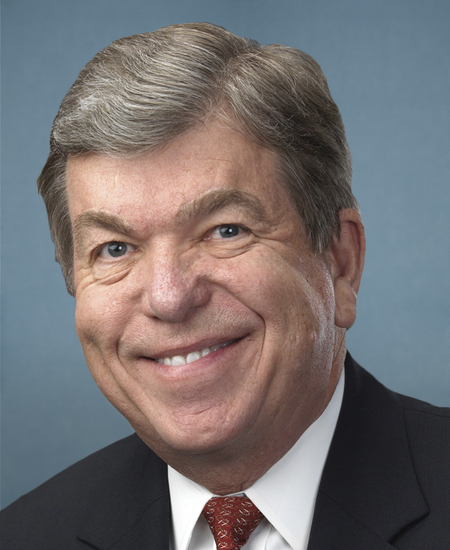
Alzheimer's Accountability and Investment Act This bill requires the National Institutes of Health to annually submit, beginning in FY2024, an estimate of its budget and personnel needs for carrying out initiatives pursuant to the National Alzheimer's Project. This project supports coordination of federal planning, research, and other efforts to address Alzheimer's disease and related dementias.
Sponsored bills
NAPA Reauthorization Act This bill extends through 2035 and makes other changes to the National Alzheimer's Project. This project supports coordination of federal planning, programs, and other efforts to address Alzheimer's disease and related dementias. In particular, the bill incorporates a focus on promoting healthy aging and reducing risk factors associated with cognitive decline. The bill also expands the membership of the Advisory Council on Alzheimer's Research, Care, and Services to include (1) a researcher with experience recruiting and retaining diverse clinical trial participants, (2) an individual diagnosed with Alzheimer's disease, and (3) representatives from additional federal agencies (e.g., the Department of Justice and the Office of Management and Budget).
Maddy summarySRES 594 is a symbolic Senate resolution honoring three Missouri police officers killed in the line of duty during March 2022: Corporal Benjamin Lee Cooper, Officer Jake Alexander Reed, and Patrolman Lane Anthony Burns. It expresses the Senate’s condolences to their families and recognizes the sacrifices of all law enforcement officers, particularly those serving in rural communities. The resolution does not create new laws or allocate funding but formally acknowledges the need for adequate resources for rural law enforcement departments. It serves as a ceremonial gesture of support for officers’ families and the broader law enforcement community.
This resolution expresses that the Senate has heard of the death of the Honorable Orrin G. Hatch, former U.S. Senator for the state of Utah. The resolution also expresses that the Senate honors the life and legacy of the late Senator Hatch for his unwavering dedication to Utah as a Senator and a public servant and accomplishments in legislating with principle and dedication for the good of the people of the United States. The resolution states when the Senate adjourns today, it stands adjourned as a further mark of respect to the memory of Senator Hatch.
Ukraine Democracy Defense Lend-Lease Act of 2022 This bill temporarily waives certain requirements related to the President's authority to lend or lease defense articles if the defense articles are intended for Ukraine's government or the governments of other Eastern European countries affected by Russia's invasion of Ukraine. For FY2022 and FY2023, an agreement to lend or lease defense articles under this bill shall not be subject to certain requirements and provisions that typically apply to such lend-lease agreements, including a requirement that generally prohibits a loan or lease period from exceeding five years. The President must establish expedited procedures to ensure the timely delivery of defense articles loaned or leased to Ukraine under this bill.
This concurrent resolution honors Ulysses S. Grant for his efforts and leadership in defending the union of the United States and affirms that he is among the most influential military commanders in the history of the country.
Spectrum Innovation Act of 2021 This bill specifies a process for auctioning a portion of the electromagnetic spectrum between 3100 megahertz (MHz) and 3540 MHz for nonfederal use, shared federal and nonfederal use, or a combination of those uses. Most wireless technologies (e.g., mobile communication) rely on the electromagnetic spectrum to transmit signals. Specifically, the Office of Management and Budget must transfer funding from the Spectrum Reallocation Fund to federal entities for planning related to the reallocation. The National Telecommunications and Information Administration (NTIA) and the Executive Office of the President must oversee the planning. Informed by the planning, the Department of Commerce must identify at least 200 MHz of spectrum for reallocation. In identifying the spectrum, Commerce must consult with the Department of Defense, the Office of National Science and Technology Policy, and the Federal Communications Commission (FCC). The FCC must (1) adopt rules authorizing the use of the identified spectrum in consultation with the NTIA, and (2) auction licenses for the identified spectrum within seven years of the bill's enactment. Additionally, the President must modify or withdraw (subject to certain limits) current federal assignments of the identified spectrum to increase nonfederal use. The FCC must allow for opportunistic uses (i.e., allow devices to opportunistically identify and transmit on unused spectrum without infringing on the rights of the spectrum license holder) of a withdrawn or modified assignment. An allowed opportunistic use must cease after the auction if the use is inconsistent with the rights of the licensee that obtains its license through the auction.

Maddy summarySRES 593 is a Senate resolution honoring former U.S. Senator Kaneaster Hodges, Jr. of Arkansas, who served from 1977 to 1978. The resolution expresses the Senate’s "profound sorrow" at his death and directs the Secretary of the Senate to transmit an enrolled copy to his family. It also calls for the Senate to adjourn as a mark of respect. This is a ceremonial resolution with no policy provisions or direct impact on legislation or constituents.
This resolution designates April 16 through April 24, 2022, as National Park Week. The resolution also encourages the people of the United States and the world to responsibly visit, experience, recreate in, and support the treasured national parks of the United States.
Maddy summarySRES 565 is a ceremonial Senate resolution honoring the late Representative Don Young (R-AK), who served 49 years in the U.S. House of Representatives - the longest tenure of any Alaska representative and the 45th Dean of the House. The resolution commemorates his life, service, and legacy, including his work on landmark legislation like the Trans-Alaska Pipeline authorization and the Alaska Native Claims Settlement Act. It contains no policy changes or new laws; instead, it directs the Senate to mourn his passing, honor his bipartisan service, and transmit a copy to his family. This is a purely symbolic resolution with no direct impact on constituents or legislation.